


- Introduction: Why Should We Talk About Oil?
- 1. Oil Is Much More Than Petrol and Diesel
- 2. Oil Has Played a Major Role in Modern Transportation
- 3. Oil Demand Is Changing
- 4. Oil Has Both Economic Benefits and Environmental Costs
- 5. Oil Prices Can Affect Ordinary Families
- 6. Oil Is Closely Connected to Energy Security
- 7. The Future of Oil Is Closely Connected With the Energy Transition
- 1. Understanding Energy
- 2. Understanding the Economy
- 3. Understanding Environmental Responsibility
- 4. Encouraging Innovation
- 5. Promoting Energy Efficiency
- 6. Supporting Energy Literacy
- 7. Preparing Students for Future Careers
- 🧑🎓 For Students
- 🏫 For Schools and Colleges
- 🌱 For Families
- Transportation
- Manufacturing
- Packaging
- Clothing
- Healthcare
- Agriculture
- Construction
- Simple actions include:
- Educational Value: ⭐⭐⭐⭐⭐
- Social Relevance: ⭐⭐⭐⭐⭐
- Environmental Awareness: ⭐⭐⭐⭐⭐
- Student Relevance: ⭐⭐⭐⭐⭐
- Future Relevance: ⭐⭐⭐⭐⭐
- 1. When is World Oil Day celebrated?
- 2. Is World Oil Day an official UN day?
- 3. Why is oil important?
- 4. What is crude oil?
- 5. Is oil renewable?
- 6. Why is oil called “black gold”?
- 7. Is the world moving away from oil?
- 8. Will oil disappear soon?
- 9. How can students learn about oil?
- 10. How can ordinary people reduce oil consumption?
- Suggested Internal Links for Minorstudy


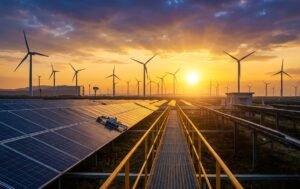
🛢️Eye-Opening Facts About World Oil Day and Why It Matters to Our Future
Introduction: Why Should We Talk About Oil?
Imagine waking up in the morning, switching on the lights, travelling to school or work, ordering something online, using a smartphone, wearing synthetic clothes and taking medicine when you are sick.
Oil may be connected to many parts of that modern lifestyle in ways that are easy to overlook.
Petroleum is not simply the fuel we put into cars and motorcycles. Petroleum-derived products and petrochemicals are connected with transportation, plastics, packaging, synthetic fibres, chemicals and numerous industrial processes.
That is why discussions around World Oil Day can be useful. The observance is often described online as taking place on October 13, but readers should know that it is not a UN-designated international day. The United Nations’ official calendar lists October 13 as the International Day for Disaster Risk Reduction.
The oil story itself, however, is unquestionably important.
Oil helped transform transportation and industry during the modern era. At the same time, oil consumption has environmental, economic and geopolitical consequences. Today, the world is also experiencing rapid growth in electric vehicles, renewable energy and energy-efficiency technologies.
So, rather than simply celebrating oil, an awareness-focused World Oil Day can be an opportunity to ask a bigger question:
How can humanity use energy wisely while preparing for a cleaner and more resilient future?
What Is World Oil Day?
World Oil Day is a term used by some websites and awareness initiatives to discuss the importance of petroleum, the oil industry, energy security and the future of energy.
October 13 is frequently given online as the date for World Oil Day. However, there is an important distinction between an internet-observed awareness day and an officially designated international day.
The UN’s October 13 observance is the International Day for Disaster Risk Reduction, not World Oil Day.
Therefore, educational articles should avoid presenting World Oil Day as an official UN observance.
The broader subject remains highly relevant because oil continues to play a major role in the global economy while energy systems are gradually changing.
According to the International Energy Agency (IEA), global oil demand growth slowed in 2024, and oil’s share of total energy demand fell below 30% for the first time.
History of Oil: From Discovery to a Global Industry
Human societies have used naturally occurring petroleum products for thousands of years, but the modern petroleum industry developed much later.
A major milestone came in 1859, when Edwin Drake’s well in Pennsylvania became an important landmark in the development of modern commercial oil production.
As drilling, refining and transportation technologies improved, petroleum became increasingly important.
Major stages in oil history
- Ancient times: People used naturally occurring bitumen and petroleum in different applications.
- 1859: Edwin Drake’s Pennsylvania oil well became a landmark in modern oil production.
- Late 19th century: Petroleum refining and commercial distribution expanded.
- Early 20th century: Oil became increasingly important to transportation and industry.
- Mid-20th century: Motor vehicles, aviation and industrialization dramatically increased petroleum consumption.
- 1970s: Oil crises demonstrated how strongly economies could be affected by disruptions in petroleum supply.
- Late 20th century: Environmental concerns and energy-security discussions became increasingly prominent.
- 21st century: Electric vehicles, renewable energy, efficiency improvements and climate policies began reshaping energy systems.
The history of oil is therefore also a history of technology, transportation, industrialization and globalization.
7 Eye-Opening Facts About World Oil Day and Oil
1. Oil Is Much More Than Petrol and Diesel
One of the biggest misconceptions about petroleum is that its importance ends at the fuel station.
Crude oil is processed into a wide range of products. Petroleum and petrochemicals are used in plastics, synthetic materials, solvents, lubricants and many industrial applications.
The IEA notes that petrochemical feedstocks are becoming increasingly important in global oil demand. In its 2025 outlook, the agency projected petrochemicals to become the dominant source of global oil-demand growth from 2026 onward.
This means that reducing oil dependence is not simply a question of replacing petrol cars with electric cars.
It also involves questions about:
- Plastics
- Packaging
- Chemicals
- Synthetic fibres
- Industrial materials
- Aviation
- Shipping
- Manufacturing
This makes the future of oil a complicated technological and economic challenge.
2. Oil Has Played a Major Role in Modern Transportation
For more than a century, petroleum-based fuels have powered cars, trucks, ships and aircraft.
Road transportation became one of the most important sources of petroleum demand.
However, the transportation system is changing.
Electric vehicles are expanding, public transport is developing in many cities, and energy-efficiency technologies are reducing fuel consumption in some markets.
The IEA reported that global electric-car sales exceeded 17 million in 2024 and expected them to surpass 20 million in 2025.
This does not mean oil suddenly disappears.
Instead, it shows that transportation is becoming more diverse.
3. Oil Demand Is Changing
Oil demand is still enormous, but its growth pattern is changing.
According to the IEA’s Global Energy Review 2026, global oil demand increased by about 0.7% in 2025, following similarly subdued growth in 2024. The agency highlighted rising road-transport electrification and biofuel use as factors limiting oil-demand growth.
This is an important lesson.
The energy transition is not necessarily a simple story of:
Oil disappears → renewable energy takes over.
Instead, the real-world transition involves:
Oil + gas + coal + nuclear + hydro + solar + wind + biofuels + electrification + efficiency + new technologies.
Different countries are moving at different speeds.
4. Oil Has Both Economic Benefits and Environmental Costs
Oil has contributed enormously to economic development.
The industry creates employment across:
- Exploration
- Drilling
- Engineering
- Refining
- Transportation
- Manufacturing
- Logistics
- Retail
- Research
- Finance
Oil also supports industries that manufacture materials used in everyday life.
But petroleum consumption also has environmental consequences.
Burning fossil fuels releases carbon dioxide, while extraction, refining and transportation can create additional environmental risks.
This creates a difficult balancing act.
Societies need energy for development, but they also need to reduce environmental damage and prepare for climate-related risks.
5. Oil Prices Can Affect Ordinary Families
When international oil prices change, consumers can sometimes feel the effects through fuel prices, transportation expenses, logistics and the prices of goods.
For example, higher transportation costs can increase the expense of moving:
- Food
- Clothing
- Electronics
- Construction materials
- Medicines
- Agricultural products
Oil markets can therefore affect household budgets even when people do not directly purchase crude oil.
What are the costs of oil?
Oil has several different kinds of costs:
1. Direct cost:
The price consumers pay for petrol, diesel and other petroleum products.
2. Industrial cost:
Businesses pay for fuel, transportation, petrochemical feedstocks and energy.
3. Infrastructure cost:
Oil requires wells, pipelines, refineries, ports, storage facilities and transportation systems.
4. Environmental cost:
Pollution, emissions and ecological risks create broader social and environmental consequences.
5. Energy-transition cost:
Moving toward cleaner technologies requires investment in electricity grids, renewable generation, storage, public transport, charging infrastructure and new industrial systems.
Therefore, discussing the “cost of oil” requires looking beyond the price displayed at a petrol station.
6. Oil Is Closely Connected to Energy Security
Countries need reliable energy supplies.
If a country imports a large amount of petroleum, changes in international markets, transportation disruptions or geopolitical events can influence its energy security.
The IEA continues to identify oil-supply security as an important international energy-policy issue.
Energy diversification can therefore become important.
A country may seek to combine:
- Domestic energy production
- Strategic petroleum reserves
- Renewable energy
- Nuclear power
- Natural gas
- Biofuels
- Energy efficiency
- Electrified transportation
The goal is not simply to use one energy source.
It is to build an energy system capable of supporting people and the economy through changing circumstances.
7. The Future of Oil Is Closely Connected With the Energy Transition
Perhaps the most important fact is that the future energy system is already changing.
The IEA’s 2025 oil outlook projected global oil demand to reach a plateau around 105.5 million barrels per day by the end of the decade, under the assumptions of its then-current policy and market outlook. It also projected stronger growth in petrochemical-related demand while transport and power-generation uses face increasing substitution.
The IEA’s 2026 Global Energy Review also reported that global energy demand continued to grow in 2025, with solar PV and natural gas among the leading contributors to additional energy supply.
The lesson is simple:
The future of energy is becoming more diversified.
World Oil Day Timeline
| Year/Period | Important Development |
|---|---|
| Ancient period | Petroleum and bitumen were used in several civilizations |
| 1859 | Edwin Drake’s Pennsylvania oil well became a landmark in modern oil production |
| Late 1800s | Commercial oil production and refining expanded |
| Early 1900s | Petroleum became increasingly important for transportation |
| 1940s–1950s | Post-war industrialization accelerated petroleum consumption |
| 1970s | Major oil shocks highlighted global dependence on petroleum |
| 1990s–2000s | Climate and environmental discussions increasingly influenced energy policy |
| 2010s | Solar, wind and electric vehicles expanded rapidly |
| 2020s | Electrification, renewables and energy security became increasingly important alongside continued oil demand |
| 2025–2026 | Oil-demand growth remained comparatively subdued while energy systems continued diversifying |
Significance of World Oil Day
Even though World Oil Day is not a UN-designated international day, the subject can provide an educational opportunity.
1. Understanding Energy
Students can learn where energy comes from and how it reaches homes, businesses and transportation systems.
2. Understanding the Economy
Oil influences transportation, manufacturing, trade and many industrial sectors.
3. Understanding Environmental Responsibility
Learning about petroleum also means understanding pollution, emissions and environmental risks.
4. Encouraging Innovation
The future requires engineers, scientists and entrepreneurs to develop better energy technologies.
5. Promoting Energy Efficiency
Saving energy can reduce waste and household expenses while lowering pressure on energy systems.
6. Supporting Energy Literacy
People should understand basic concepts such as crude oil, refining, petroleum products, energy demand and energy security.
7. Preparing Students for Future Careers
The energy transition creates opportunities in areas such as:
- Renewable energy engineering
- Petroleum engineering
- Environmental science
- Battery technology
- Electric vehicles
- Data science
- Energy economics
- Climate technology
- Sustainable manufacturing
How World Oil Day Can Be Observed
If your school, college, organization or website chooses to observe World Oil Day as an awareness theme, activities can include:
🧑🎓 For Students
- Prepare an oil-and-energy presentation.
- Study the history of petroleum.
- Create an energy-saving poster.
- Conduct a household energy audit.
- Research electric vehicles.
- Compare fossil fuels and renewable energy.
- Organize a debate on the future of transportation.
🏫 For Schools and Colleges
Institutions can conduct:
- Seminars
- Quiz competitions
- Essay competitions
- Science exhibitions
- Energy-awareness campaigns
- Documentary screenings
- Renewable-energy demonstrations
🌱 For Families
Families can:
- Avoid unnecessary vehicle trips.
- Maintain vehicles properly.
- Reduce fuel wastage.
- Use public transportation where practical.
- Walk or cycle for short journeys when safe.
- Reduce unnecessary consumption of disposable products.
- Learn about recycling and responsible waste management.
Importance of Oil in Our Daily Life
Oil’s influence can be surprisingly broad.
Transportation
Petroleum fuels remain important for road, aviation and maritime transportation.
Manufacturing
Petrochemical products are used in numerous industrial processes.
Packaging
Many forms of plastic packaging are derived from petrochemical feedstocks.
Clothing
Synthetic fibres such as polyester and nylon are petroleum-related products.
Healthcare
Petroleum-derived materials are involved in some medical products, packaging and equipment manufacturing.
Agriculture
Energy and petroleum-derived inputs are important across modern agricultural supply chains.
Construction
Petroleum-derived materials are used in several construction-related products and processes.
This is why a transition away from fossil fuels is a system-wide challenge rather than simply a fuel-switching exercise.
Daily Life Impacts: What Can One Person Do?
A single person cannot transform the global energy system alone.
But everyday choices can contribute to lower energy waste.
Simple actions include:
- Switch off unnecessary electrical equipment.
- Combine errands to reduce unnecessary travel.
- Use public transportation when convenient.
- Walk or cycle for suitable short-distance journeys.
- Maintain vehicles properly.
- Avoid unnecessary idling.
- Reduce disposable-product consumption.
- Reuse products where practical.
- Learn about renewable-energy technologies.
- Teach children that energy is valuable and should not be wasted.
The biggest lesson is not “stop using everything connected with oil.”
The better lesson is:
Understand energy, reduce waste and support responsible innovation.
Costs: Is Saving Energy Expensive?
Energy conservation does not always require expensive technology.
Some actions cost almost nothing.
| Action | Approximate Cost | Potential Benefit |
|---|---|---|
| Switching off unnecessary lights | ₹0 | Reduces electricity waste |
| Avoiding unnecessary vehicle idling | ₹0 | Saves fuel |
| Walking for suitable short trips | ₹0 | Reduces fuel consumption |
| Public transportation | Varies | Can reduce individual fuel use |
| Vehicle maintenance | Varies | Can improve efficiency |
| LED lighting | Low to moderate | Lower electricity consumption |
| Solar installation | Higher initial cost | Potential long-term energy generation |
| Electric vehicle | Higher purchase cost in some cases | Can reduce petrol/diesel use |
| Energy-efficient appliances | Moderate | Can reduce electricity consumption |
Costs vary significantly by location, technology, financing and household needs, so these figures should be treated as categories rather than universal prices.
Review Section: Why Does World Oil Day Matter?
Educational Value: ⭐⭐⭐⭐⭐
The oil industry is an excellent subject for understanding economics, geography, engineering, chemistry and environmental science.
Social Relevance: ⭐⭐⭐⭐⭐
Oil remains connected with transportation, manufacturing, trade and everyday products.
Environmental Awareness: ⭐⭐⭐⭐⭐
The subject naturally encourages discussions about pollution, climate change, conservation and sustainable development.
Student Relevance: ⭐⭐⭐⭐⭐
Students can explore careers across petroleum, engineering, environmental science, renewable energy, electric mobility and sustainability.
Future Relevance: ⭐⭐⭐⭐⭐
Energy systems are changing rapidly, making energy literacy increasingly valuable.
Overall review: World Oil Day works best as an educational awareness theme when it encourages people to understand both the historical importance of petroleum and the challenges of building future energy systems.
World Oil Day Wishes and Messages
Here are some human-friendly World Oil Day messages:
🌍 “On World Oil Day, let us understand the energy that powers our lives and remember the responsibility we have toward our planet.”
🛢️ “Oil powered much of modern development; innovation and responsible energy use can help shape tomorrow.”
🌱 “Let us use energy wisely today so that future generations can live better tomorrow. Happy World Oil Day!”
💡 “Energy is valuable. Let us reduce waste, encourage innovation and build a more sustainable future.”
🌎 “From petroleum to clean technology, the story of energy is a story of human innovation. Let us make the next chapter better.”
FAQs About World Oil Day
1. When is World Oil Day celebrated?
October 13 is commonly cited online as World Oil Day. However, it is important to note that October 13 is officially recognized by the United Nations as the International Day for Disaster Risk Reduction, and World Oil Day is not listed among the UN’s official international days.
2. Is World Oil Day an official UN day?
No. The UN’s official calendar does not list World Oil Day. October 13 is the International Day for Disaster Risk Reduction.
3. Why is oil important?
Oil is important because petroleum products are used across transportation, industry and petrochemical manufacturing.
4. What is crude oil?
Crude oil is a naturally occurring liquid mixture of hydrocarbons extracted from underground geological formations. It is refined into different petroleum products.
5. Is oil renewable?
No. Conventional crude oil is considered a non-renewable fossil fuel because it forms over geological timescales.
6. Why is oil called “black gold”?
“Black gold” is a common expression referring to crude oil because of its historical economic value and importance to industrial economies.
7. Is the world moving away from oil?
Energy systems are becoming more diversified. Electric vehicles, renewable energy, efficiency improvements and alternative fuels are affecting oil demand, although oil remains an important part of global energy and industrial systems.
8. Will oil disappear soon?
There is no simple date when oil will disappear. Different sectors and countries are changing at different speeds, and petrochemical and aviation demand remain important parts of the outlook.
9. How can students learn about oil?
Students can study petroleum engineering, geology, chemistry, environmental science, energy economics, renewable energy, electric mobility and sustainability.
10. How can ordinary people reduce oil consumption?
People can reduce unnecessary travel, use public transportation where practical, maintain vehicles, avoid fuel wastage and choose efficient products and services when appropriate.
Important Points to Remember
- World Oil Day is commonly described online as an October 13 observance.
- It is not an official UN international day.
- October 13 is the UN’s International Day for Disaster Risk Reduction.
- Oil has played a major role in modern industrial development.
- Petroleum is used for much more than petrol and diesel.
- Petrochemicals are an important part of future oil demand.
- Oil markets can affect transportation and consumer costs.
- Energy security remains an important international issue.
- Electric vehicles and renewable technologies are changing energy systems.
- Energy efficiency can reduce waste.
- Students have opportunities in both traditional and emerging energy careers.
- The future energy system is likely to be more diversified.
Why World Oil Day Matters to Students
For students, the oil story is not simply a history lesson.
It connects science with real life.
A student studying chemistry can explore hydrocarbons.
A geography student can study oil reserves and transportation routes.
An economics student can examine commodity markets.
An engineering student can investigate drilling, refining, electric vehicles or renewable-energy systems.
A computer-science student can work on energy forecasting, smart grids or industrial automation.
An environmental-science student can research pollution reduction and sustainable development.
This makes energy education a multidisciplinary subject.
Why Oil Matters to Society
Modern societies depend on reliable energy.
Hospitals require electricity and transportation.
Farmers need machinery and supply chains.
Schools require energy for classrooms and digital systems.
Businesses require transportation and industrial infrastructure.
Families need affordable mobility and household products.
At the same time, society has to address pollution, climate risks and resource efficiency.
Therefore, the real question is not simply:
“Oil or no oil?”
The more useful question is:
“How can society provide reliable, affordable and increasingly sustainable energy while reducing waste and environmental damage?”
That question will require scientists, engineers, policymakers, entrepreneurs, students and ordinary citizens.
Conclusion: The Powerful Lesson Behind World Oil Day
World Oil Day can be viewed as an opportunity to understand one of the most influential resources in modern history.
Oil helped transform transportation, industry and global commerce. It continues to support important parts of the world’s economy.
But the story does not end there.
The world is changing.
Electric vehicles are expanding. Renewable-energy technologies are developing. Energy efficiency is improving. Industries are experimenting with alternative materials and fuels. At the same time, petroleum continues to serve important roles, especially in transportation and petrochemical production.
The IEA’s recent assessments show that oil demand growth has slowed compared with historical trends, while electrification and other technologies increasingly influence consumption patterns.
For ordinary people, the message is simple:
Use energy wisely. Avoid unnecessary waste. Understand where products come from. Learn about new technologies. Encourage responsible innovation.
And for students, there is an even bigger lesson:
The future of energy is also the future of technology, science, economics and society.
So, whether your school or organization observes World Oil Day as an awareness occasion or simply uses the topic for education, let the conversation go beyond oil.
Let it be about energy literacy, responsible consumption, innovation and the kind of future we want to build.
Suggested Internal Links for Minorstudy
You can connect this article with relevant Minorstudy content such as:










Usually I do not learn article on blogs, however I wish to say that this write-up very compelled me to take a look at and do so! Your writing style has been amazed me. Thanks, quite nice article.
I don’t think the title of your article matches the content lol. Just kidding, mainly because I had some doubts after reading the article.
Thanks for sharing. I read many of your blog posts, cool, your blog is very good. Anm”al dig f”or att fa 100 USDT
I don’t think the title of your article matches the content lol. Just kidding, mainly because I had some doubts after reading the article. https://www.binance.info/futures/ref?code=JW3W4Y3A