⚡ Renewable Energy That Can Create a Cleaner and Brighter Future

- 🌱 What Is Renewable Energy?
- 1. Renewable Energy Is Growing Very Quickly
- 2. Solar Energy Has Become a Major Driver
- 3. Wind Energy Is Another Major Renewable Source
- 4. Renewable Energy Is Becoming More Competitive
- 5. Renewable Energy Can Reduce Dependence on Fossil Fuels
- 6. Renewable Energy Is Important for India’s Future
- 7. Renewable Energy Can Create New Careers
- 8. Rooftop Solar Can Change Household Electricity Use
- 9. Renewable Energy and Storage Are Closely Connected
- 10. Farmers Can Participate in Renewable Energy
- 11. The Renewable Energy Transition Is a Global Story
- Ancient period
- Ancient and medieval water power
- Windmills
- Industrial Revolution
- 19th century
- 20th century
- Late 20th century
- 21st century
- At home
- In education
- In agriculture
- In business
- In rural areas
- Energy security
- Economic development
- Environmental protection
- Rural development
- Technological innovation
- 1. Intermittency
- 2. Storage
- 3. Transmission
- 4. Land use
- 5. Materials
- 6. Recycling
- 7. Financing
- What does this topic teach us?
- What is particularly important?
- What should readers remember?
- Student perspective
- Overall learning takeaway
- 1. What is renewable energy?
- 2. What are the five major renewable energy sources?
- 3. Is solar energy renewable?
- 4. Is renewable energy completely pollution-free?
- 5. Is renewable energy expensive?
- 6. Can renewable energy work at night?
- 7. Is renewable energy good for students?
- 8. What is the future of renewable energy?


Renewable energy is no longer just a topic discussed by scientists, environmentalists, or energy companies. It is becoming part of everyday life. Solar panels on rooftops, wind turbines across open landscapes, hydropower stations, biogas plants, electric vehicles and renewable-powered industries are changing the way societies think about energy.
At its simplest, renewable energy means energy obtained from natural sources that are replenished continuously or relatively quickly, such as sunlight, wind, flowing water, biomass and geothermal heat.
The importance of renewable energy is growing because the world needs electricity and fuels while also dealing with climate change, air pollution, energy security, rising energy demand and the long-term limitations of fossil fuels.
According to IRENA, global renewable power capacity reached about 5,149 GW at the end of 2025, and renewables accounted for 49% of global installed power capacity. Around 692 GW of renewable capacity was added during 2025, with solar accounting for approximately 510 GW of those additions. (IRENA)
India is also experiencing rapid expansion. As of 31 August 2026, India’s total renewable energy capacity including large hydro stood at about 295.55 GW, according to the Ministry of New and Renewable Energy (MNRE). Solar accounted for about 168.04 GW and wind about 58.52 GW. (Ministry of New and Renewable Energy)
So, what exactly is renewable energy, how did it develop, what does it cost, and why does it matter to ordinary people?
Let’s explore it in a simple, human-friendly way.
🌱 What Is Renewable Energy?
Renewable energy is energy generated from naturally replenishing resources.
Major renewable energy sources include:
- Solar energy – energy from sunlight.
- Wind energy – electricity generated using moving air.
- Hydropower – energy produced from flowing or falling water.
- Biomass energy – energy from organic materials such as agricultural residues and certain forms of organic waste.
- Geothermal energy – heat obtained from inside the Earth.
- Marine energy – energy from tides, waves and other ocean movements.
Unlike coal, petroleum and natural gas, renewable resources are not dependent on extracting finite fossil deposits.
However, renewable does not mean completely impact-free. Solar panels, wind turbines, batteries and transmission infrastructure require minerals, manufacturing, land and transportation. Responsible planning, recycling and environmental safeguards therefore remain important.
☀️ 11 Powerful Facts About Renewable Energy
1. Renewable Energy Is Growing Very Quickly
Renewable energy has moved from a relatively specialised part of the energy sector to a major source of new electricity capacity.
IRENA reports that 692 GW of renewable power capacity was added globally in 2025, the largest annual increase recorded in its capacity statistics. Solar alone contributed approximately 510 GW. (IRENA)
This shows how quickly the electricity system is changing.
2. Solar Energy Has Become a Major Driver
Solar photovoltaic technology converts sunlight directly into electricity.
Solar can be installed at several scales:
- A small rooftop
- A school or hospital
- A factory
- A solar farm
- A large renewable-energy park
- Off-grid systems for remote locations
In India, cumulative solar capacity reached approximately 168.04 GW by 31 August 2026, according to MNRE. (Ministry of New and Renewable Energy)
3. Wind Energy Is Another Major Renewable Source
Wind turbines convert the kinetic energy of moving air into electricity.
India has substantial wind resources, particularly in states such as Gujarat, Tamil Nadu, Karnataka, Maharashtra, Rajasthan and Andhra Pradesh.
As of June 30, 2026, India’s installed wind capacity was reported at 57.443 GW by the Ministry of New and Renewable Energy. (Press Information Bureau)
4. Renewable Energy Is Becoming More Competitive
Cost is one of the biggest reasons for renewable energy’s expansion.
IRENA’s 2026 report on 2025 generation costs found that solar PV’s global weighted-average levelised cost of electricity was about USD 44/MWh, while onshore wind was approximately USD 33/MWh. IRENA also reported that more than 90% of utility-scale renewable projects commissioned in 2025 produced electricity at a cost below the cheapest new fossil-fuel alternative in their respective markets. (IRENA)
These are global generation-cost figures, not the price an individual household necessarily pays for electricity.
5. Renewable Energy Can Reduce Dependence on Fossil Fuels
Countries importing large quantities of coal, oil or natural gas can use renewable resources available within their own borders.
Sunlight, wind, water and biomass can provide domestic energy resources.
This can become particularly important when international fuel prices or supply chains experience disruption.
6. Renewable Energy Is Important for India’s Future
India has rapidly expanded renewable capacity during the last decade.
According to the Indian government, renewable energy capacity increased from about 76.38 GW in March 2014 to 274.68 GW in March 2026, including the categories specified in its official comparison. Solar capacity increased from 2.82 GW to about 150.26 GW over the same period. (Press Information Bureau)
The exact number depends on the date and whether particular hydro categories are included, so readers should always check the reporting definition alongside the figure.
7. Renewable Energy Can Create New Careers
The renewable-energy economy requires much more than engineers.
Career opportunities can include:
- Solar PV installation
- Electrical engineering
- Mechanical engineering
- Civil engineering
- Renewable-energy project management
- Battery technology
- Energy storage
- Environmental science
- Data analysis
- Artificial intelligence
- Geographic information systems
- Sales and marketing
- Finance
- Policy and regulation
- Research and development
- Operations and maintenance
This makes renewable energy an interesting field for students from science, engineering, management and other backgrounds.
8. Rooftop Solar Can Change Household Electricity Use
Renewable energy does not always require a huge power plant.
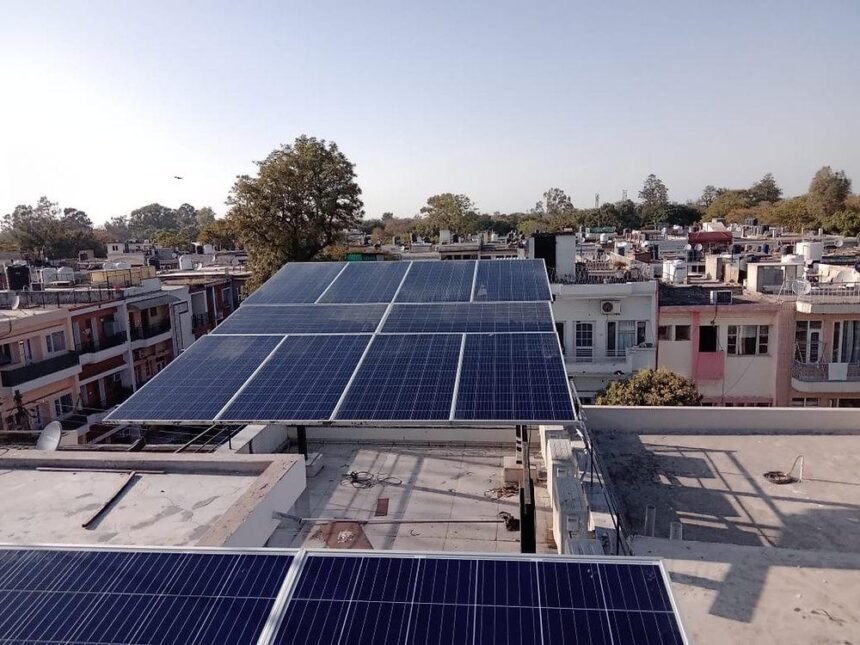
A household can install solar panels on its roof and generate electricity.
India’s PM-Surya Ghar: Muft Bijli Yojana was designed to support residential rooftop solar. The scheme has a total outlay of ₹75,021 crore and aims to support rooftop solar for one crore households. (Ministry of New and Renewable Energy)
The central financial assistance structure provides up to ₹78,000 for eligible residential installations, subject to scheme rules and eligibility. (Solar Rooftop)
9. Renewable Energy and Storage Are Closely Connected
Solar power is strongest during daylight hours. Wind generation also varies with weather conditions.
This means modern energy systems increasingly need:
- Batteries
- Pumped-storage hydropower
- Flexible generation
- Strong transmission networks
- Demand management
- Smart grids
- Forecasting systems
The future isn’t simply about producing more renewable electricity; it is also about making electricity available when people need it.
10. Farmers Can Participate in Renewable Energy
Renewable energy can also create opportunities in agriculture.
The PM-KUSUM programme supports solarisation and renewable-energy applications in the agricultural sector. Its components include decentralised renewable-energy plants, standalone solar agricultural pumps and solarisation of grid-connected agricultural pumps. (Ministry of New and Renewable Energy)
This can connect clean-energy development with irrigation, rural infrastructure and additional income opportunities.
11. The Renewable Energy Transition Is a Global Story
The transition is not limited to one country.
The International Energy Agency projects that renewable power capacity could increase by around 4,600 GW between 2025 and 2030, with solar PV accounting for nearly 80% of the projected expansion in its 2025 outlook. (IEA)
This demonstrates the scale of the transformation taking place in global electricity systems.
📜 History of Renewable Energy
Renewable energy is actually much older than modern solar panels.
Humans have used renewable resources for thousands of years.
Ancient period
People used:
- Sunlight for heating and drying
- Wind for sailing
- Biomass for cooking and heating
- Flowing water for basic mechanical work
Ancient and medieval water power
Water wheels were used in different civilisations for grinding grain and other mechanical activities.
Windmills
Windmills became important for mechanical work, including water pumping and grain processing.
Industrial Revolution
Coal became increasingly important during industrialisation because it could provide concentrated and controllable energy for steam engines and factories.
19th century
Scientific discoveries led to important developments in electricity generation, solar science and hydropower.
20th century
Hydropower expanded substantially, while modern photovoltaic technology emerged.
Late 20th century
Concerns about oil security, pollution and environmental damage increased interest in solar, wind and other alternatives.
21st century
Renewable energy became increasingly commercial, supported by technological improvements, policy programmes, investment and declining costs.
🕰️ Renewable Energy Timeline
| Period | Important Development |
|---|---|
| Ancient times | Sun, biomass, wind and water used for basic energy needs |
| Ancient/medieval period | Water wheels and windmills expanded |
| 1800s | Modern electricity and early solar research developed |
| Late 1800s | Hydropower became an important electricity technology |
| 1950s | Practical silicon solar-cell technology emerged |
| 1970s | Oil crises increased interest in alternative energy |
| 1990s | Modern wind and solar industries expanded |
| 2000s | Large-scale renewable investment accelerated |
| 2010s | Solar and wind costs fell significantly |
| 2020s | Renewables became a central part of global electricity expansion |
| 2025–26 | Record global renewable capacity additions and continued rapid solar growth |
💰 Renewable Energy Costs: What Should You Know?
“Renewable energy cost” can mean different things.
There is a major difference between:
1. Cost of building a system
2. Cost of generating electricity
3. Cost paid by a household or business
For example, a rooftop solar system requires spending on:
- Solar modules
- Inverter
- Mounting structure
- Wiring
- Protection equipment
- Installation
- Metering/grid connection where applicable
- Battery, if required
The final price depends on capacity, technology, location, installation complexity, battery requirements and applicable subsidies.
For residential consumers under PM-Surya Ghar, central financial assistance can reduce the eligible upfront burden. The scheme’s published structure provides ₹30,000/kW for the first 2 kW and ₹18,000/kW for additional capacity up to 3 kW, with the maximum central assistance reaching ₹78,000 for eligible residential systems. (Solar Rooftop)
For utility-scale projects, IRENA’s levelised-cost figures provide a useful international comparison, but they should not be mistaken for household installation prices. (IRENA)
🌍 Why Is Renewable Energy Important in Our Life?
Renewable energy is not only about climate change.
It can influence everyday life in many ways.
At home
Solar electricity can power:
- Lights
- Fans
- Refrigerators
- Computers
- Water pumps
- Mobile chargers
- Other household appliances
In education
Schools and colleges can use renewable systems for:
- Electricity
- Digital classrooms
- Computer laboratories
- Research
- Demonstration projects
In agriculture
Solar-powered pumps can support irrigation, while renewable electricity can support agricultural processing and cold storage.
In business
Businesses can use renewable electricity to manage energy costs and reduce exposure to conventional energy sources.
In rural areas
Distributed renewable systems can help provide electricity to locations where conventional infrastructure is difficult or expensive to extend.
🏭 Importance of Renewable Energy to Society
A modern society needs reliable energy.
Renewable energy can contribute to several broader objectives:
Energy security
Domestic renewable resources can diversify the energy supply.
Economic development
Renewable projects require workers, manufacturers, technicians, engineers, construction services and maintenance professionals.
Environmental protection
Replacing fossil-fuel generation with low-emission renewable electricity can reduce greenhouse-gas emissions and some forms of air pollution, depending on the technology and what generation it displaces.
Rural development
Solar and wind projects can bring infrastructure and economic activity to rural regions.
Technological innovation
Renewable energy is encouraging progress in:
- Batteries
- Smart grids
- Artificial intelligence
- Power electronics
- Green hydrogen
- Energy forecasting
- Electric mobility
⚠️ Challenges of Renewable Energy
Renewable energy has major opportunities, but it also has challenges.
1. Intermittency
Solar power varies with sunlight, while wind varies with weather.
2. Storage
Large quantities of electricity storage may be required for some power systems.
3. Transmission
Renewable resources are not always located near major electricity-demand centres.
4. Land use
Large projects can require substantial areas of land, creating the need for careful planning.
5. Materials
Solar panels, batteries, wind turbines and transmission equipment require minerals and industrial supply chains.
6. Recycling
As deployment increases, recycling and responsible end-of-life management will become increasingly important.
7. Financing
Large renewable projects require significant upfront investment even when their long-term generation costs are competitive.
🇮🇳 Renewable Energy in India
India is becoming an important renewable-energy market.
As of 31 August 2026, MNRE reported approximately:
| Renewable Source | Installed Capacity |
|---|---|
| Solar | 168.04 GW |
| Wind | 58.52 GW |
| Small Hydro | 5.18 GW |
| Biomass bagasse cogeneration | 9.82 GW |
| Biomass non-bagasse cogeneration | 1.05 GW |
| Waste-to-energy | 0.32 GW |
| Off-grid waste-to-energy | 0.55 GW |
| Large Hydro | 52.06 GW |
| Total Renewable Energy | 295.55 GW |
Source: Ministry of New and Renewable Energy, Government of India. (Ministry of New and Renewable Energy)
These numbers illustrate how diverse India’s renewable-energy system has become.
🎓 Renewable Energy for Students
Students interested in renewable energy can start building knowledge early.
Useful subjects include:
- Physics
- Mathematics
- Chemistry
- Computer Science
- Environmental Science
- Electronics
- Electrical Engineering
- Mechanical Engineering
- Data Science
Possible educational routes include:
- Diploma programmes
- B.Tech/B.E.
- B.Sc.
- M.Tech/M.Sc.
- MBA in energy or sustainability
- Environmental studies
- Short-term solar installation courses
- Research programmes
Students can also learn practical skills such as solar-system design, energy auditing, programming, data analysis and project management.
⭐ Review Section: Renewable Energy
What does this topic teach us?
Renewable energy demonstrates how science, economics, technology and society are connected.
What is particularly important?
The rapid expansion of solar and wind shows that electricity generation is changing quickly.
What should readers remember?
Renewable energy is not a magic solution. It needs good planning, storage, transmission, responsible mineral supply chains, environmental safeguards and reliable electricity networks.
Student perspective
For students, renewable energy is more than an environmental topic. It can become a career field involving engineering, AI, data science, finance, policy, manufacturing and entrepreneurship.
Overall learning takeaway
The most important lesson is that the future energy system will probably require a combination of renewable generation, storage, strong grids, efficiency and other energy technologies, rather than one single solution.
❓ Frequently Asked Questions About Renewable Energy
1. What is renewable energy?
Renewable energy is energy obtained from naturally replenishing resources such as sunlight, wind, water, biomass and geothermal heat.
2. What are the five major renewable energy sources?
Solar, wind, hydropower, biomass and geothermal are five major categories. Marine energy is another emerging category.
3. Is solar energy renewable?
Yes. Solar energy comes from sunlight, which is continuously replenished by natural processes.
4. Is renewable energy completely pollution-free?
Not necessarily. Renewable electricity technologies generally have low operational emissions, but manufacturing, transportation, construction, land use and end-of-life management can have environmental impacts.
5. Is renewable energy expensive?
Costs vary by technology and location. Many renewable technologies have become highly competitive for new electricity generation. IRENA reported global 2025 weighted-average LCOE of about USD 44/MWh for solar PV and USD 33/MWh for onshore wind. (IRENA)
6. Can renewable energy work at night?
Solar panels do not generate electricity from sunlight at night, but electricity generated earlier can be stored in batteries or other storage systems.
7. Is renewable energy good for students?
It can provide a wide range of educational and career opportunities across engineering, science, technology, management and environmental fields.
8. What is the future of renewable energy?
Renewable deployment is expected to continue growing significantly. The IEA’s Renewables 2025 outlook projects around 4,600 GW of additional renewable power capacity between 2025 and 2030. (IEA)
🌟 Important Points to Remember
- Renewable energy comes from naturally replenishing resources.
- Solar and wind are currently major drivers of global renewable expansion.
- Hydropower remains an important renewable electricity source.
- Renewable energy can contribute to energy security.
- Storage and transmission are essential for integrating large amounts of variable renewable electricity.
- India has rapidly expanded its solar and wind capacity.
- Rooftop solar gives households an opportunity to participate directly in electricity generation.
- Renewable energy can create new jobs and educational opportunities.
- Renewable projects still require responsible environmental and social planning.
- The energy transition will require technology, investment, skilled people and effective infrastructure.
💚 How Can We Support Renewable Energy in Daily Life?
Ordinary people can contribute without building a giant solar farm.
Simple actions include:
- Use electricity efficiently.
- Switch off unnecessary appliances.
- Consider rooftop solar if your home and budget are suitable.
- Learn about government renewable-energy schemes.
- Choose energy-efficient appliances.
- Support responsible clean-energy projects.
- Learn about battery recycling.
- Encourage renewable-energy education in schools.
- Explore careers in clean technology.
- Talk about energy conservation with family and friends.
Small decisions repeated by millions of people can influence energy demand.
🎉 Renewable Energy Wishes and Positive Message
Happy Renewable Energy Future! 🌱☀️
May our homes become smarter, our cities cleaner, our industries more efficient and our energy systems more resilient.
May students learn to see renewable energy not merely as a chapter in a textbook, but as an opportunity to invent, research, build businesses and solve real-world problems.
Let the sun inspire us, let the wind move us forward, and let responsible innovation create a cleaner future for everyone.
🌍 Conclusion: Renewable Energy and Our Future
Renewable energy represents one of the most important transformations happening in the modern energy system.
From a small rooftop solar panel to a giant wind farm, from a solar-powered agricultural pump to a battery-storage facility, renewable technologies are becoming increasingly connected with everyday life.
The global figures demonstrate the scale of the change. IRENA recorded a record 692 GW of renewable capacity additions in 2025, while India had approximately 295.55 GW of renewable capacity including large hydro by August 2026, according to MNRE. (IRENA)
But the future is not simply about installing more panels and turbines. It is about creating an energy system that is reliable, affordable, technologically advanced, environmentally responsible and accessible to society.
For students, renewable energy offers an exciting intersection of science, engineering, artificial intelligence, business and environmental responsibility.
For households, rooftop solar can turn consumers into energy producers.
For farmers, solarisation can connect agriculture with clean electricity.
For businesses, renewable power can become part of long-term energy planning.
And for society, renewable energy can contribute to a more diversified and resilient energy system.
The renewable-energy story is therefore not only about electricity. It is about how people choose to build the future.