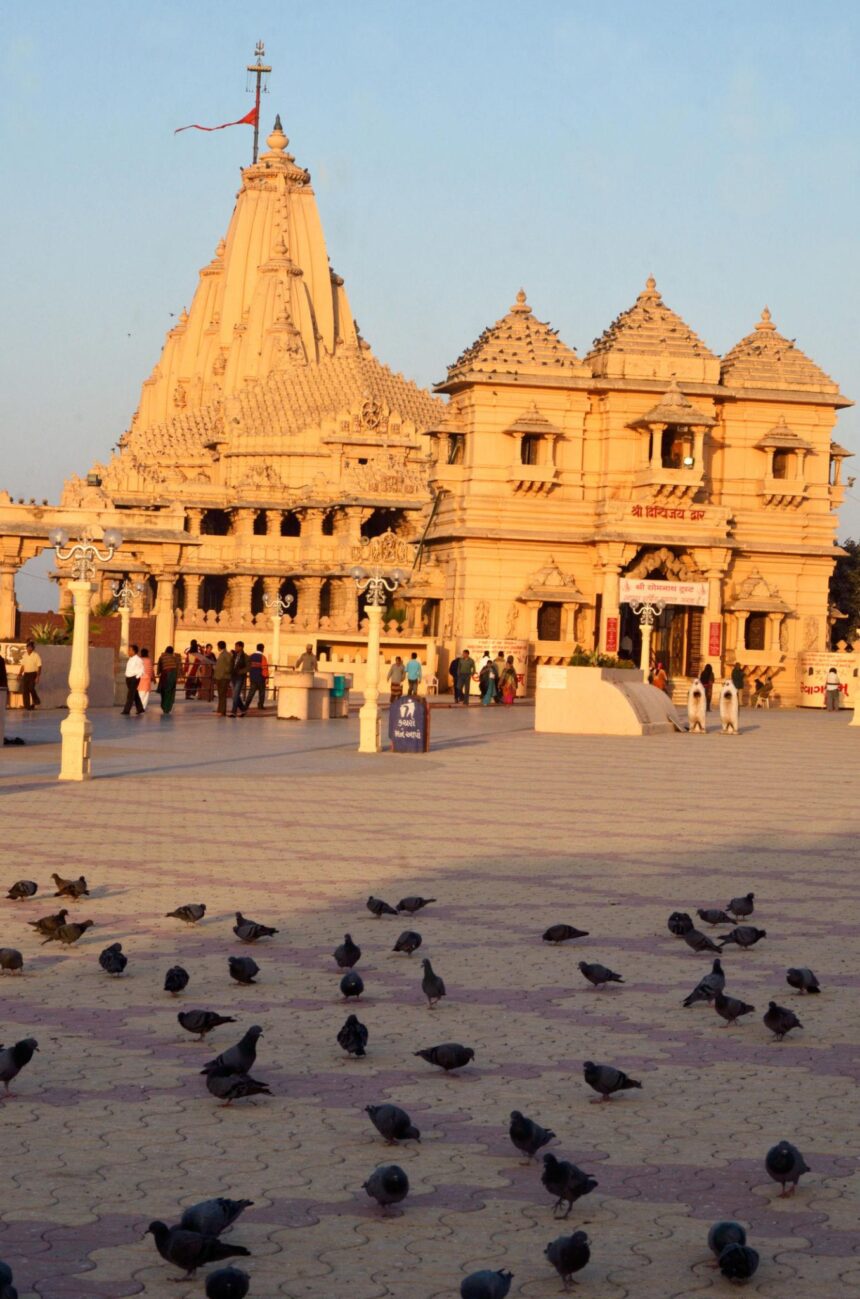


Somnath Temple: Complete History, Significance, Facts, Timeline, Student Guide, Travel Cost, FAQs, and Daily Life Impact
Introduction
Somnath Temple is one of India’s most sacred and historically significant temples. Located in the Prabhas Patan region of Gujarat, this magnificent temple is dedicated to Lord Shiva and is known as the first among the twelve Jyotirlingas. Millions of devotees, tourists, historians, and students visit the temple every year to witness its spiritual beauty and architectural brilliance.
The temple represents faith, resilience, and India’s rich cultural heritage. Despite being destroyed multiple times throughout history, Somnath Temple was rebuilt again and again, making it a powerful symbol of determination and devotion.
Whether you are a student preparing for exams, a traveler planning a pilgrimage, or someone interested in Indian history, Somnath Temple offers valuable lessons about courage, spirituality, and cultural preservation.
History of Somnath Temple
The history of Somnath Temple dates back thousands of years. According to Hindu mythology, the Moon God (Chandra) built the original temple in gold to worship Lord Shiva after being cursed by his father-in-law Daksha.
Later, the temple is believed to have been rebuilt several times:
- Ravana rebuilt it using silver.
- Lord Krishna rebuilt it with sandalwood.
- King Bhimdev reconstructed it using stone.
Historically, Somnath Temple faced repeated invasions and destruction. The most famous attack occurred in 1025 CE when Mahmud of Ghazni invaded the temple and looted its immense wealth.
Despite these attacks, the people of India rebuilt the temple repeatedly. After India’s independence, Sardar Vallabhbhai Patel initiated the reconstruction of the present temple, which was completed in 1951.
Today, Somnath Temple stands as a symbol of India’s unbreakable spirit.
Timeline of Somnath Temple
| Year | Event |
|---|---|
| Ancient Era | Mythological construction by Chandra |
| Early centuries | Temple flourished as an important pilgrimage site |
| 1025 CE | Mahmud of Ghazni attacked and looted the temple |
| 1299 CE | Another invasion damaged the temple |
| Several centuries | Temple rebuilt multiple times |
| 1947 | Reconstruction announced after India’s independence |
| 1951 | Present temple inaugurated |
| Today | One of India’s most visited pilgrimage destinations |
Why is Somnath Temple Important?
Somnath Temple is important because it represents:
- Faith over fear
- Devotion towards Lord Shiva
- India’s cultural heritage
- Ancient Indian architecture
- Historical resilience
- Spiritual peace
It also reminds people that no matter how many challenges arise, faith and determination can rebuild what is lost.
Significance of Somnath Temple
The spiritual significance of Somnath Temple is immense.
Some important reasons include:
- First Jyotirlinga of Lord Shiva
- Sacred pilgrimage destination
- Mentioned in ancient Hindu scriptures
- Symbol of eternal faith
- Represents the victory of devotion over destruction
Many devotees believe that visiting Somnath Temple brings inner peace, removes negative energy, and strengthens spiritual growth.
Interesting Facts About Somnath Temple
Here are some fascinating facts:
- Somnath is the first Jyotirlinga among twelve.
- The temple has been rebuilt several times.
- It is situated on the Arabian Sea coast.
- No land exists directly between Somnath Temple and Antarctica along its sea line.
- The temple follows Chalukya architectural style.
- Evening light and sound shows narrate its history.
- Millions of pilgrims visit every year.
- The temple is one of India’s most protected heritage sites.
- The temple flag is changed several times daily.
- It symbolizes India’s resilience.
Architecture of Somnath Temple
The temple showcases magnificent Chalukya architecture.
Major features include:
- Beautiful stone carvings
- Massive entrance gate
- High temple tower (Shikhara)
- Elegant Sabha Mandap
- Intricately designed pillars
- Sea-facing location
The peaceful sound of waves creates a divine atmosphere that attracts visitors from around the world.
Estimated Travel Costs for Students
Travel expenses vary depending on the city of departure.
| Expense | Approximate Cost |
|---|---|
| Temple Entry | Free |
| Museum | ₹20–₹50 |
| Budget Hotel | ₹800–₹1,500 |
| Mid-range Hotel | ₹2,000–₹4,500 |
| Food | ₹200–₹500 per day |
| Local Transport | ₹100–₹500 |
| Train Fare | Depends on departure city |
| Flight | Varies by location |
Students can reduce expenses by traveling in groups and using railway concessions where available.
Why Students Should Learn About Somnath Temple
Studying Somnath Temple helps students understand:
- Indian history
- Religious diversity
- Ancient architecture
- Cultural heritage
- Archaeology
- Historical invasions
- National unity
- Preservation of monuments
The temple is frequently mentioned in history, culture, and general knowledge examinations.
Observance and Worship
Daily rituals include:
- Mangala Aarti
- Morning prayers
- Afternoon worship
- Evening Aarti
- Special festivals
The temple is especially crowded during:
- Maha Shivaratri
- Shravan Month
- Kartik Purnima
Thousands of devotees participate in these celebrations.
Important Points About Somnath Temple
- Located in Gujarat.
- Dedicated to Lord Shiva.
- First Jyotirlinga.
- Ancient pilgrimage center.
- Rebuilt multiple times.
- Symbol of resilience.
- Beautiful coastal location.
- Major tourist destination.
- Rich historical importance.
- National heritage landmark.
Wishing Messages
If someone is visiting Somnath Temple, you may wish them:
- “May Lord Shiva bless you with happiness, peace, and prosperity.”
- “Wishing you a peaceful and spiritually enriching journey to Somnath Temple.”
- “May your visit to Somnath Temple bring positivity and success in your life.”
- “Har Har Mahadev! May Lord Shiva always protect and guide you.”
Importance in Our Life
Somnath Temple teaches valuable life lessons:
Faith
Faith helps people remain strong during difficult times.
Courage
The temple’s history shows that courage can overcome destruction.
Hope
No matter how difficult life becomes, rebuilding is always possible.
Patience
The temple reminds us that great achievements require patience.
Devotion
True devotion brings inner peace and happiness.
Importance to Society
Somnath Temple contributes to society in many ways.
Cultural Preservation
It preserves India’s ancient traditions.
Tourism
It generates employment through tourism.
Education
Students and researchers learn about history and architecture.
Economy
Local businesses benefit from millions of visitors annually.
National Pride
The temple represents India’s rich civilization and resilience.
Daily Life Impact
The teachings associated with Somnath Temple can inspire everyday life:
- Stay positive during challenges.
- Respect cultural traditions.
- Practice honesty and kindness.
- Value patience and perseverance.
- Maintain faith in difficult times.
- Support heritage conservation.
- Encourage unity and respect among communities.
Its story reminds us that setbacks can be overcome with determination and collective effort.
Frequently Asked Questions (FAQs)
1. Where is Somnath Temple located?
Somnath Temple is located in Prabhas Patan, Gujarat, India.
2. Which deity is worshipped here?
Lord Shiva.
3. Why is Somnath Temple famous?
It is the first Jyotirlinga and one of India’s most sacred temples.
4. Is there an entry fee?
No. Entry to the temple is free.
5. Who rebuilt the current temple?
The present temple was reconstructed after India’s independence under the initiative of Sardar Vallabhbhai Patel and inaugurated in 1951.
6. Which is the best time to visit?
October to March offers pleasant weather, though devotees also visit during Maha Shivaratri and the Shravan month.
7. Can students visit?
Yes. The temple is an excellent educational destination for learning about history, culture, and architecture.
8. Are photography and mobile phones allowed?
Photography rules may vary by area, and mobile phones are generally restricted inside the main temple premises. Visitors should follow the latest temple guidelines.
Visitor Review Section
⭐⭐⭐⭐⭐ Overall Rating: 4.8/5
Spiritual Experience: ⭐⭐⭐⭐⭐
Visitors often describe the temple as peaceful and spiritually uplifting.
Architecture: ⭐⭐⭐⭐⭐
The stone carvings, towering shikhara, and sea-facing location leave a lasting impression.
Cleanliness: ⭐⭐⭐⭐⭐
The temple complex is generally well maintained.
Accessibility: ⭐⭐⭐⭐☆
Road, rail, and nearby airport connections make travel convenient for most visitors.
Overall Recommendation:
Somnath Temple is highly recommended for pilgrims, families, students, history enthusiasts, and travelers seeking a blend of spirituality, culture, and heritage.
Conclusion
Somnath Temple is much more than a place of worship. It is a living symbol of faith, resilience, history, and India’s enduring cultural identity. Its repeated reconstruction through the centuries reflects the determination of generations to preserve their beliefs and heritage. For students, it offers valuable lessons in history, architecture, and cultural studies. For devotees, it is a sacred destination that inspires devotion and inner peace. For travelers, it showcases breathtaking craftsmanship alongside the beauty of the Arabian Sea.
Visiting or learning about Somnath Temple reminds us that challenges can be overcome with courage, unity, and hope. The temple continues to inspire millions by teaching timeless values such as perseverance, respect for heritage, compassion, and spiritual growth. Whether you seek knowledge, history, or divine blessings, Somnath Temple remains one of India’s most remarkable landmarks and a shining example of strength that continues to inspire society and future generations.