

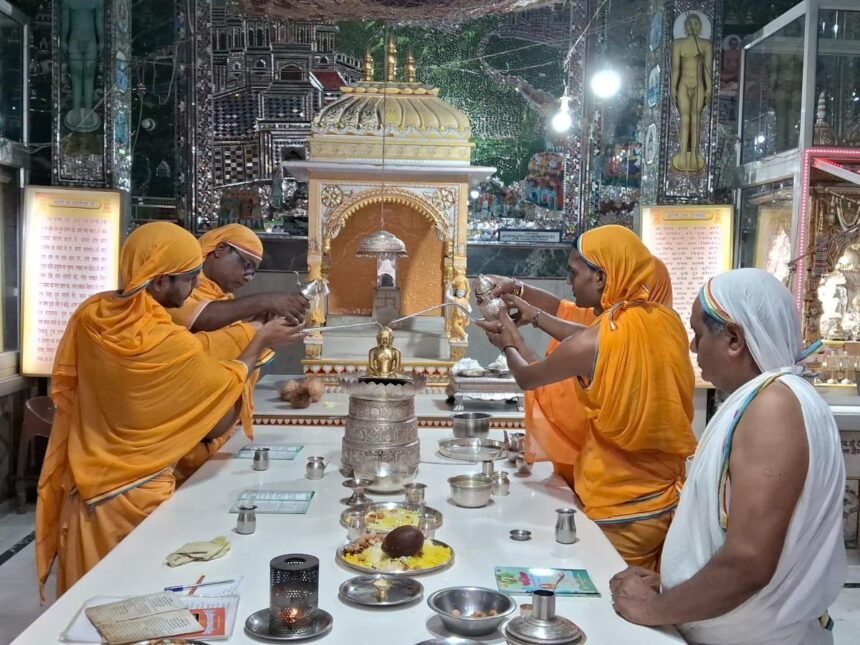
Powerful Reasons Why Samvatsari Festival Inspires Forgiveness and Inner Peace
The beautiful message of Samvatsari can be expressed through the words “Micchami Dukkadam”, which convey the intention that if we have caused you pain through our thoughts, words, or actions, may those mistakes be forgiven.
In a world where misunderstandings, anger, jealousy, and conflicts often affect relationships, Samvatsari reminds us that forgiveness is not a weakness. It is a sign of courage, humanity, and spiritual strength.
Celebrated as the concluding day of the Jain festival of Paryushan, Samvatsari encourages people to look within themselves, recognise their mistakes, and make a sincere effort to become better human beings.
This article explores the history, significance, traditions, facts, timeline, wishes, and ten powerful reasons why Samvatsari Festival inspires forgiveness and inner peace.
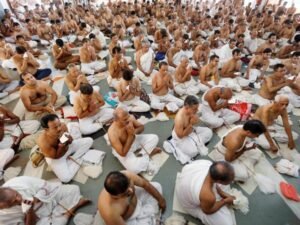
1. What Is Samvatsari Festival? (All About Samvatsari)
Samvatsari, also known as Samvatsari Parva, is an important annual religious observance in Jainism. It is the most significant day of the Paryushan festival for the Shvetambara Jain tradition.
The word Samvatsari is associated with the idea of an annual occasion. It provides an opportunity for individuals to review their behaviour and seek forgiveness for mistakes committed throughout the year.
The central principle of this festival is forgiveness for every living being.
Jainism teaches that every living being deserves respect and compassion. Its fundamental principles include Ahimsa (non-violence), Satya (truthfulness), Asteya (non-stealing), Brahmacharya (self-restraint), and Aparigraha (non-possessiveness).
Samvatsari brings these principles into everyday human relationships.
On this occasion, devotees commonly:
Perform Pratikraman, a practice of reflection and repentance.
Seek forgiveness for intentional and unintentional mistakes.
Offer prayers and participate in religious activities.
Practise self-discipline and compassion.
Avoid unnecessary arguments and negative behaviour.
Exchange the traditional greeting, “Micchami Dukkadam.”
The festival teaches that spiritual growth begins when a person accepts responsibility for their actions.
2. History of Samvatsari Festival
The history of Samvatsari is closely connected with the ancient teachings and traditions of Jainism.
Jainism is one of India’s oldest religious and philosophical traditions. Its teachings emphasise non-violence, truth, self-control, compassion, and liberation from the cycle of birth and death.
Samvatsari developed as an important part of the annual Paryushan observance, during which Jain followers dedicate time to spiritual discipline, religious study, fasting, meditation, and self-examination.
Paryushan is especially important because it encourages individuals to step away from ordinary distractions and concentrate on improving their inner lives.
During this period, monks, nuns, and householders engage in spiritual practices. The final day is particularly associated with forgiveness and reconciliation.
The tradition of asking forgiveness is deeply rooted in Jain philosophy. According to Jain teachings, anger, pride, deceit, and greed contribute to harmful karma. By recognising mistakes, expressing genuine regret, and changing one’s behaviour, a person takes an important step towards spiritual purification.
Samvatsari is therefore more than a religious celebration. It is an annual reminder that people should not allow ego, resentment, and hatred to control their lives.
Why Is Forgiveness So Important in Jainism?
Jainism considers Ahimsa one of its highest principles. Non-violence is not limited to physical actions. It also includes avoiding harm through speech and thoughts.
For example:
Insulting someone can cause emotional pain.
Spreading false information can damage someone’s reputation.
Jealousy can create unhealthy relationships.
Anger can lead to hurtful words and actions.
Ignoring another person’s suffering can reflect a lack of compassion.
Samvatsari encourages followers to recognise these behaviours and work towards eliminating them.
3. 10 Powerful Reasons Why Samvatsari Festival Inspires Forgiveness and Inner Peace
Samvatsari is not simply a day of religious activities. It carries ten powerful life lessons that can help individuals build stronger relationships, develop emotional maturity, and create a peaceful society.
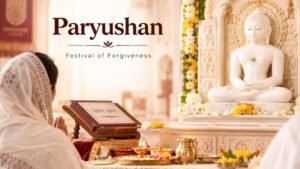
1. It Teaches the True Meaning of Forgiveness
Forgiveness is the heart of Samvatsari. People are encouraged to forgive those who have hurt them and seek forgiveness from those they may have harmed.
In everyday life, people sometimes hold grudges for years because of small misunderstandings. These feelings can damage friendships, family relationships, and mental peace.
Samvatsari teaches that forgiving someone does not mean that their mistakes were acceptable. It means choosing not to let anger control your heart.
2. It Encourages Self-Reflection
One of the most valuable traditions of Samvatsari is Pratikraman.
Pratikraman involves looking back at one’s thoughts, words, and actions and recognising mistakes.
For example, a person might ask themselves:
Did I hurt someone with my words?
Did I behave selfishly?
Did I spread negativity?
Did I ignore someone who needed help?
Did I knowingly or unknowingly harm another living being?
This honest examination helps people understand their behaviour and make better decisions in the future.
3. It Promotes Non-Violence (Ahimsa)
Ahimsa is one of the most important principles of Jainism.
It teaches people to avoid harming living beings through physical actions, speech, and thoughts.
Samvatsari reminds us that kindness should not be limited to human beings. Respect for animals, insects, plants, and other forms of life is also important in Jain philosophy.
This principle is especially relevant today when environmental destruction, cruelty towards animals, and violence remain serious global concerns.
4. It Helps Remove Ego and Pride
Sometimes relationships break not because of major disagreements but because neither person wants to apologise.
Ego prevents people from accepting their mistakes.
Samvatsari teaches that saying sorry is not a sign of weakness. It requires courage, honesty, and humility.
When people put aside their pride, they create opportunities for reconciliation and understanding.
5. It Strengthens Family and Friendships
Family relationships are important, but misunderstandings can sometimes create emotional distance.
Samvatsari provides an opportunity to reconnect with loved ones.
A simple apology, a sincere conversation, or a message saying “Micchami Dukkadam” can help rebuild trust.
It reminds us that relationships are more valuable than winning arguments.
6. It Encourages Emotional Peace
Anger, jealousy, hatred, and resentment can create unnecessary emotional suffering.
Forgiveness helps people move towards emotional freedom.
Samvatsari encourages individuals to release negative feelings and develop compassion.
This does not mean that every difficult situation disappears immediately. Instead, the festival teaches a healthier way to respond to emotional challenges.
7. It Develops Discipline and Self-Control
During Paryushan, many Jain followers observe fasting, meditation, prayer, religious study, and other forms of self-discipline.
These practices encourage people to control unnecessary desires and become more conscious of their behaviour.
Self-control is valuable in everyday life, whether it involves managing anger, avoiding harmful habits, controlling spending, or speaking thoughtfully.
8. It Promotes Universal Friendship
One of the most beautiful messages associated with Jain forgiveness traditions is:
“I forgive all living beings. May all living beings forgive me. My friendship is with all living beings, and my enmity is with none.”
This message encourages people to move beyond personal differences, social divisions, and misunderstandings.
It teaches that humanity becomes stronger when people treat one another with dignity and compassion.
9. It Inspires Positive Behaviour in Society
A peaceful society cannot be created through laws alone. It also requires responsible citizens who respect others.
Samvatsari encourages people to practise honesty, patience, tolerance, kindness, and forgiveness.
These values can improve relationships in schools, offices, communities, and public institutions.
10. It Reminds Us That Personal Growth Never Ends
Nobody is perfect. Every person makes mistakes at different stages of life.
The important thing is to recognise those mistakes and try to improve.
Samvatsari provides an annual opportunity to review one’s behaviour and make a fresh commitment to positive living.
Its message is simple: become a better person, not by judging others, but by improving yourself.
4. Significance of Samvatsari Festival
The significance of Samvatsari lies in its emphasis on spiritual purification and forgiveness.
Jain philosophy teaches that the soul can move towards liberation by overcoming passions and harmful actions that contribute to karmic bondage.
The festival highlights several important values.
| Principle | Meaning | Life lesson |
|---|---|---|
| Kshama | Forgiveness | Let go of resentment |
| Ahimsa | Non-violence | Avoid harming living beings |
| Satya | Truthfulness | Speak honestly |
| Vinaya | Humility | Respect others |
| Aparigraha | Non-possessiveness | Avoid excessive attachment |
| Maitri | Friendship | Develop goodwill towards all |
The significance of Samvatsari extends beyond religious boundaries because forgiveness, compassion, and self-improvement are universal human values.
jainfoundation.in+2
5. How Is Samvatsari Festival Celebrated? (Observance and Traditions)
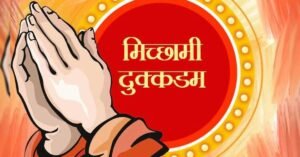
Samvatsari is observed with devotion, simplicity, and spiritual discipline. Practices may differ among Jain communities and according to individual capacity.
Here are some important traditions.
A. Samvatsari Pratikraman
Pratikraman is one of the central religious practices of the day.
Devotees reflect on mistakes committed through thoughts, words, and actions. They seek forgiveness and resolve to avoid repeating harmful behaviour.
B. Fasting and Self-Discipline
Many devotees observe fasting during Paryushan and Samvatsari. Some undertake complete fasting, while others follow dietary restrictions according to their health, religious commitments, and personal capacity.
Fasting is understood as a spiritual discipline rather than merely a physical exercise.
C. Religious Prayers and Scripture Reading
Devotees participate in prayers, listen to religious teachings, and study Jain scriptures.
These activities help followers understand the teachings of Jain Tirthankaras and apply them to everyday life.
D. Asking for Forgiveness
After religious observances, people approach relatives, friends, acquaintances, and others to seek forgiveness.
The traditional expression is:
“Micchami Dukkadam.”
It communicates regret for any hurt caused knowingly or unknowingly through thoughts, words, or actions.
E. Forgiving Others
Asking forgiveness is only one part of the tradition.
People are also encouraged to forgive those who have hurt them.
True forgiveness requires letting go of hatred and avoiding revenge.
F. Compassion Towards All Living Beings
Samvatsari also reminds people to respect life and practise non-violence.
Acts of kindness, charity, responsible living, and compassion reflect the wider spirit of Jain teachings.
6. What Does “Micchami Dukkadam” Mean?
“Micchami Dukkadam” is a traditional Jain expression associated with seeking forgiveness.
It is commonly understood as:
“If I have caused you pain or committed any wrong against you knowingly or unknowingly through my thoughts, words, or actions, may those wrongs become fruitless. Please forgive me.”
It is not simply a greeting. It represents a sincere willingness to accept responsibility and improve one’s conduct.
People exchange this expression with family members, friends, colleagues, and members of their wider community.
Its message is particularly meaningful because it encourages people to seek forgiveness without restricting it only to those they like.
7. Important Facts About Samvatsari Festival
Here are some interesting facts about Samvatsari:
Jain festival: Samvatsari is an important annual religious observance in Jainism.
Day of forgiveness: It is widely known as the Jain Day of Forgiveness.
Connection with Paryushan: It marks the concluding day of the eight-day Paryushan observance in the Shvetambara tradition.
Pratikraman: Annual self-reflection and repentance are central practices.
Micchami Dukkadam: This expression is traditionally used to seek forgiveness.
Non-violence: The festival reinforces the Jain principle of Ahimsa.
Spiritual discipline: Prayer, fasting, meditation, and religious study are common practices.
Universal message: Forgiveness is extended in spirit to all living beings.
Annual observance: It takes place once every year according to the Jain calendar.
Related Digambara observance: Digambara Jains have the related Kshamavani observance associated with the conclusion of Das Lakshana Parva.
An important distinction is that Samvatsari is specifically the concluding day of Shvetambara Paryushan. Digambara Jains observe Das Lakshana Parva and Kshamavani according to their own tradition and calendar.
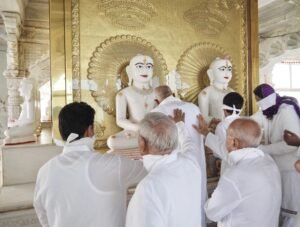
8. Samvatsari Festival Timeline
Samvatsari does not have a fixed Gregorian calendar date. Its date changes every year according to the Jain lunar calendar and the tradition being followed.
The following timeline explains the general progression of the Shvetambara Paryushan observance.
| Period | Religious activity |
|---|---|
| Before Paryushan | Preparation and spiritual reflection |
| Days 1–3 | Prayer, religious study, fasting and self-discipline |
| Days 4–6 | Meditation, scripture reading and spiritual activities |
| Day 7 | Continued reflection and preparation for forgiveness |
| Day 8 | Samvatsari Pratikraman and seeking forgiveness |
| After Samvatsari | Continuing positive conduct and spiritual discipline |
Note: Specific rituals, fasting practices, and dates can vary between Jain sects and communities. The timeline is a general guide, not a universal ritual schedule.
9. Why Is Samvatsari Important in Our Daily Life?
The lessons of Samvatsari are not limited to one day. They can guide our behaviour throughout the year.
In Family Life
Forgiveness can prevent small disagreements from becoming permanent family conflicts. Respecting parents, listening to children, and understanding partners are ways to practise its message.
In Student Life
Students can learn to accept mistakes, respect teachers, avoid bullying, and treat classmates fairly.
Instead of blaming others for every failure, they can reflect on their own decisions and work towards improvement.
In Professional Life
Workplaces become healthier when employees communicate respectfully, acknowledge mistakes, and cooperate with colleagues.
Forgiveness can help resolve disagreements without encouraging irresponsible behaviour.
In Social Life
People from different communities, backgrounds, and generations can live peacefully when they respect one another.
Samvatsari reminds us that differences should not become reasons for hatred.
In Digital Life
Social media has made communication easier, but it has also increased online arguments, trolling, and personal attacks.
We can apply Samvatsari’s teachings by:
Avoiding abusive comments.
Not spreading unverified information.
Apologising when we post something hurtful.
Respecting different opinions.
Refusing to participate in online harassment.
In Environmental Life
The principle of Ahimsa inspires respect for animals, plants, and the natural environment.
Reducing waste, avoiding unnecessary harm to animals, and protecting biodiversity are meaningful ways to express compassion.
10. Impact of Samvatsari Festival on Society
Samvatsari has an important social message because it encourages individuals to build a community based on kindness rather than hostility.
Its positive influence can be understood in several ways:
Promotes social harmony: Forgiveness helps people move beyond personal disputes and misunderstandings.
Strengthens relationships: The tradition of asking forgiveness encourages communication and reconciliation.
Encourages peaceful behaviour: Non-violence and compassion provide an ethical foundation for peaceful communities.
Develops responsible citizens: Self-reflection encourages people to accept responsibility for their actions.
Supports mental and emotional well-being: Letting go of resentment may reduce emotional burdens, although forgiveness does not replace professional help when needed.
Encourages respect for nature: Jain teachings promote compassion towards all forms of life.
Ultimately, the festival reminds society that peace begins with individual behaviour.
11. Samvatsari Festival Wishes, Messages and Quotes
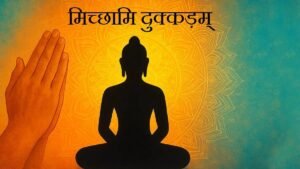
Samvatsari is an occasion to share love, forgiveness, and positive thoughts with everyone. Here are some meaningful wishes suitable for WhatsApp, Facebook, Instagram, and personal messages.
10 Best Samvatsari Wishes
1. Happy Samvatsari! May your life be filled with forgiveness, happiness, compassion, and inner peace.
2. On this sacred occasion, I sincerely ask for your forgiveness for any hurt caused knowingly or unknowingly. Micchami Dukkadam!
3. May Samvatsari inspire us to remove hatred, overcome ego, and spread love among all living beings.
4. Let us forgive others, accept our mistakes, and begin a new journey towards peace and happiness.
5. May the beautiful teachings of Jainism guide us towards truth, non-violence, and spiritual growth.
6. On Samvatsari, let us promise to replace anger with kindness and pride with humility.
7. Wishing you and your family a peaceful and spiritually fulfilling Samvatsari. Micchami Dukkadam!
8. Forgiveness makes the heart lighter and life more beautiful. May we all learn to forgive and grow.
9. May every misunderstanding disappear and every relationship become stronger through love and forgiveness.
10. Let us seek forgiveness from all living beings and develop friendship with everyone. Micchami Dukkadam!
5 Inspirational Samvatsari Quotes
“Forgiveness is the beginning of inner peace.”
“A kind heart is stronger than an angry mind.”
“True greatness lies in accepting mistakes and forgiving others.”
“Peace begins when ego ends.”
“A better world begins with a better version of ourselves.”
Traditional Forgiveness Message
Micchami Dukkadam!
Khāmemi Savve Jīvā, Savve Jīvā Khamantu Me.
Mitti Me Savva Bhūesu, Veraṃ Majjha Na Keṇai.
Meaning: I forgive all living beings, and may all living beings forgive me. My friendship is with all living beings, and my enmity is with none.
12. Samvatsari Festival Review
Samvatsari is a meaningful spiritual observance that offers lessons extending far beyond religious celebrations.
| Review category | Assessment |
|---|---|
| Spiritual significance | Very high |
| Cultural importance | Very high |
| Focus on forgiveness | Excellent |
| Message of non-violence | Excellent |
| Family relationships | Highly meaningful |
| Social harmony | Highly meaningful |
| Relevance to modern life | Very high |
Our Review:
Samvatsari stands out because it encourages people to practise what they often find difficult: accepting mistakes, apologising sincerely, and forgiving others.
Its most valuable lesson is that forgiveness should not be limited to words or a particular festival day. It should become part of our everyday behaviour.
For Minorstudy readers, this festival offers an opportunity to understand how ancient Indian spiritual traditions can contribute to modern human values, emotional maturity, and peaceful relationships.
Editorial review by Minorstudy | Educational and informational perspective.
13. Frequently Asked Questions (FAQs) About Samvatsari Festival
Q1. What is Samvatsari Festival?
Samvatsari is an important Jain religious observance associated with forgiveness, repentance, self-reflection, and spiritual purification. It is the concluding day of Paryushan in the Shvetambara tradition.
Q2. Why is Samvatsari celebrated?
It is celebrated to encourage people to recognise their mistakes, seek forgiveness, forgive others, and develop compassion towards all living beings.
Q3. What is the meaning of Micchami Dukkadam?
Micchami Dukkadam is a traditional Jain expression used to seek forgiveness for mistakes committed knowingly or unknowingly through thoughts, words, or actions.
Q4. When is Samvatsari Festival celebrated?
It is celebrated annually according to the Jain calendar, usually during August or September. Its exact Gregorian date changes every year.
Q5. Is Samvatsari the last day of Paryushan?
Yes. Samvatsari is the final day of the eight-day Paryushan observance in the Shvetambara Jain tradition.
Q6. What is Pratikraman?
Pratikraman is a Jain spiritual practice involving reflection on one’s actions, repentance for mistakes, and a commitment to better behaviour.
Q7. Do people fast on Samvatsari?
Many Jain devotees observe fasting, but the type and duration of fasting vary according to individual capacity, health, and religious tradition.
Q8. What is the main message of Samvatsari?
Its main message is forgiveness, non-violence, compassion, humility, and friendship towards all living beings.
Q9. Is Samvatsari celebrated by Digambara Jains?
Digambara Jains observe the related Das Lakshana Parva and Kshamavani traditions. Their observance and calendar differ from Shvetambara Samvatsari.
Q10. How can students celebrate Samvatsari?
Students can celebrate by apologising for their mistakes, respecting teachers and classmates, avoiding bullying, helping others, and practising kindness.
Q11. What is the difference between Paryushan and Samvatsari?
Paryushan is a multi-day Jain spiritual festival in the Shvetambara tradition, while Samvatsari is its concluding day, particularly associated with annual forgiveness.
Q12. What is the universal message of Samvatsari?
The universal message is to forgive others, seek forgiveness, avoid harming living beings, and develop friendship and goodwill towards everyone.
14. Important Points to Remember About Samvatsari
Samvatsari is an important Jain festival of forgiveness.
It is associated with the conclusion of Shvetambara Paryushan.
Pratikraman is a central religious practice.
Micchami Dukkadam is the traditional expression of forgiveness.
Ahimsa and compassion are essential teachings.
Fasting, meditation, prayers, and scripture reading are common observances.
The festival encourages people to overcome anger, pride, and hatred.
Digambara Jains observe related forgiveness traditions through Kshamavani.
Forgiveness is a universal human value.
Its teachings can be practised throughout the year.
15. Conclusion: Samvatsari Teaches Us the Power of Forgiveness
Samvatsari Festival is a beautiful reminder that the real purpose of life is not simply to achieve success, collect wealth, or compete with others. It is also about becoming a better human being.
In our daily lives, we sometimes hurt people through our words, decisions, behaviour, and even our silence. We also experience pain because of the actions of others. These experiences can create anger, disappointment, and misunderstandings.
Samvatsari provides an opportunity to look beyond these negative emotions.
Its message of “Micchami Dukkadam” reminds us that apologising requires courage, forgiving requires strength, and changing our behaviour requires determination.
The teachings of Jainism encourage us to respect every living being, practise non-violence, control our desires, and develop compassion.
We do not have to wait until the next Samvatsari to apologise to someone or forgive another person. We can practise these values every morning, every evening, and throughout our lives.
Let us make forgiveness our strength, compassion our identity, and peace our way of living.
Micchami Dukkadam!
References and Further Reading
For factual background and further understanding of Jain traditions:
Minorstudy – Learn, Grow and Inspire
Minorstudy believes that education is not only about acquiring knowledge but also about developing values, humanity, and responsibility towards society.
Spread knowledge. Spread kindness. Spread happiness.









Howdy! Do you use Twitter? I’d like to follow you if that would be okay. I’m absolutely enjoying your blog and look forward to new posts.
Your article helped me a lot, is there any more related content? Thanks! https://accounts.binance.info/si-LK/register?ref=LBF8F65G
I don’t think the title of your article matches the content lol. Just kidding, mainly because I had some doubts after reading the article.
Your article helped me a lot, is there any more related content? Thanks! https://www.binance.info/uk-UA/register?ref=XZNNWTW7
I don’t think the title of your article matches the content lol. Just kidding, mainly because I had some doubts after reading the article. https://www.binance.info/register?ref=QCGZMHR6
Thank you for your sharing. I am worried that I lack creative ideas. It is your article that makes me full of hope. Thank you. But, I have a question, can you help me?
Your article helped me a lot, is there any more related content? Thanks!
Can you be more specific about the content of your article? After reading it, I still have some doubts. Hope you can help me.
Can you be more specific about the content of your article? After reading it, I still have some doubts. Hope you can help me.
Can you be more specific about the content of your article? After reading it, I still have some doubts. Hope you can help me. https://accounts.binance.com/es-MX/register?ref=GJY4VW8W
Your point of view caught my eye and was very interesting. Thanks. I have a question for you.
Your article helped me a lot, is there any more related content? Thanks! https://accounts.binance.bh/register/person?ref=IHJUI7TF
I don’t think the title of your article matches the content lol. Just kidding, mainly because I had some doubts after reading the article.