

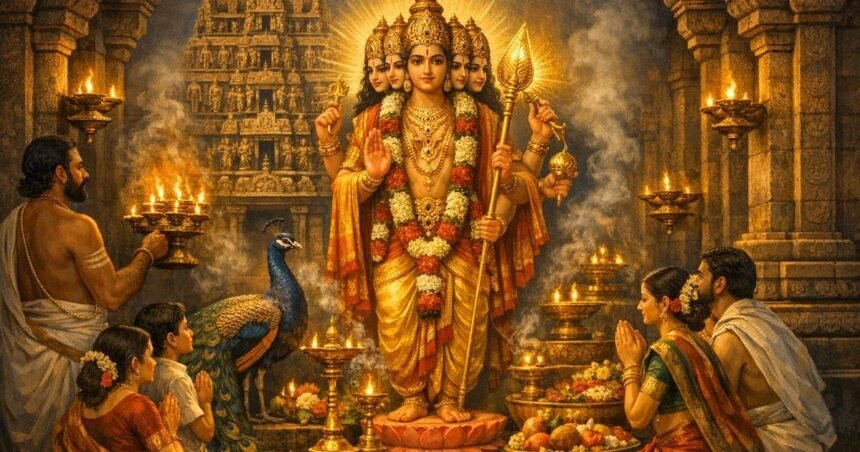
Panchami & Skanda Shashti: Inspiring Lessons of Faith, Purity, and Spiritual Strength
Rishi Panchami and Skanda Shashti are two spiritually significant observances in Hindu tradition that inspire people to follow the path of devotion, purity, discipline, gratitude, and righteousness. Although these festivals have different religious backgrounds and methods of observance, both remind us of the importance of spiritual growth and a meaningful life.
Rishi Panchami is traditionally associated with the remembrance and reverence of the Saptarishis (seven great sages). It teaches the values of purification, gratitude, self-discipline, and respect for ancient wisdom. Skanda Shashti, on the other hand, is dedicated to Lord Skanda, also known as Lord Kartikeya, Murugan, Subramanya, and Shanmukha. It celebrates his divine strength and victory over evil, particularly his triumph over the demon Surapadman.
These sacred days are not simply occasions for rituals and prayers. They also offer valuable lessons for modern society. In a world where people face stress, uncertainty, competition, and personal struggles, their messages of faith, courage, discipline, and inner cleanliness remain meaningful.
In this article, we will explore eight powerful insights about Rishi Panchami and Skanda Shashti, including their history, religious significance, facts, timeline, observance, wishes, frequently asked questions, and influence on everyday life and society.
1. All About Rishi Panchami and Skanda Shashti
Rishi Panchami and Skanda Shashti are important observances in the Hindu religious calendar. They are connected with different traditions, deities, and spiritual practices.
What Is Rishi Panchami?
Rishi Panchami is observed on the fifth lunar day (Panchami Tithi) of the Shukla Paksha in the Hindu month of Bhadrapada.
The day is dedicated to the Saptarishis, the seven revered sages of Hindu tradition. Their names are commonly given as Kashyapa, Atri, Bharadvaja, Vishvamitra, Gautama, Jamadagni, and Vashishtha, although lists can differ across traditions and scriptures.
Rishi Panchami is particularly associated with the observance of vrat (fasting), worship, purification, and remembrance of the sages.
In traditional Hindu belief, the observance is connected with seeking forgiveness for ritual impurities and mistakes, including those associated with the menstrual period. Interpretations and practices vary between communities. It is important to approach these traditions with cultural sensitivity and without treating menstruation as a medical impurity or a reason to discriminate against women.
What Is Skanda Shashti?
Skanda Shashti is a sacred observance dedicated to Lord Skanda, the son of Lord Shiva and Goddess Parvati.
He is worshipped under several names:
Lord Kartikeya
Lord Murugan
Lord Subramanya
Lord Shanmukha
Lord Guha
Skanda Shashti is observed on the sixth lunar day (Shashti Tithi) of the waxing or waning lunar fortnight, depending on the particular observance and regional tradition. The major monthly Shukla Shashti observance is especially important to devotees of Lord Murugan.
The best-known celebration is the six-day Kanda Shashti festival in Tamil traditions, culminating in Soorasamharam, the symbolic celebration of Lord Murugan’s victory over Surapadman.
Both observances encourage people to remember divine wisdom, overcome negative qualities, and live with greater responsibility.
2. History and Mythological Background
History and Origin of Rishi Panchami
Rishi Panchami has its roots in ancient Hindu religious traditions that emphasize the importance of sages, spiritual knowledge, and purification.
The Saptarishis occupy a respected position in Hindu cosmology and sacred literature. They are regarded as great teachers who preserved and transmitted spiritual knowledge across generations.
Hindu traditions also connect the seven sages with the concept of the Saptarishi Mandala, a group of stars associated with the constellation Ursa Major.
The observance of Rishi Panchami is traditionally connected with vrat kathas, or religious narratives, that explain the importance of repentance, purification, and sincere devotion.
One commonly circulated traditional story describes a woman who suffers because of ritual transgressions and receives spiritual guidance through the observance of Rishi Panchami. Different regional versions tell the story differently.
The broader message is that people should reflect on their actions, seek forgiveness, and develop a more disciplined spiritual life.
History and Origin of Skanda Shashti
The history of Skanda Shashti is closely connected with the birth and divine mission of Lord Kartikeya.
According to Hindu mythology, powerful demonic forces threatened the gods and disturbed cosmic balance. Surapadman became a major adversary of the devas.
Lord Shiva and Goddess Parvati’s divine son, Lord Skanda, emerged as the warrior who would restore balance and protect righteousness.
According to the Skanda Purana and Tamil devotional traditions, Lord Murugan fought Surapadman and ultimately defeated him.
His victory is celebrated as Soorasamharam. In many traditions, the Vel (divine spear) given by Goddess Parvati symbolizes divine knowledge and the power to destroy ignorance.
The festival is particularly prominent in Tamil Nadu and among Tamil communities in India and around the world.
The historical and mythological backgrounds of these observances demonstrate how Hindu traditions use stories, symbols, and rituals to communicate spiritual values.
3. Eight Powerful Insights on Rishi Panchami and Skanda Shashti
These eight insights explain why both observances continue to inspire millions of devotees.
1. Respect for Ancient Wisdom and Knowledge
Rishi Panchami reminds us that knowledge is one of the greatest treasures of humanity.
The Saptarishis are traditionally respected as spiritual teachers who contributed to the preservation and transmission of sacred knowledge. Their lives symbolize learning, meditation, wisdom, and dedication.
In modern society, this message is especially important for students and young people. Education should not be limited to earning degrees or finding employment. It should also develop good character, responsibility, compassion, and the ability to distinguish right from wrong.
Life lesson: Respect teachers, value knowledge, and never stop learning.
2. The Importance of Inner and Outer Purity
Purity is one of the central themes associated with Rishi Panchami.
Traditional rituals include bathing, cleaning the surroundings, offering prayers, and following dietary practices according to family customs.
However, purity should also be understood in a broader ethical and spiritual sense. Keeping our thoughts positive, speaking honestly, avoiding harmful behaviour, and treating others with dignity are equally important.
We should also remember that menstruation is a normal biological process, not a medical impurity. Religious customs should never become an excuse for discrimination or humiliation.
Life lesson: True purity begins with kindness, honesty, and respect for others.
3. Courage and Victory Over Negative Forces
Skanda Shashti represents the victory of Lord Murugan over Surapadman.
This story has a powerful symbolic meaning. In everyday life, people face different forms of negativity, including fear, anger, jealousy, dishonesty, and selfishness.
Lord Murugan’s victory encourages devotees to confront these challenges with courage and determination.
Just as the divine warrior protects righteousness, individuals should stand against injustice and make responsible choices.
Life lesson: Never allow fear or negativity to control your decisions.
4. Faith and Devotion Bring Mental Strength
Both observances encourage people to develop a stronger relationship with spirituality.
During Rishi Panchami, devotees remember the sages through prayers and worship. During Skanda Shashti, devotees offer prayers to Lord Murugan and seek his blessings.
Faith does not mean that life will always be free from difficulties. Rather, it can give people the emotional strength to face difficult situations with patience and hope.
For example, a student preparing for an examination may pray for confidence while continuing to study sincerely. Similarly, a person experiencing professional challenges may find encouragement through meditation and devotion.
Life lesson: Combine faith with sincere effort, patience, and responsibility.
5. Discipline and Self-Control Are Essential
Fasting and other religious observances are important elements of these traditions.
For devotees, fasting may represent dedication, self-control, and the ability to manage personal desires.
The deeper lesson is that discipline should continue beyond religious occasions.
A student can practise discipline by following a study schedule. A professional can develop discipline by managing time effectively. A family can practise it by maintaining healthy habits and respectful communication.
Fasting should always be adapted to individual health needs. People who are ill, pregnant, elderly, or taking medication should avoid unsafe fasting practices.
Life lesson: Self-control helps people achieve meaningful goals.
6. Gratitude Towards Teachers, Parents, and Society
Rishi Panchami highlights gratitude towards spiritual teachers and the sages who preserved knowledge.
This principle can be extended to everyday relationships.
Parents make sacrifices for their children. Teachers invest time in developing students. Farmers provide food, healthcare workers protect lives, and countless workers support society.
Recognising these contributions makes people more humble and responsible.
Life lesson: Never forget the people whose efforts have helped you become who you are.
7. The Power of Unity and Cultural Traditions
Rishi Panchami and Skanda Shashti bring families and communities together through prayer, storytelling, temple visits, and traditional celebrations.
Skanda Shashti is particularly significant in Tamil culture, where devotional songs, temple processions, and Soorasamharam celebrations attract large numbers of devotees.
These occasions also help younger generations understand their cultural heritage.
People living away from their hometowns can maintain connections with their roots through festivals, family traditions, and community gatherings.
Life lesson: Respect cultural diversity and preserve meaningful traditions.
8. Goodness and Righteousness Should Guide Everyday Life
The most important message of both observances is that spiritual life should influence human behaviour.
Rishi Panchami encourages gratitude, reflection, and respect for wisdom. Skanda Shashti teaches courage, righteousness, and victory over negative qualities.
Their messages can be practised through small actions:
Help someone who needs support.
Speak truthfully, even when it is difficult.
Respect women, elders, children, and people from different backgrounds.
Avoid unnecessary arguments and hatred.
Share knowledge with others.
Stand against injustice.
Take responsibility for your mistakes.
Life lesson: A truly spiritual person demonstrates goodness through actions, not just words.
4. Significance of Rishi Panchami and Skanda Shashti
Both observances have religious, cultural, moral, and social significance.
| Aspect | Rishi Panchami | Skanda Shashti |
|---|---|---|
| Main association | Saptarishis | Lord Skanda/Murugan |
| Lunar day | Bhadrapada Shukla Panchami | Shashti Tithi |
| Main message | Wisdom and purification | Courage and righteousness |
| Common practices | Saptarishi Puja and vrat | Murugan Puja and fasting |
| Spiritual values | Gratitude and self-reflection | Faith and self-discipline |
| Cultural importance | Reverence for sages | Devotion to Lord Murugan |
Religious Significance
Rishi Panchami honours the spiritual contribution of the sages and encourages devotees to seek forgiveness and follow a disciplined life.
Skanda Shashti celebrates the divine power of Lord Murugan and his victory over evil. Devotees believe that sincere prayers bring spiritual strength, courage, and blessings.
Moral Significance
Both observances teach that a person’s character matters.
Knowledge without good character can become harmful, while strength without responsibility can lead to injustice. These festivals encourage a balance between wisdom and courage.
Cultural Significance
Religious ceremonies, devotional music, traditional food, temple gatherings, and family participation help preserve India’s cultural diversity.
Social Significance
The festivals can inspire people to support education, encourage positive relationships, promote compassion, and contribute to community welfare.
5. How Are Rishi Panchami and Skanda Shashti Observed?
Rishi Panchami Observance
The traditional observance of Rishi Panchami may include:
Early morning bath: Devotees begin the day with a ritual bath and wear clean clothes.
Preparation of the puja area: A clean place is prepared for worship.
Saptarishi worship: Images, representations, or symbolic arrangements of the seven sages are worshipped.
Offerings: Flowers, fruits, water, sandalwood paste, and other traditional offerings are presented.
Vrat Katha: Devotees listen to or read the traditional Rishi Panchami story.
Fasting: Some devotees observe a fast or follow a simple traditional diet.
Charity: Food, clothes, educational materials, or other useful items may be donated.
The exact rituals differ between regions and families.
Skanda Shashti Observance
Devotees generally observe Skanda Shashti through:
Morning prayers: The day begins with bathing and preparing for worship.
Lord Murugan Puja: Devotees worship Lord Murugan with flowers, lamps, fruits, and traditional offerings.
Fasting: Some devotees observe a full-day fast, while others follow partial fasting.
Mantra chanting: Devotees recite prayers and devotional hymns dedicated to Lord Murugan.
Temple visits: Many visit Murugan temples to seek blessings.
Kanda Shashti Kavasam: Devotees commonly recite this famous Tamil devotional hymn.
Soorasamharam: During the six-day Kanda Shashti festival, the symbolic enactment of Lord Murugan’s victory over Surapadman is a major event.
The most important element is sincere devotion rather than the expense or scale of the celebration.
6. Timeline of Rishi Panchami and Skanda Shashti
Understanding the lunar calendar helps devotees understand when these observances take place.
Rishi Panchami timeline
Bhadrapada Shukla Panchami
The fifth lunar day of the bright fortnight, traditionally dedicated to the Saptarishis.
Morning purification
Devotees take a bath and prepare for worship.
Saptarishi Puja
Prayers and offerings are made to the seven sages.
Vrat and Katha
Devotees follow their family traditions, listen to the vrat story, and reflect on spiritual values.
Skanda Shashti timeline
Shukla Shashti
The sixth lunar day associated with Lord Murugan.
Devotional observances
Prayers, fasting, mantra chanting, and temple visits.
Six-day Kanda Shashti
In the major annual observance, devotees participate in six days of worship and spiritual discipline.
Soorasamharam
The symbolic celebration of Lord Murugan’s victory over Surapadman.
Thirukalyanam
In many Tamil temple traditions, the divine wedding of Lord Murugan is celebrated after Soorasamharam.
Important calendar note: These festivals do not necessarily fall on the same date. Rishi Panchami is fixed to Bhadrapada Shukla Panchami, whereas Skanda Shashti is associated with Shashti Tithi. Skanda Shashti is observed monthly in many traditions, with the six-day Kanda Shashti festival being particularly prominent.
An old Indian calendar reference also records Rishi Panchami and Skanda Shashti among the observances associated with the Bhadrapada lunar fortnight.
7. Important Facts About Rishi Panchami and Skanda Shashti
Here are some interesting facts that help explain the importance of these observances.
Rishi Panchami honours seven sages: The Saptarishis are respected as great spiritual teachers in Hindu tradition.
Rishi Panchami falls in Bhadrapada: It is observed on the fifth day of the bright lunar fortnight.
Arundhati is also remembered: Some traditions include Arundhati, the wife of Sage Vashishtha, in the worship.
Rishi Panchami is observed in Nepal: It is an important traditional observance among many Nepali Hindu communities.
Skanda is another name for Kartikeya: He is also widely worshipped as Murugan in Tamil traditions.
The Vel is an important symbol: Lord Murugan’s divine spear represents spiritual power and the destruction of ignorance.
Soorasamharam celebrates victory over evil: It represents the triumph of righteousness over negative forces.
Kanda Shashti Kavasam is a famous hymn: It is widely recited by devotees seeking Lord Murugan’s blessings.
8. Impact on Daily Life: What Can We Learn?
Religious observances become more meaningful when their teachings influence our everyday decisions.
Here are some practical ways to apply their lessons.
For Students
Students can learn the importance of dedication, patience, and respect for teachers from Rishi Panchami.
Lord Murugan’s courage can inspire students to face examinations, academic competition, and career uncertainty without losing confidence.
For Working Professionals
Professional life involves deadlines, responsibilities, competition, and difficult decisions.
These observances encourage people to remain honest, disciplined, and courageous even when circumstances become challenging.
For Families
Families can use these occasions to spend time together, share traditional stories, teach children about cultural values, and develop stronger relationships.
For Women and Society
Rishi Panchami provides an opportunity to discuss traditional customs with sensitivity and respect.
Modern society should ensure that religious practices do not promote shame or discrimination around menstruation. Women’s dignity, health, education, and equality deserve respect every day.
For Mental and Spiritual Well-Being
Prayer, meditation, reflection, and community participation may provide emotional comfort and a sense of connection.
However, spiritual practices should complement—not replace—appropriate medical care or professional support when needed.
9. Importance of These Festivals in Society
India is a country of diverse languages, religions, traditions, and cultural identities. Festivals play an important role in maintaining these connections.
Rishi Panchami and Skanda Shashti contribute to society in several ways.
Preservation of traditional knowledge: Rishi Panchami encourages younger generations to learn about ancient sages, spiritual literature, and the value of education.
Promotion of positive behaviour: Both observances encourage people to practise honesty, self-control, courage, and compassion.
Community participation: Temple programmes and religious gatherings create opportunities for social interaction and collective celebrations.
Cultural tourism: Famous Murugan temples attract devotees and visitors, supporting local cultural activities and livelihoods.
Encouragement of charity: People can use these occasions to donate food, support education, help disadvantaged families, and serve their communities.
Respect for diversity: These festivals provide opportunities to appreciate different regional traditions within Hindu culture.
Ultimately, the value of a festival should not be measured only by the number of people attending a temple or the amount of money spent on celebrations. Its deeper value lies in the positive changes it inspires in human behaviour.
10. Rishi Panchami and Skanda Shashti Wishes and Greetings
These auspicious days are wonderful opportunities to share positive messages with friends, relatives, students, and loved ones.
Here are some wishes suitable for WhatsApp, Facebook, Instagram, and other social media platforms.
Rishi Panchami Wishes
May the blessings of the Saptarishis bring wisdom, peace, purity, and happiness into your life. Happy Rishi Panchami!
May this sacred occasion inspire you to follow the path of truth, knowledge, and righteousness.
Wishing you and your family a blessed Rishi Panchami filled with spiritual growth and positivity.
May the teachings of the great sages guide you towards a meaningful and successful life.
Skanda Shashti Wishes
May Lord Murugan bless you with courage, strength, wisdom, and success. Happy Skanda Shashti!
May the divine Vel destroy negativity and fill your life with positivity and peace.
May Lord Kartikeya protect your family and guide you towards righteousness.
On this auspicious occasion, may you overcome every difficulty with faith and determination.
Combined Festival Wishes
May the wisdom of the Saptarishis and the courage of Lord Murugan inspire us to live with purity, kindness, and devotion. Wishing everyone a spiritually blessed and peaceful celebration!
Copy combined wish
11. Review Section: Rishi Panchami and Skanda Shashti
Why Are These Observances Worth Understanding?
Rishi Panchami and Skanda Shashti offer two complementary perspectives on spiritual development.
Rishi Panchami focuses on the importance of knowledge, gratitude, purification, and respect for spiritual teachers. Skanda Shashti focuses on bravery, devotion, determination, and the victory of righteousness.
Their combination offers a meaningful message: a person needs both wisdom and courage to build a better life.
| Review factor | Rishi Panchami | Skanda Shashti |
|---|---|---|
| Spiritual message | Wisdom and purification | Courage and victory |
| Main focus | Saptarishi worship | Lord Murugan worship |
| Cultural relevance | Ancient sage traditions | Tamil devotional heritage |
| Life lesson | Gratitude and reflection | Determination and discipline |
| Community participation | Family and vrat traditions | Temple and devotional celebrations |
Overall review: Both observances have significant cultural and spiritual value. Their strongest contribution is the encouragement of positive human qualities. However, traditional customs should always be understood thoughtfully and practised with compassion, dignity, and respect for individual health and circumstances.
12. Frequently Asked Questions (FAQs)
Q1. What is Rishi Panchami?
Rishi Panchami is a Hindu religious observance dedicated to the Saptarishis, the seven great sages. It falls on Bhadrapada Shukla Panchami and is associated with worship, fasting, gratitude, and spiritual purification.
Q2. What is Skanda Shashti?
Skanda Shashti is a religious observance dedicated to Lord Skanda, also known as Lord Kartikeya or Murugan. It celebrates his divine power and victory over the demon Surapadman.
Q3. Are Rishi Panchami and Skanda Shashti the same festival?
No. They are different Hindu observances. Rishi Panchami honours the seven sages, while Skanda Shashti is dedicated to Lord Murugan.
Q4. Who are the Saptarishis?
The commonly recognised seven sages are Kashyapa, Atri, Bharadvaja, Vishvamitra, Gautama, Jamadagni, and Vashishtha. Different Hindu texts sometimes provide different lists.
Q5. Why is Rishi Panchami celebrated?
It is celebrated to honour the sages, express gratitude for spiritual knowledge, and follow traditional practices of prayer and purification.
Q6. Why is Skanda Shashti important?
It commemorates Lord Murugan’s victory over Surapadman and symbolises the victory of righteousness over evil.
Q7. What is Soorasamharam?
Soorasamharam is the traditional enactment or celebration of Lord Murugan’s victory over Surapadman during the six-day Kanda Shashti festival.
Q8. Can anyone observe Rishi Panchami?
Yes. Anyone can remember and honour the Saptarishis. Specific vrat and ritual practices vary according to family and regional traditions.
Q9. Can devotees observe Skanda Shashti without fasting?
Yes. Devotees can worship Lord Murugan, chant prayers, visit temples, or practise devotion without undertaking a fast. Health and personal circumstances should always come first.
Q10. What is the main lesson of both festivals?
Their shared message is to develop wisdom, courage, discipline, gratitude, faith, and positive behaviour.
Q11. Is Skanda Shashti celebrated every month?
Yes. Monthly Shukla Shashti observances are dedicated to Lord Murugan in many traditions. The annual six-day Kanda Shashti celebration is especially prominent.
Q12. What should we do on these auspicious days?
Devotees may pray, read religious stories, practise meditation, visit temples, spend time with family, and help people in need.
13. Important Points to Remember
Rishi Panchami is dedicated to the Saptarishis.
It falls on Bhadrapada Shukla Panchami.
Skanda Shashti is dedicated to Lord Kartikeya or Murugan.
Lord Murugan’s Vel represents divine power and wisdom.
Soorasamharam celebrates the victory of Lord Murugan over Surapadman.
Fasting and worship practices vary across regions.
Both observances promote spiritual discipline and positive values.
Religious traditions should always be practised with compassion and respect for human dignity.
Their teachings can inspire better relationships, education, and community service.
14. Conclusion: A Beautiful Message of Faith, Purity, and Strength
Rishi Panchami and Skanda Shashti are two meaningful observances that offer valuable lessons for individuals, families, and society.
Rishi Panchami reminds us of the importance of knowledge, gratitude, wisdom, and self-reflection. It encourages us to respect teachers, appreciate the contributions of spiritual traditions, and continuously improve our character.
Skanda Shashti reminds us that courage and determination are essential when facing difficulties. The story of Lord Murugan’s victory over Surapadman inspires people to overcome fear, negativity, dishonesty, and injustice.
In today’s fast-moving world, these messages remain highly relevant. Students need wisdom and discipline. Professionals need courage and honesty. Families need love and understanding. Society needs compassion, equality, and responsibility.
The real meaning of celebrating an auspicious day is not limited to performing rituals. It is about bringing positive changes into our lives.
Let us remember the wisdom of the Saptarishis and the courage of Lord Murugan. Let us make a commitment to become better human beings, help others, respect every individual, and contribute to a peaceful society.
May the blessings of the Saptarishis and Lord Murugan bring wisdom, strength, prosperity, happiness, and spiritual peace to everyone.
Happy Rishi Panchami and Skanda Shashti!
15. References and Further Reading
For readers who want to explore the traditions further:
The Saptarishi: The Seven Sages of India – Background on the seven sages and their traditional significance.
Rishi Panchami: Remembering the Seven Sages – Traditional observance and calendar information.
Rishi Panchami Vratam – Regional customs and worship practices.
The Hindu Religious Year – Historical and religious-calendar background.
Editorial note: Rituals, stories, names, and calendar calculations may differ between regional and religious traditions. Readers should consult their local Panchang or temple for observance dates and specific rituals.
Recommended internal linking for readers:
Ganesh Chaturthi: History, Significance and Celebrations
Hartalika Teej: Traditions and Importance
Hindu Festivals in India: A Complete Guide
Lord Shiva: History and Spiritual Significance
Lord Kartikeya: Birth, Legends and Teachings
Indian Spiritual Traditions and Ancient Sages
- 2. History and Mythological Background
- 3. Eight Powerful Insights on Rishi Panchami and Skanda Shashti
- 1. Respect for Ancient Wisdom and Knowledge
- 2. The Importance of Inner and Outer Purity
- 3. Courage and Victory Over Negative Forces
- 4. Faith and Devotion Bring Mental Strength
- 5. Discipline and Self-Control Are Essential
- 6. Gratitude Towards Teachers, Parents, and Society
- 7. The Power of Unity and Cultural Traditions
- 8. Goodness and Righteousness Should Guide Everyday Life
- 4. Significance of Rishi Panchami and Skanda Shashti
- 5. How Are Rishi Panchami and Skanda Shashti Observed?
- 6. Timeline of Rishi Panchami and Skanda Shashti
- 7. Important Facts About Rishi Panchami and Skanda Shashti
- 8. Impact on Daily Life: What Can We Learn?
- For Students
- For Working Professionals
- For Families
- For Women and Society
- For Mental and Spiritual Well-Being
- 9. Importance of These Festivals in Society
- 10. Rishi Panchami and Skanda Shashti Wishes and Greetings
- 11. Review Section: Rishi Panchami and Skanda Shashti
- 12. Frequently Asked Questions (FAQs)
- Q1. What is Rishi Panchami?
- Q2. What is Skanda Shashti?
- Q3. Are Rishi Panchami and Skanda Shashti the same festival?
- Q4. Who are the Saptarishis?
- Q5. Why is Rishi Panchami celebrated?
- Q6. Why is Skanda Shashti important?
- Q7. What is Soorasamharam?
- Q8. Can anyone observe Rishi Panchami?
- Q9. Can devotees observe Skanda Shashti without fasting?
- Q10. What is the main lesson of both festivals?
- Q11. Is Skanda Shashti celebrated every month?
- Q12. What should we do on these auspicious days?
- 13. Important Points to Remember
- 14. Conclusion: A Beautiful Message of Faith, Purity, and Strength
- 15. References and Further Reading








Your article helped me a lot, is there any more related content? Thanks!
Your point of view caught my eye and was very interesting. Thanks. I have a question for you. https://accounts.binance.info/register-person?ref=IHJUI7TF
Your point of view caught my eye and was very interesting. Thanks. I have a question for you.
Thank you for your sharing. I am worried that I lack creative ideas. It is your article that makes me full of hope. Thank you. But, I have a question, can you help me? https://www.binance.com/register?ref=IXBIAFVY
Thank you for your sharing. I am worried that I lack creative ideas. It is your article that makes me full of hope. Thank you. But, I have a question, can you help me?
Your point of view caught my eye and was very interesting. Thanks. I have a question for you. https://www.binance.info/en-TR/register?ref=GQ1JXNRE
Thank you for your sharing. I am worried that I lack creative ideas. It is your article that makes me full of hope. Thank you. But, I have a question, can you help me?
Your article helped me a lot, is there any more related content? Thanks!