Vijayadashami That Will Fill You With Joy: History, Significance, Celebration, Wishes & Life Lessons
Vijayadashami, also known as Dussehra, is one of the most joyful, meaningful, and spiritually significant festivals celebrated in India. It represents the victory of good over evil, truth over dishonesty, courage over fear, and righteousness over injustice. This beautiful festival reminds us that no matter how powerful negativity becomes, goodness and truth can ultimately triumph.
Celebrated with immense enthusiasm across India, Vijayadashami holds a special place in Hindu culture and tradition. People celebrate the occasion through Ravan Dahan, Durga Puja festivities, prayers, cultural programmes, family gatherings, and the exchange of greetings and blessings.
For millions of people, Vijayadashami is more than a religious celebration. It is a reminder to become better human beings, respect others, overcome negative thoughts, and bring positive changes into everyday life.
In this article, we will explore the history, eight inspiring facts, religious significance, timeline, celebrations, important life lessons, wishes, social importance, and frequently asked questions about Vijayadashami.
1. What Is Vijayadashami? (All About Vijayadashami)
Vijayadashami is a major Hindu festival celebrated on the tenth day of the bright half (Shukla Paksha) of the Hindu lunar month of Ashwin. It marks the conclusion of the nine-day festival of Navratri.
The word Vijayadashami has two important parts:
Vijaya: Victory or success.
Dashami: The tenth day of the lunar fortnight.
Together, Vijayadashami represents the victory of righteousness and positive forces over evil.
In different parts of India, the festival is celebrated through different religious and cultural traditions.
In North India, people celebrate Lord Rama’s victory over Ravana through Ramleela performances and Ravan Dahan.
In West Bengal, Vijayadashami marks the conclusion of Durga Puja and the farewell of Goddess Durga.
In Karnataka, Mysuru celebrates the occasion with its famous Dasara traditions and royal procession.
In Maharashtra, people exchange Apta leaves as symbolic gold and share good wishes.
In many southern Indian communities, the day is associated with Vidyarambham, the traditional beginning of learning for children.
Although celebrations differ, the central message remains the same: truth, courage, knowledge, and goodness should always guide human life.
2. History of Vijayadashami: Where Did This Festival Begin?
The history of Vijayadashami is deeply connected with Hindu religious literature, mythology, and cultural traditions.
Two major stories explain the importance of this festival.
Lord Rama’s Victory Over Ravana
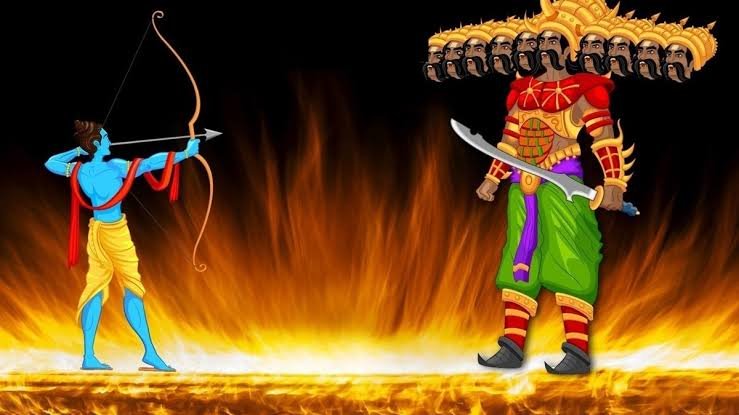
According to the Hindu epic Ramayana, Ravana, the powerful king of Lanka, abducted Goddess Sita, the wife of Lord Rama.
To rescue Sita and restore righteousness, Lord Rama fought a great battle against Ravana with the support of Lakshmana, Hanuman, and the Vanara army.
After a challenging battle, Lord Rama defeated Ravana.
This victory became a powerful symbol of the triumph of truth, justice, devotion, and righteousness over arrogance, injustice, and evil.
Today, many communities celebrate this victory through Ramleela performances and the burning of Ravana’s effigies.
Goddess Durga’s Victory Over Mahishasura
Another important tradition connects Vijayadashami with Goddess Durga.
According to Hindu mythology, Mahishasura was a powerful demon who created suffering and challenged the authority of the gods.
To defeat him, Goddess Durga appeared with divine strength and fought a fierce battle that lasted nine days and nights.
On the tenth day, she defeated Mahishasura.
This victory represents the power of divine feminine energy, courage, protection, and justice.
It is one of the central reasons why Vijayadashami is celebrated at the conclusion of Durga Puja.
Cultural and Historical Development
Over generations, Vijayadashami developed into a festival combining religious beliefs, local traditions, theatre, music, art, and community celebrations.
Ramleela became an important cultural tradition in many parts of North India. In Bengal, Durga Puja developed into a major artistic and community celebration.
The festival continues to connect India’s diverse communities through shared values of courage, compassion, hope, and righteousness.
3. 8 Inspiring Facts About Vijayadashami That Will Fill You With Joy
Vijayadashami is full of fascinating stories, traditions, and lessons. Here are eight inspiring facts that explain why this festival is so special.
Fact 1: Vijayadashami Celebrates the Victory of Good Over Evil
The most important message of Vijayadashami is that good ultimately triumphs over evil.
Lord Rama’s victory over Ravana and Goddess Durga’s victory over Mahishasura represent the same universal principle.
This teaches us that honesty, patience, courage, and righteousness are more powerful than arrogance, dishonesty, and cruelty.
Life lesson: Always choose the right path, even when doing so is difficult.
Fact 2: It Marks the Victory of Two Divine Powers
Vijayadashami is associated with two important victories in Hindu traditions.
Lord Rama defeated Ravana and restored righteousness.
Goddess Durga defeated Mahishasura and protected the world from evil forces.
These stories make Vijayadashami a celebration of both divine courage and the protection of dharma.
Fact 3: Ravana’s Ten Heads Represent Human Weaknesses
Ravana is traditionally depicted with ten heads. Beyond the famous story, these heads are often interpreted symbolically as human weaknesses such as anger, greed, pride, jealousy, selfishness, and ego.
The burning of Ravana’s effigy therefore encourages people to overcome their own negative qualities.
Life lesson: Before trying to defeat negativity in society, we should first defeat negativity within ourselves.
Fact 4: Vijayadashami Marks the Beginning of New Learning
In several parts of southern India, Vijayadashami is considered an auspicious day to begin education.
The Vidyarambham ceremony introduces young children to the world of letters and learning. Parents and teachers encourage children to take their first steps towards knowledge.
It reminds us that education is one of the strongest foundations of a successful and meaningful life.
Fact 5: Mysuru Dasara Is Famous for Its Grand Celebrations
Mysuru in Karnataka is internationally recognised for its magnificent Dasara celebrations.
The illuminated Mysuru Palace, traditional music, cultural performances, decorated procession, and historical customs attract visitors from different parts of India and abroad.
The festival beautifully combines heritage, devotion, and tourism.
Fact 6: Durga Visarjan Is an Emotional Part of Vijayadashami
In West Bengal and other eastern Indian communities, Vijayadashami marks the farewell of Goddess Durga after several days of worship.
Devotees participate in processions and the immersion of Durga idols, known as Durga Visarjan.
The occasion combines happiness, devotion, and emotional farewell. People exchange Bijoya greetings and pray for peace, prosperity, and happiness.
Fact 7: The Festival Encourages New Beginnings
Vijayadashami is traditionally considered an auspicious occasion for beginning new activities.
Many people start educational journeys, business ventures, professional projects, and other positive initiatives around this festival.
It inspires people to leave behind their failures and move forward with confidence.
Fact 8: Vijayadashami Connects India’s Diverse Cultures
From Ravan Dahan in North India to Durga Visarjan in Bengal, from Mysuru Dasara to the celebrations of Kullu, the festival has many beautiful regional forms.
Despite these differences, people share a common message of victory, hope, unity, and goodness.
Life lesson: Diversity makes our culture richer, and shared values bring people closer.
These traditions are documented in India’s tourism and cultural heritage resources.
4. Significance of Vijayadashami in Hindu Culture
Vijayadashami holds religious, spiritual, social, and cultural significance. It encourages individuals to understand the importance of good behaviour and righteous actions.
Here are some of its major forms of significance.
Religious Significance
For devotees, Vijayadashami is a day to remember the divine victories of Lord Rama and Goddess Durga. People visit temples, perform prayers, offer flowers, and seek blessings from the divine.
Spiritual Significance
The festival reminds us that the greatest victory is the victory over our own negative thoughts.
Anger, jealousy, greed, hatred, and ego can affect our relationships and peace of mind. Vijayadashami inspires us to replace these feelings with kindness, patience, forgiveness, and humility.
Cultural Significance
Ramleela, traditional music, dance, fairs, processions, and Durga Puja celebrations preserve India’s cultural heritage.
They also provide opportunities for younger generations to learn about traditional stories and values.
Social Significance
Vijayadashami brings families, friends, neighbours, and communities together. People participate in celebrations, share food, exchange greetings, and support cultural activities.
Educational Significance
The association of Vijayadashami with Vidyarambham highlights the importance of knowledge and education.
It encourages parents to provide children with opportunities to learn, grow, and become responsible citizens.
5. Vijayadashami Timeline: From Navratri to Dussehra
The festival is the culmination of the nine days of Sharad Navratri. The following timeline explains the broad sequence of celebrations.
Vijayadashami festival timeline
Day 1 – Pratipada
Sharad Navratri begins. Devotees worship Goddess Shailputri and establish the festival’s spiritual atmosphere.
Day 2 – Dwitiya
Devotees worship Goddess Brahmacharini and focus on devotion, discipline, and determination.
Day 3 – Tritiya
Goddess Chandraghanta is worshipped, symbolising courage and protection.
Day 4 – Chaturthi
Goddess Kushmanda is worshipped, representing creative energy and vitality.
Day 5 – Panchami
Goddess Skandamata is worshipped, representing motherhood and compassion.
Day 6 – Shashthi
Goddess Katyayani is worshipped, representing strength and determination.
Day 7 – Saptami
Goddess Kalaratri is worshipped, symbolising protection against darkness and fear.
Day 8 – Ashtami
Maha Ashtami is observed with special prayers and traditional rituals in many communities.
Day 9 – Navami
Maha Navami and other regional Navami traditions are observed. Some communities perform Kanya Puja and Ayudha Puja.
Day 10 – Vijayadashami
The festival reaches its conclusion with celebrations of victory, Ravan Dahan, Durga Visarjan, and other regional customs.
Note: Rituals, deity associations, and observances vary by region and tradition.
6. How Is Vijayadashami Celebrated Across India?
India’s diversity makes Vijayadashami particularly beautiful. Every region has its own way of celebrating the festival.
North India: Ravan Dahan and Ramleela
In states such as Uttar Pradesh, Bihar, Delhi, Madhya Pradesh, and Rajasthan, Vijayadashami is widely celebrated through Ramleela performances.
People gather in open grounds to watch scenes from the Ramayana. In the evening, large effigies of Ravana, Meghnad, and Kumbhakarna are traditionally burned.
West Bengal: Bijoya Dashami
In West Bengal, Vijayadashami marks the conclusion of Durga Puja.
Devotees bid farewell to Goddess Durga through processions and idol immersion. Families exchange sweets and greetings, while traditional Sindoor Khela is observed by participating married women in many communities.
Karnataka: Mysuru Dasara
Mysuru celebrates Dasara with grand cultural events, palace illumination, traditional performances, and the famous Jamboo Savari procession.
Himachal Pradesh: Kullu Dussehra
Kullu has a distinctive celebration in which local deities are brought together in traditional processions. Unlike many other regions, the famous Kullu Dussehra begins on Vijayadashami and continues for several days.
Southern India: Ayudha Puja and Vidyarambham
In parts of southern India, the festival is connected with the worship of books, tools, musical instruments, vehicles, and professional equipment.
Vidyarambham is especially meaningful for families introducing young children to education.
7. Observance and Rituals of Vijayadashami
People observe Vijayadashami according to their family traditions, religious beliefs, and regional customs.
Some common practices include:
Morning prayers: Devotees worship Lord Rama, Goddess Durga, and other deities.
Temple visits: Families visit temples to offer prayers and seek blessings.
Ramleela: Communities organise dramatic performances based on the Ramayana.
Ravan Dahan: Effigies of Ravana are burned as a symbol of the destruction of evil.
Durga Visarjan: Devotees bid farewell to Goddess Durga through traditional immersion ceremonies.
Ayudha Puja: Tools, books, instruments, and work equipment are honoured in communities observing this tradition.
Family gatherings: Relatives and friends meet, exchange sweets, and share happiness.
Charity and kindness: Some people distribute food, clothes, and other necessities to those in need.
The purpose of these observances is not only religious celebration but also the development of positive values in society.
8. Important Life Lessons We Can Learn From Vijayadashami
Vijayadashami is a festival that offers meaningful lessons for people of every age.
1. Truth is more powerful than lies. Always remain honest, even when dishonesty appears to offer temporary benefits.
2. Never allow ego to control your life. Ravana’s story reminds us that knowledge and power without humility can lead to destruction.
3. Courage helps us overcome challenges. Lord Rama’s journey teaches us to remain determined during difficult situations.
4. Respect women and protect their dignity. The stories of Sita and Goddess Durga encourage respect, dignity, and protection against injustice.
5. Knowledge is a lifelong journey. The educational traditions of Vijayadashami remind us to continue learning.
6. Goodness begins within us. We must overcome our own negative behaviour before expecting positive changes in society.
7. Unity makes us stronger. The festival demonstrates the importance of cooperation, family, friendship, and community.
8. Never lose hope. Even after difficult experiences, we can begin again with courage and positivity.
9. Importance of Vijayadashami in Our Daily Life
The real meaning of Vijayadashami becomes valuable when we apply its lessons to our everyday activities.
Consider these practical examples:
| Daily-life situation | Vijayadashami lesson |
|---|---|
| Student facing examination pressure | Remain confident and work hard |
| Person facing business difficulties | Stay patient and make ethical decisions |
| Family disagreements | Choose understanding and forgiveness |
| Workplace competition | Avoid jealousy and respect others |
| Personal failure | Learn from mistakes and start again |
| Social injustice | Stand for truth and fairness |
| Negative thinking | Develop gratitude and positivity |
| Lack of discipline | Build better habits and consistency |
For students, Vijayadashami can become a reminder to defeat procrastination, fear of failure, and self-doubt.
For professionals, it can encourage honesty, teamwork, and responsible leadership.
For families, it can inspire love, respect, understanding, and peaceful relationships.
The festival’s deepest message is simple: we cannot always control what happens around us, but we can choose how we respond.
10. Why Is Vijayadashami Important to Society?
Vijayadashami has an important role in building a positive and responsible society.
In today’s world, people face many challenges, including corruption, discrimination, dishonesty, violence, hatred, and social inequality. The message of Vijayadashami encourages everyone to stand against such negative practices.
Here are some ways this festival contributes to society.
Promotes unity: People from different backgrounds participate in celebrations and cultural programmes.
Preserves Indian heritage: Traditional stories, folk performances, music, and rituals are passed on to younger generations.
Encourages education: Vidyarambham highlights the importance of knowledge and learning.
Supports local businesses: Festivals create opportunities for artisans, shopkeepers, event organisers, performers, and small businesses.
Promotes women’s dignity: The worship of Goddess Durga celebrates feminine strength and divine energy.
Encourages charity: Festival celebrations inspire people to help disadvantaged families and communities.
Builds positive values: Truth, kindness, courage, discipline, and responsibility become central themes.
Vijayadashami reminds society that real development is not only about money, technology, and infrastructure. It is also about humanity, education, justice, and good character.
11. Vijayadashami Wishes, Messages and Greetings
Vijayadashami is a beautiful occasion to spread happiness, love, and positivity. Sending wishes to family members, friends, teachers, colleagues, and loved ones makes the celebration even more meaningful.
Here are some beautiful Vijayadashami wishes that you can share on WhatsApp, Facebook, Instagram, and other social media platforms.
10 Best Vijayadashami Wishes
1. Wishing you and your family a very Happy Vijayadashami! May truth and goodness always guide your path.
2. May this Dussehra remove negativity from your life and fill your heart with happiness, peace, and prosperity.
3. May Lord Rama bless you with courage, wisdom, and strength to overcome every challenge. Happy Vijayadashami!
4. Let us burn the negativity within ourselves and welcome a new beginning filled with positivity.
5. May Goddess Durga bless your family with good health, happiness, success, and prosperity.
6. On this auspicious occasion, may every difficulty become an opportunity and every failure become a lesson.
7. May the victory of good over evil inspire you to live with honesty, kindness, and confidence.
8. Wishing you success in your education, career, business, and every new journey. Happy Dussehra!
9. May your home be filled with love, your heart with peace, and your life with countless reasons to smile.
10. Celebrate the spirit of goodness, courage, and righteousness. Have a joyful and blessed Vijayadashami!
Short Vijayadashami Captions for Social Media
Victory of good over evil! Happy Dussehra!
Let goodness win, always.
Celebrate courage, truth, and positivity.
Burn your ego, not just an effigy.
Every ending brings a new beginning.
Choose kindness. Choose righteousness. Choose happiness.
A Special Vijayadashami Blessing
May the divine blessings of Lord Rama and Goddess Durga bring happiness into your life. May you overcome every obstacle, defeat your inner negativity, achieve your dreams, and always walk on the path of truth.
Happy Vijayadashami to everyone!
12. Vijayadashami Review: Why Is This Festival So Special?
Vijayadashami is one of India’s most meaningful cultural and religious celebrations. Its greatest strength is its universal message: goodness, courage, knowledge, and righteousness should always triumph over negativity.
Here is a quick review of the festival.
| Review category | Details |
|---|---|
| Festival name | Vijayadashami / Dussehra |
| Religious tradition | Hinduism |
| Observance | Ashwin Shukla Dashami |
| Main message | Victory of good over evil |
| Associated deities | Lord Rama and Goddess Durga |
| Main celebrations | Ravan Dahan, Durga Visarjan, Ramleela |
| Cultural value | Very significant |
| Social importance | Unity, heritage, education, and positivity |
| Main life lesson | Overcome your inner weaknesses |
Our review: Vijayadashami is not just a festival to watch celebrations or burn Ravana’s effigy. It is an opportunity to examine our own behaviour, improve our character, and become more responsible human beings.
Its traditions, cultural diversity, and positive message make it an important part of India’s heritage.
13. Frequently Asked Questions (FAQs) About Vijayadashami
Q1. What is Vijayadashami?
Vijayadashami is an important Hindu festival celebrating the victory of good over evil. It is also known as Dussehra or Dasara and is observed on the tenth day of the bright fortnight of Ashwin.
Q2. Why is Vijayadashami celebrated?
It is celebrated to commemorate Lord Rama’s victory over Ravana and Goddess Durga’s victory over Mahishasura, according to Hindu traditions.
Q3. What is the other name for Vijayadashami?
Vijayadashami is also known as Dussehra, Dasara, Dashahara, and Vijaya Dashami. Regional names and pronunciations vary.
Q4. When is Vijayadashami celebrated?
It is celebrated on Ashwin Shukla Dashami according to the Hindu lunar calendar. Its Gregorian calendar date generally falls in September or October.
Q5. What is the significance of Ravana Dahan?
Ravan Dahan symbolises the destruction of evil and encourages people to overcome arrogance, greed, anger, jealousy, and other negative qualities.
Q6. What is the connection between Navratri and Vijayadashami?
Vijayadashami marks the tenth day following the nine-day Sharad Navratri celebrations. It celebrates the victory associated with Goddess Durga and, in many regions, Lord Rama.
Q7. Why is Goddess Durga worshipped during Vijayadashami?
In traditions associated with Durga Puja, the day marks Goddess Durga’s victory over Mahishasura and the restoration of divine order.
Q8. Why is Vijayadashami important for students?
It is considered an auspicious occasion for beginning education in several traditions. It inspires students to value knowledge, discipline, hard work, and continuous learning.
Q9. How do people celebrate Vijayadashami in India?
People celebrate through prayers, temple visits, Ramleela, Ravan Dahan, Durga Visarjan, cultural programmes, family gatherings, and regional traditions.
Q10. What is the main message of Vijayadashami?
The central message is that truth, righteousness, courage, and goodness ultimately triumph over evil.
Q11. Is Vijayadashami a good day to start something new?
Yes. Many communities consider Vijayadashami an auspicious day for beginning educational, professional, and personal activities.
Q12. What should we learn from Vijayadashami?
We should learn to control our ego, respect others, remain honest, fight injustice, develop positive habits, and never lose hope during difficult times.
14. Conclusion: Vijayadashami Is a Celebration of Joy, Courage and Goodness
Vijayadashami is much more than a traditional Indian festival. It is a celebration of hope, courage, righteousness, knowledge, and humanity.
The stories of Lord Rama and Goddess Durga remind us that no matter how powerful evil appears, truth and goodness deserve our commitment and courage.
The burning of Ravana’s effigy should inspire us to remove the Ravana within ourselves. We should try to overcome anger, greed, jealousy, dishonesty, and arrogance. Similarly, the victory of Goddess Durga reminds us to stand against injustice and protect the dignity of every individual.
For students, this festival is an opportunity to develop discipline and pursue knowledge. For parents, it is a reminder to teach children good values. For professionals, it encourages honesty and responsibility. For society, it represents unity, cultural heritage, and humanity.
Let us make this Vijayadashami more meaningful by promising to become better individuals, help those in need, respect everyone, and spread happiness wherever we go.
Remember: The real victory of Vijayadashami is not only the destruction of Ravana outside us but also the destruction of negativity within us.
Wishing everyone a very Happy Vijayadashami! May your life always be filled with joy, peace, prosperity, success, and positivity.
15. Important Points About Vijayadashami at a Glance
Vijayadashami is also known as Dussehra and Dasara.
It is celebrated on Ashwin Shukla Dashami.
It marks the conclusion of Sharad Navratri.
It commemorates Lord Rama’s victory over Ravana.
It also celebrates Goddess Durga’s victory over Mahishasura.
Ravan Dahan is a popular tradition in many northern Indian communities.
Durga Visarjan is an important part of celebrations in Bengal.
Mysuru Dasara is famous for its royal cultural traditions.
Vidyarambham connects the festival with education.
Its universal message is the victory of goodness over evil.
References and Further Reading
For additional information and cultural background, readers can explore:
- 1. What Is Vijayadashami? (All About Vijayadashami)
- 2. History of Vijayadashami: Where Did This Festival Begin?
- Lord Rama’s Victory Over Ravana
- Goddess Durga’s Victory Over Mahishasura
- Cultural and Historical Development
- 3. 8 Inspiring Facts About Vijayadashami That Will Fill You With Joy
- Fact 1: Vijayadashami Celebrates the Victory of Good Over Evil
- Fact 2: It Marks the Victory of Two Divine Powers
- Fact 3: Ravana’s Ten Heads Represent Human Weaknesses
- Fact 4: Vijayadashami Marks the Beginning of New Learning
- Fact 5: Mysuru Dasara Is Famous for Its Grand Celebrations
- Fact 6: Durga Visarjan Is an Emotional Part of Vijayadashami
- Fact 7: The Festival Encourages New Beginnings
- Fact 8: Vijayadashami Connects India’s Diverse Cultures
- 4. Significance of Vijayadashami in Hindu Culture
- Religious Significance
- Spiritual Significance
- Cultural Significance
- Social Significance
- Educational Significance
- 5. Vijayadashami Timeline: From Navratri to Dussehra
- Vijayadashami festival timeline
- 6. How Is Vijayadashami Celebrated Across India?
- North India: Ravan Dahan and Ramleela
- West Bengal: Bijoya Dashami
- Karnataka: Mysuru Dasara
- Himachal Pradesh: Kullu Dussehra
- Southern India: Ayudha Puja and Vidyarambham
- 7. Observance and Rituals of Vijayadashami
- 8. Important Life Lessons We Can Learn From Vijayadashami
- 9. Importance of Vijayadashami in Our Daily Life
- 10. Why Is Vijayadashami Important to Society?
- 11. Vijayadashami Wishes, Messages and Greetings
- 10 Best Vijayadashami Wishes
- 12. Vijayadashami Review: Why Is This Festival So Special?
- 13. Frequently Asked Questions (FAQs) About Vijayadashami
- Q1. What is Vijayadashami?
- Q2. Why is Vijayadashami celebrated?
- Q3. What is the other name for Vijayadashami?
- Q4. When is Vijayadashami celebrated?
- Q5. What is the significance of Ravana Dahan?
- Q6. What is the connection between Navratri and Vijayadashami?
- Q7. Why is Goddess Durga worshipped during Vijayadashami?
- Q8. Why is Vijayadashami important for students?
- Q9. How do people celebrate Vijayadashami in India?
- Q10. What is the main message of Vijayadashami?
- Q11. Is Vijayadashami a good day to start something new?
- Q12. What should we learn from Vijayadashami?
- 14. Conclusion: Vijayadashami Is a Celebration of Joy, Courage and Goodness
- 15. Important Points About Vijayadashami at a Glance
- References and Further Reading