

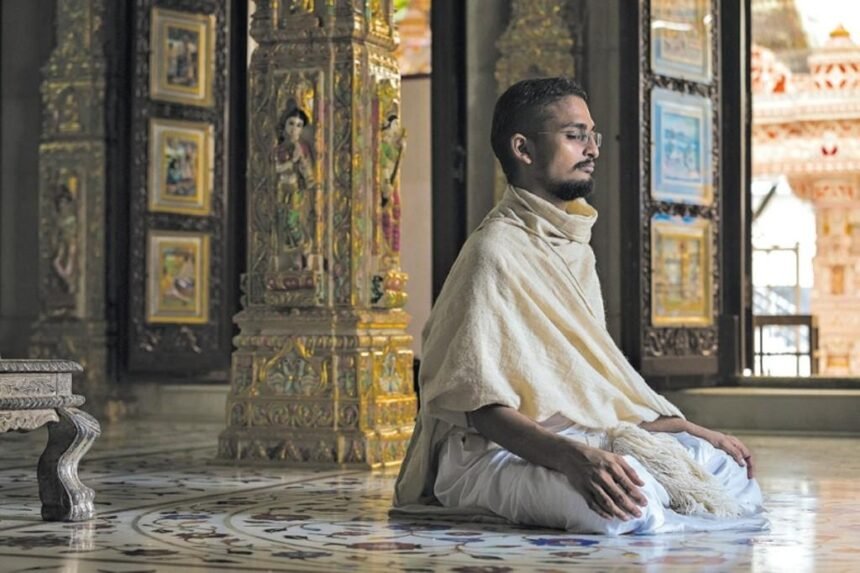
Lessons from Paryushan Mahaparv That Will Transform Your Life
Paryushan Mahaparv is one of the most sacred and spiritually meaningful festivals of Jainism. It is a festival of forgiveness, self-discipline, compassion, meditation, simplicity, and inner purification. Unlike celebrations that focus mainly on external decorations, food, and entertainment, Paryushan encourages people to look within themselves and improve their thoughts, words, and actions.
The word Paryushan reminds followers of the importance of coming closer to their inner self through spiritual practices, self-reflection, and discipline. It provides an opportunity to pause from everyday distractions, understand our mistakes, forgive others, and develop a more peaceful relationship with the world.
The central message of this beautiful festival is that real happiness does not come only from material possessions. It comes from a pure heart, peaceful thoughts, controlled desires, and kindness towards every living being.
For students, professionals, families, and people from all walks of life, Paryushan offers valuable lessons that can transform everyday behaviour. Its teachings are not limited to Jain communities; values such as non-violence, truth, forgiveness, and compassion are meaningful for all humanity.
In this article, we will explore the history, meaning, important facts, timeline, significance, observance, wishes, social importance, and seven profound life lessons of Paryushan Mahaparv.
1. What Is Paryushan Mahaparv? (All About Paryushan)
Paryushan Mahaparv is an important annual spiritual festival observed by followers of Jainism. It is dedicated to self-purification, religious reflection, meditation, fasting, forgiveness, and the practice of non-violence.
The festival is especially associated with the Jain principles of:
Ahimsa: Non-violence towards all living beings.
Satya: Speaking the truth.
Asteya: Not stealing.
Brahmacharya: Self-control and restraint.
Aparigraha: Reducing attachment and possessions.
Paryushan is celebrated by both major Jain traditions, although the duration and certain practices differ.
Shvetambara tradition: Paryushan generally lasts eight days.
Digambara tradition: The corresponding major observance is known as Das Lakshan Parv, generally lasting ten days.
One of the most important aspects of this festival is Samvatsari, the concluding day of the Shvetambara Paryushan observance. It is associated with asking for and offering forgiveness.
The famous expression used during this period is:
Micchami Dukkadam.
It conveys the sentiment: “May my wrong actions be forgiven” or “If I have hurt you knowingly or unknowingly, may those mistakes be forgiven.”
This message encourages people to repair relationships, release resentment, and begin again with a peaceful heart.
2. History of Paryushan Mahaparv
The history of Paryushan Mahaparv is deeply connected with the ancient spiritual traditions and teachings of Jainism.
Jainism is one of India’s ancient religious and philosophical traditions. Its teachings emphasize non-violence, self-discipline, truth, renunciation, and liberation from the cycle of birth and death.
Paryushan developed around the spiritual practices of Jain monks, nuns, and householders. Traditionally, the rainy season was an important period for spiritual reflection and disciplined living.
During the monsoon, many small living organisms become more active, and travelling can unintentionally harm living beings. Jain monks and nuns traditionally observe Chaturmas, a four-month period of staying in one place during the rainy season.
This practice supports the principle of Ahimsa by reducing unnecessary movement and the possibility of harming microscopic and small living organisms.
During this period, Jain communities gather for religious teachings, meditation, fasting, scriptural study, and self-examination.
Paryushan became an especially significant period for strengthening these spiritual practices.
Historical and spiritual foundations
Lord Mahavira and Jain teachings
Lord Mahavira is an important spiritual figure in Jainism. His teachings emphasized non-violence, truth, self-control, and freedom from attachment.
The Jain Agamas
Jain scriptures provide guidance on spiritual conduct, ethical living, self-discipline, and liberation. Their study is an important part of Paryushan observances, particularly in the Shvetambara tradition.
The tradition of Chaturmas
The rainy-season residence of Jain ascetics provides an important historical and spiritual context for Paryushan.
The practice of forgiveness
The concluding observances encourage individuals to recognize their mistakes and seek forgiveness from others.
Thus, Paryushan is not simply a festival with a fixed calendar date. It is a continuing spiritual tradition that encourages people to improve their conduct and develop a compassionate outlook towards all living beings.
3. Seven Profound Lessons from Paryushan Mahaparv That Will Transform Your Life
The greatest beauty of Paryushan lies in the lessons it offers for everyday life. These teachings can help us become more responsible, thoughtful, peaceful, and compassionate human beings.
Lesson 1: Forgiveness Is the Greatest Strength
One of the most powerful teachings of Paryushan is forgiveness.
In everyday life, misunderstandings, arguments, jealousy, and disagreements are common. Sometimes, people hurt us intentionally, while at other times, they hurt us without realizing it.
Holding on to anger can affect our relationships and peace of mind.
Paryushan encourages us to let go of unnecessary resentment and seek forgiveness.
The expression Micchami Dukkadam reminds us that nobody is perfect. Every human being makes mistakes, and recognizing those mistakes is an important step towards personal growth.
How to apply this lesson in daily life:
Forgive people when they genuinely acknowledge their mistakes.
Apologize when your words or actions hurt someone.
Avoid allowing small disagreements to destroy meaningful relationships.
Learn from mistakes instead of repeating them.
Stop carrying unnecessary hatred into the future.
Forgiveness does not mean accepting abuse or allowing others to repeatedly harm you. It means releasing hatred while maintaining healthy boundaries.
Lesson 2: Non-Violence Makes the World More Beautiful
Ahimsa, or non-violence, is one of the central principles of Jainism.
Paryushan teaches us that violence is not limited to physical harm. Harsh words, insulting behaviour, unnecessary criticism, and hateful thoughts can also hurt others.
A person who practises non-violence understands that every living being deserves respect.
In modern society, where people often experience stress, competition, anger, and conflict, this lesson is especially important.
How to apply this lesson in daily life:
Speak respectfully, even when you disagree.
Avoid hurting animals and other living beings.
Practise kindness towards people who are struggling.
Avoid spreading hatred through social media.
Think before reacting in anger.
Non-violence begins with our thoughts and gradually becomes visible through our actions.
Lesson 3: Self-Discipline Creates Real Freedom
Paryushan emphasizes fasting, meditation, prayer, and control over desires.
These practices remind us that human beings should not become slaves to temporary pleasures.
Today, people face many distractions, including excessive social media use, unhealthy eating habits, unnecessary shopping, and uncontrolled entertainment.
Self-discipline helps individuals make better decisions and develop stronger character.
How to apply this lesson in daily life:
Maintain a healthy daily routine.
Avoid unnecessary spending.
Develop the habit of reading and learning.
Control anger and impulsive reactions.
Set realistic personal and professional goals.
Fasting during Paryushan is a religious practice and should be undertaken according to one’s health and guidance. The deeper lesson is self-control, not competition over how much someone can endure.
Lesson 4: Truth Builds Trust and Respect
Satya, or truthfulness, is another important principle of Jain philosophy.
In personal relationships, education, business, and professional life, honesty creates trust.
A person may achieve temporary success through dishonesty, but lasting respect depends on integrity.
Paryushan encourages people to examine whether their words and actions reflect honesty.
How to apply this lesson in daily life:
Speak honestly with family members.
Avoid cheating in examinations.
Maintain transparency in business.
Accept your mistakes instead of blaming others.
Keep promises whenever possible.
Truthfulness is not simply about speaking facts. It also involves communicating responsibly and avoiding words intended to hurt others.
Lesson 5: Reduce Attachment and Discover Happiness
Aparigraha teaches non-possessiveness and freedom from excessive attachment.
Modern society often measures success through money, property, expensive products, social status, and popularity.
However, material possessions cannot guarantee permanent happiness.
Paryushan reminds us to understand the difference between our genuine needs and unnecessary desires.
How to apply this lesson in daily life:
Avoid comparing your life with others.
Appreciate what you already have.
Donate useful items to people in need.
Spend quality time with family.
Focus on meaningful experiences rather than unnecessary possessions.
A simpler lifestyle can create more space for gratitude, relationships, and inner peace.
Lesson 6: Self-Reflection Is the Beginning of Improvement
One of the most meaningful practices associated with Paryushan is examining one’s own behaviour.
People often spend considerable time identifying the mistakes of others but rarely examine their own actions.
Self-reflection changes this approach.
It encourages us to ask:
Did I hurt anyone today?
Was I honest in my behaviour?
Did I waste someone’s time?
Did I act out of jealousy or anger?
What can I improve tomorrow?
This habit can help students become more responsible, professionals become more ethical, and families develop stronger relationships.
Paryushan teaches that personal transformation begins when we stop blaming the world for everything and start improving ourselves.
Lesson 7: Compassion Is the Foundation of Humanity
The final lesson is compassion.
Jain philosophy recognizes the importance of respecting all forms of life. Compassion means understanding the difficulties of others and responding with kindness.
A successful person is not defined only by wealth, education, or professional achievements. The way that person treats others also matters.
How to apply this lesson in daily life:
Help people who need support.
Respect workers and people from every background.
Avoid unnecessary cruelty towards animals.
Support educational opportunities for underprivileged children.
Be kind to elderly people and those facing difficulties.
When compassion becomes part of our daily behaviour, society becomes more peaceful and inclusive.
These seven lessons show why Paryushan Mahaparv is much more than a religious celebration. It is an opportunity to become a better human being.
4. Important Facts About Paryushan Mahaparv
Here are some interesting and meaningful facts about Paryushan Mahaparv.
One of the most important Jain festivals: Paryushan is widely regarded as one of the holiest annual observances in Jainism.
Eight days of observance: The Shvetambara tradition generally observes Paryushan for eight days.
Ten days of spiritual practice: Digambara Jains observe the related Das Lakshan Parv for ten days.
Festival of forgiveness: Samvatsari is an important concluding day of Shvetambara Paryushan, dedicated to repentance and forgiveness.
Micchami Dukkadam: This expression is traditionally used to seek forgiveness for mistakes committed knowingly or unknowingly.
Importance of fasting: Many devotees undertake fasting or dietary restrictions according to their ability and religious traditions.
Scriptural study: The Kalpa Sutra receives particular attention in several Shvetambara communities.
Importance of meditation: Meditation, prayer, and self-reflection are essential spiritual activities.
Connection with Chaturmas: The observance takes place during the broader rainy-season period associated with Jain monastic discipline.
Universal message: Its teachings encourage respect, compassion, forgiveness, and non-violence towards all living beings.
These facts demonstrate that Paryushan is not merely a religious event. It is a festival of personal responsibility and spiritual development.
5. Timeline of Paryushan Mahaparv
The timeline of Paryushan can differ according to Jain traditions and individual communities. The following is a broad description of the eight-day Shvetambara observance.
Eight-day Paryushan timeline
Day 1 – Beginning of spiritual purification
Devotees begin the festival with prayers, religious activities, self-discipline, and a commitment to improve their conduct.
Day 2 – Practising non-violence
Special attention is given to Ahimsa, kindness, and respect for every living being.
Day 3 – Self-control and discipline
Devotees focus on controlling desires, reducing unnecessary consumption, and developing good habits.
Day 4 – Scriptural study
In many Shvetambara traditions, the reading and discussion of the Kalpa Sutra receive special importance.
Day 5 – Reflection on Mahavira’s life
Religious programmes may include the celebration of the auspicious dreams associated with Queen Trishala and the life of Lord Mahavira.
Day 6 – Meditation and spiritual learning
Devotees participate in religious discourses, prayers, fasting, and self-examination.
Day 7 – Repentance and preparation for forgiveness
Individuals reflect on their behaviour, recognize their mistakes, and prepare to seek forgiveness.
Day 8 – Samvatsari
The concluding day emphasizes Pratikraman, repentance, forgiveness, and the expression Micchami Dukkadam.
This is an illustrative outline, not a compulsory universal daily programme. Rituals and their placement differ among communities.
After the Shvetambara observance, Digambara communities celebrate Das Lakshan Parv, focusing on ten spiritual virtues. The two observances are related through Jain values but are distinct traditions.
6. Ten Important Virtues of Digambara Das Lakshan Parv
The ten virtues associated with Das Lakshan Dharma offer another valuable perspective on spiritual development.
| Virtue | Meaning |
|---|---|
| Uttam Kshama | Supreme forgiveness |
| Uttam Mardava | Supreme humility |
| Uttam Arjava | Supreme straightforwardness |
| Uttam Shaucha | Supreme purity and contentment |
| Uttam Satya | Supreme truth |
| Uttam Sanyam | Supreme self-control |
| Uttam Tap | Supreme austerity |
| Uttam Tyag | Supreme renunciation |
| Uttam Akinchanya | Supreme non-possessiveness |
| Uttam Brahmacharya | Supreme celibacy and purity of conduct |
Each virtue encourages individuals to overcome negative tendencies and develop a better understanding of themselves.
7. Significance of Paryushan Mahaparv
Paryushan holds deep spiritual, emotional, ethical, and social significance.
Spiritual significance
The festival encourages individuals to understand the true nature of the soul and move towards spiritual purification. Through meditation, religious study, fasting, and self-discipline, devotees attempt to reduce negative passions and attachments.
Religious significance
Paryushan strengthens the connection between Jain followers and their religious teachings. It provides opportunities to study scriptures, listen to spiritual teachers, participate in prayers, and understand the teachings of the Tirthankaras.
Emotional significance
Forgiveness is one of its most powerful emotional messages. People are encouraged to release resentment and rebuild relationships.
Ethical significance
The festival reminds individuals to follow truthfulness, non-violence, honesty, self-control, and non-possessiveness.
Environmental significance
The principle of Ahimsa encourages respect for animals, insects, plants, and other forms of life. It inspires people to become more conscious of the effects of their everyday activities.
Universal significance
Although Paryushan is rooted in Jain religious traditions, its message of kindness, forgiveness, and responsible living has relevance for people across different communities.
8. How Is Paryushan Mahaparv Observed?
Paryushan is observed through various spiritual and religious activities. The exact practices depend on the individual’s tradition, community, and personal capacity.
1. Fasting and dietary discipline
Many devotees observe fasting during Paryushan. Some abstain from food for particular periods, while others follow restricted diets or eat only at prescribed times.
2. Pratikraman
Pratikraman is an important spiritual practice involving reflection on one’s actions, repentance for mistakes, and a commitment to better conduct.
3. Meditation and prayer
Devotees spend time in meditation, prayers, and spiritual contemplation.
4. Religious discourses
Jain monks, nuns, and spiritual teachers deliver sermons explaining religious principles and ethical values.
5. Scriptural reading
In many Shvetambara communities, the Kalpa Sutra is read and discussed during Paryushan.
6. Charity and helping others
People are encouraged to support the needy, provide food, help educational causes, and participate in charitable activities.
7. Seeking forgiveness
On Samvatsari, devotees seek forgiveness from people they may have hurt through thoughts, speech, or actions.
The purpose of these practices is not to compete with others in religious austerity. Their real objective is spiritual improvement and purification of conduct.
9. Importance of Paryushan in Our Daily Life
One of the most beautiful aspects of Paryushan is that its teachings can be practised throughout the year.
We do not need to wait for a religious festival to become kind, honest, or disciplined.
Consider these everyday examples:
| Everyday situation | Lesson from Paryushan |
|---|---|
| Family disagreements | Forgive and communicate peacefully |
| School and college | Be honest and avoid cheating |
| Workplace competition | Respect colleagues |
| Social media arguments | Avoid hateful comments |
| Shopping habits | Practise contentment |
| Environmental concerns | Respect living beings |
| Personal failures | Accept mistakes and improve |
| Financial decisions | Avoid unnecessary greed |
Importance for students
Students can learn honesty, discipline, patience, and respect from Paryushan. These qualities help them become responsible citizens.
Importance for parents
Parents can teach children forgiveness, kindness, and respect through their own behaviour.
Importance for professionals
Working people can apply the principles of truthfulness, responsibility, and non-possessiveness to their careers and business decisions.
Importance for young generations
Young people often face pressure from social media, competition, and expectations. Paryushan reminds them that success should not come at the cost of mental peace, honesty, or compassion.
10. Impact of Paryushan Mahaparv on Society
Paryushan can make a positive contribution to society by encouraging ethical behaviour and peaceful relationships.
Promotes peaceful relationships: Forgiveness helps people resolve misunderstandings and avoid unnecessary conflicts.
Encourages animal welfare: Ahimsa inspires compassion towards animals and other living beings.
Supports charitable activities: The festival motivates devotees to participate in humanitarian and community services.
Strengthens family relationships: Seeking forgiveness and showing gratitude can improve communication between family members.
Promotes responsible consumption: Aparigraha encourages people to reduce excessive material desires and unnecessary waste.
Encourages social harmony: Its message of respect and non-violence can help people from different backgrounds live together peacefully.
The wider social message is simple: a better society begins with individuals who take responsibility for their own behaviour.
11. Important Points to Remember About Paryushan
Paryushan is an important annual spiritual observance in Jainism.
Shvetambara Jains generally observe it for eight days.
Digambara Jains celebrate the related ten-day Das Lakshan Parv.
Samvatsari is an important day of forgiveness in the Shvetambara tradition.
Micchami Dukkadam is a traditional expression of seeking forgiveness.
Ahimsa is a central principle of Jain philosophy.
Fasting is practised according to individual ability and religious guidance.
The Kalpa Sutra has particular importance in many Shvetambara communities.
Pratikraman encourages self-examination and repentance.
The festival teaches values that can be followed throughout the year.
12. Paryushan Mahaparv Wishes, Messages and Quotes
Paryushan is a beautiful opportunity to share positive thoughts, forgiveness, blessings, and messages of peace with family, friends, and loved ones.
Best Paryushan Mahaparv Wishes
May this Paryushan Mahaparv bring peace, happiness, prosperity, and spiritual growth into your life.
May your heart become free from anger, jealousy, hatred, and negativity. Happy Paryushan!
On this sacred occasion, may you discover the true meaning of forgiveness and compassion.
May Lord Mahavira’s teachings inspire you to follow the path of truth, non-violence, and kindness.
May your thoughts become pure, your actions become meaningful, and your soul move towards peace.
Wishing you and your family a blessed Paryushan filled with spirituality and happiness.
May you find the courage to forgive others and the humility to apologize for your mistakes.
Micchami Dukkadam Messages
Micchami Dukkadam! If I have hurt you through my words, thoughts, or actions, knowingly or unknowingly, please forgive me.
Let us forget past misunderstandings and begin a new journey of love, respect, and friendship.
Forgiveness is not weakness; it is the strength to choose peace over anger.
May all living beings be happy, peaceful, and free from suffering.
I seek forgiveness from every living being and offer forgiveness to all.
Inspirational Quotes for Paryushan
Quote 1: “The journey towards a better world begins with the purification of our own thoughts.”
Quote 2: “Forgiveness does not change the past, but it can transform the future.”
Quote 3: “True happiness begins when we learn to control our desires.”
Quote 4: “A peaceful heart is more valuable than a thousand material possessions.”
Quote 5: “Be kind to every living being because compassion is the language of humanity.”
13. Review of Paryushan Mahaparv
Minorstudy Festival Review
5/5
Editorial assessment of its spiritual and social values, not a visitor rating.
| Review Category | Assessment |
|---|---|
| Spiritual importance | Excellent |
| Cultural significance | Excellent |
| Ethical teachings | Excellent |
| Family values | Excellent |
| Social impact | Excellent |
| Relevance to young people | Excellent |
Overall Review
Paryushan Mahaparv is a deeply meaningful spiritual observance that teaches people how to live with greater compassion, discipline, forgiveness, and responsibility. Its greatest strength is that its lessons remain useful even after the festival ends.
Why Should Everyone Learn About Paryushan?
Even people who do not follow Jainism can learn valuable lessons from this festival.
Its teachings encourage us to:
Become more understanding towards others.
Avoid unnecessary arguments and hatred.
Respect animals and nature.
Develop better habits.
Accept personal responsibility.
Value relationships over material possessions.
Paryushan offers a practical philosophy for building a more peaceful and responsible society.
14. Frequently Asked Questions (FAQs) About Paryushan Mahaparv
Q1. What is Paryushan Mahaparv?
Paryushan Mahaparv is one of the most important annual spiritual festivals of Jainism. It focuses on forgiveness, non-violence, fasting, meditation, self-discipline, and spiritual purification.
Q2. Why is Paryushan celebrated?
It is celebrated to encourage self-reflection, repentance, spiritual development, and the practice of Jain principles such as Ahimsa, Satya, and Aparigraha.
Q3. How many days is Paryushan celebrated?
Shvetambara Jains generally observe Paryushan for eight days, whereas Digambara Jains celebrate the related Das Lakshan Parv for ten days.
Q4. What is the meaning of Micchami Dukkadam?
Micchami Dukkadam is an expression used to seek forgiveness for mistakes committed knowingly or unknowingly. It conveys the intention that any harm caused to others may be forgiven.
Q5. Who celebrates Paryushan Mahaparv?
Paryushan is observed by Shvetambara Jain communities. Digambara Jain communities observe Das Lakshan Parv as their major annual ten-day spiritual festival.
Q6. What is Samvatsari?
Samvatsari is the concluding and especially important day of Shvetambara Paryushan. It is dedicated to repentance, self-reflection, and seeking forgiveness.
Q7. Is fasting compulsory during Paryushan?
Fasting is an important religious practice, but individuals observe different levels of austerity according to their health, ability, and religious guidance.
Q8. What is the importance of Lord Mahavira in Paryushan?
Lord Mahavira’s teachings on non-violence, truthfulness, self-control, and liberation provide an important philosophical foundation for the festival.
Q9. What is the difference between Paryushan and Das Lakshan Parv?
Paryushan is generally the eight-day Shvetambara observance, while Das Lakshan Parv is the ten-day Digambara observance focusing on ten supreme virtues.
Q10. What scriptures are read during Paryushan?
The Kalpa Sutra receives particular importance in many Shvetambara traditions. Jain scriptures and teachings are also studied during the festival.
Q11. When is Paryushan celebrated?
It generally falls during August or September according to the Jain religious calendar. Exact dates vary from year to year and between traditions.
Q12. Can non-Jains learn from Paryushan?
Yes. Its universal lessons of forgiveness, compassion, truth, non-violence, and self-discipline are meaningful for people of every background.
15. How Can We Practise the Teachings of Paryushan Throughout the Year?
The real success of Paryushan is not measured by the number of days we fast or the number of prayers we perform. It is reflected in how we behave after the festival.
Here are seven simple habits that everyone can practise:
Forgive someone instead of carrying unnecessary hatred.
Speak truthfully and avoid hurting others with your words.
Help at least one person whenever you have an opportunity.
Respect animals and protect the environment.
Avoid unnecessary purchases and develop gratitude.
Spend a few minutes every day in self-reflection.
Accept your mistakes and make genuine efforts to improve.
These small habits can gradually transform our personalities and relationships.
16. Conclusion: Paryushan Mahaparv Is a Journey Towards a Better Life
Paryushan Mahaparv is much more than an annual Jain religious festival. It is a beautiful reminder that the most important journey in life is the journey towards becoming a better human being.
Its teachings of forgiveness, non-violence, truthfulness, self-discipline, simplicity, and compassion offer guidance for people of every generation.
In a world where competition, anger, stress, greed, and misunderstandings are increasingly common, Paryushan encourages us to pause and look within ourselves.
It reminds us that we cannot always control the behaviour of others, but we can improve our own thoughts, decisions, and actions.
For students, it teaches discipline and honesty. For parents, it teaches patience and understanding. For professionals, it encourages ethical behaviour. For society, it promotes peace, respect, and humanity.
The most meaningful way to celebrate Paryushan is to carry its values into our everyday lives.
Let us forgive those who have hurt us, apologize to those whom we have hurt, respect every living being, and make kindness a part of our character.
Remember: A better world does not begin with changing everyone else. It begins with changing ourselves.
Micchami Dukkadam!
May peace, compassion, forgiveness, and happiness prevail in every heart.
Suggested internal linking topics for Readers:
Lord Mahavira: Life, Teachings and Philosophy
7 Powerful Lessons of Ahimsa in Everyday Life
Samvatsari: The Festival of Forgiveness
Jainism: History, Principles and Important Teachings
Paryushan and Das Lakshan Parv: Differences and Significance
References and Further Reading
For additional historical and religious information, consult:
Editorial note: Paryushan rituals, dates, and observances can vary between Jain traditions and local communities. Readers should consult their local Jain Sangh or religious calendar for specific observance details.
- 1. What Is Paryushan Mahaparv? (All About Paryushan)
- 2. History of Paryushan Mahaparv
- 3. Seven Profound Lessons from Paryushan Mahaparv That Will Transform Your Life
- Lesson 1: Forgiveness Is the Greatest Strength
- Lesson 2: Non-Violence Makes the World More Beautiful
- Lesson 3: Self-Discipline Creates Real Freedom
- Lesson 4: Truth Builds Trust and Respect
- Lesson 5: Reduce Attachment and Discover Happiness
- Lesson 6: Self-Reflection Is the Beginning of Improvement
- Lesson 7: Compassion Is the Foundation of Humanity
- 4. Important Facts About Paryushan Mahaparv
- 5. Timeline of Paryushan Mahaparv
- Eight-day Paryushan timeline
- 6. Ten Important Virtues of Digambara Das Lakshan Parv
- 7. Significance of Paryushan Mahaparv
- Spiritual significance
- Religious significance
- Emotional significance
- Ethical significance
- Environmental significance
- Universal significance
- 8. How Is Paryushan Mahaparv Observed?
- 9. Importance of Paryushan in Our Daily Life
- Importance for students
- Importance for parents
- Importance for professionals
- Importance for young generations
- 10. Impact of Paryushan Mahaparv on Society
- 11. Important Points to Remember About Paryushan
- 12. Paryushan Mahaparv Wishes, Messages and Quotes
- 13. Review of Paryushan Mahaparv
- 14. Frequently Asked Questions (FAQs) About Paryushan Mahaparv
- 15. How Can We Practise the Teachings of Paryushan Throughout the Year?
- 16. Conclusion: Paryushan Mahaparv Is a Journey Towards a Better Life
- References and Further Reading







Can you be more specific about the content of your article? After reading it, I still have some doubts. Hope you can help me.
Can you be more specific about the content of your article? After reading it, I still have some doubts. Hope you can help me.
I don’t think the title of your article matches the content lol. Just kidding, mainly because I had some doubts after reading the article.
Thank you for your sharing. I am worried that I lack creative ideas. It is your article that makes me full of hope. Thank you. But, I have a question, can you help me?
Your point of view caught my eye and was very interesting. Thanks. I have a question for you.
I don’t think the title of your article matches the content lol. Just kidding, mainly because I had some doubts after reading the article.
I don’t think the title of your article matches the content lol. Just kidding, mainly because I had some doubts after reading the article.
Your point of view caught my eye and was very interesting. Thanks. I have a question for you.
Thanks for sharing. I read many of your blog posts, cool, your blog is very good.