About Nataraja Temple Chidambaram: The Ultimate Budget Travel Guide, Powerful History & Spiritual Significance

- Estimated Travel Budget
- Estimated Student Budget
- 1. Why is Nataraja Temple famous?
- 2. Where is the temple located?
- 3. Which deity is worshipped here?
- 4. Is temple entry free?
- 5. What is Chidambara Rahasyam?
- 6. Which element does the temple represent?
- 7. Is the temple suitable for students?
- 8. What is the best time to visit?
- Overall Rating: ⭐⭐⭐⭐⭐ (4.9/5)


The Nataraja Temple, located in Chidambaram, Tamil Nadu, is one of the most sacred temples dedicated to Lord Shiva in his cosmic dancing form, Nataraja. It is among the most important Shaivite temples in India and is renowned for its spiritual significance, magnificent Dravidian architecture, rich history, and unique philosophy known as the Chidambara Rahasyam (The Secret of Chidambaram).
The temple is also one of the Pancha Bhoota Sthalams, representing the Akasha (Space/Ether) element. Unlike many temples that primarily worship the Shiva Linga, Chidambaram is famous for worshipping Lord Shiva as the Cosmic Dancer, symbolizing creation, preservation, and transformation of the universe.
For students, the Nataraja Temple is more than a pilgrimage destination. It is a living center of history, architecture, mathematics, astronomy, philosophy, classical dance, music, and Tamil culture. This guide explains everything in simple, human-friendly language and is useful for school projects, competitive exams, and educational tours.
Overview of Nataraja Temple
| Feature | Details |
|---|---|
| Location | Chidambaram, Cuddalore District, Tamil Nadu |
| Main Deity | Lord Nataraja (Lord Shiva) |
| Goddess | Shivakamasundari |
| Religion | Hinduism |
| Temple Style | Dravidian Architecture |
| Famous For | Cosmic Dance of Shiva |
| Pancha Bhoota Element | Space (Akasha) |
| Best Time to Visit | October to March |
History of Nataraja Temple


The origins of the Nataraja Temple date back to ancient times, with references found in early Tamil literature and devotional hymns. The temple gained prominence under the Chola dynasty (9th–13th centuries CE), whose rulers greatly expanded and beautified the complex. Later, the Pandya, Vijayanagara, and Nayak rulers also contributed to its development.
The temple celebrates Lord Shiva as Nataraja, whose cosmic dance, known as the Ananda Tandava, symbolizes the continuous cycle of creation, preservation, destruction, illusion, and liberation.
One of the temple’s most distinctive features is the Chidambara Rahasyam, a sacred concept that represents the invisible and formless nature of the Divine. This philosophical idea has inspired scholars, saints, artists, and devotees for centuries.
Timeline of Nataraja Temple
| Period | Event |
|---|---|
| Ancient Era | Early worship at Chidambaram |
| 7th–8th Century | Mentioned in Tamil Shaivite hymns |
| 9th–13th Century | Major expansion under Chola rulers |
| 14th–16th Century | Additions by Pandya and Vijayanagara rulers |
| Modern Era | Conservation and restoration efforts |
| Today | One of India’s most important Shaivite pilgrimage centers |
Architecture of Nataraja Temple
The temple is a masterpiece of Dravidian architecture.
Key architectural highlights include:
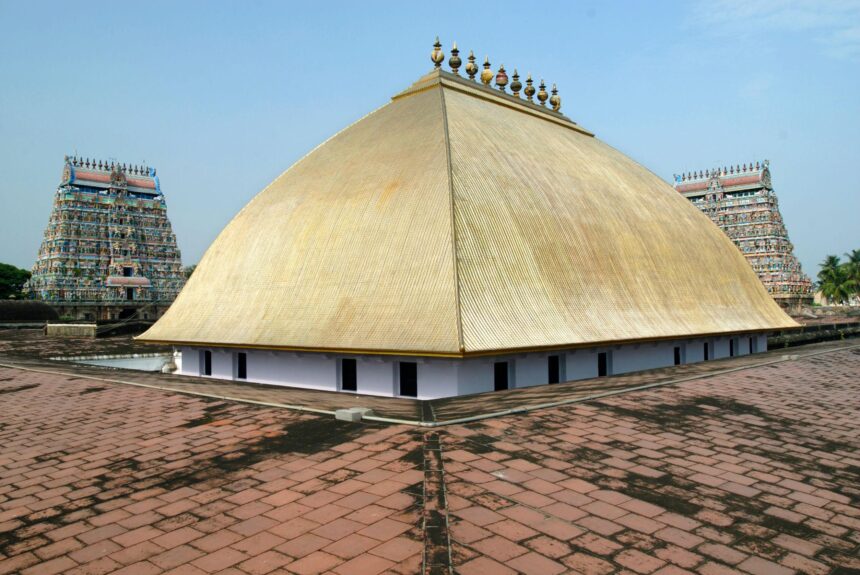
- Four towering Rajagopurams (gateway towers).
- Golden-roofed sanctum.
- Thousand-pillared hall.
- Beautiful stone sculptures.
- Sacred temple tanks.
- Intricate carvings of Bharatanatyam dance poses.
- Spacious courtyards.
- Traditional South Indian temple layout.
The temple’s architecture beautifully combines spirituality, science, and artistic excellence.
25 Incredible Facts About Nataraja Temple
- Dedicated to Lord Shiva as Nataraja.
- Represents the Space (Akasha) element.
- One of the Pancha Bhoota Sthalams.
- Famous for the Cosmic Dance of Shiva.
- Expanded by the Chola dynasty.
- Features four grand gateway towers.
- Golden roof symbolizes spiritual enlightenment.
- Home to the Chidambara Rahasyam.
- Connected with Bharatanatyam dance traditions.
- Mentioned in ancient Tamil literature.
- Beautiful Dravidian architecture.
- Intricate stone carvings.
- Sacred temple tank.
- One of India’s major Shaivite temples.
- Hosts grand annual festivals.
- Important center of Tamil culture.
- Inspires dancers and musicians.
- Symbolizes harmony between science and spirituality.
- Attracts scholars and researchers.
- Preserves centuries-old rituals.
- Supports local tourism.
- Rich collection of inscriptions.
- Associated with meditation and philosophy.
- Encourages cultural preservation.
- Continues to inspire millions of devotees.
Religious Significance
The temple is highly revered because:
- It honors Lord Shiva as the Cosmic Dancer.
- Represents the infinite nature of the universe.
- Symbolizes balance between creation and destruction.
- Encourages devotion and self-realization.
- Celebrates the unity of art, science, and spirituality.
Many devotees believe that worship at Chidambaram brings inner peace, wisdom, and spiritual growth.
Importance for Students
Students can learn about:
- South Indian History
- Chola Dynasty
- Temple Architecture
- Classical Dance (Bharatanatyam)
- Hindu Philosophy
- Tamil Literature
- Sculpture
- Astronomy and Symbolism
- Heritage Conservation
- Tourism Management
Educational visits help students connect classroom knowledge with real-world heritage.
Budget Travel Guide for Students
Estimated Travel Budget
| Expense | Approximate Cost |
|---|---|
| Train Fare | ₹300–₹900 |
| Bus Fare | ₹200–₹700 |
| Local Transport | ₹100–₹300 |
| Budget Hotel | ₹800–₹1,800 |
| Hostel | ₹500–₹1,000 |
| Meals | ₹200–₹500 |
| Local Sightseeing | ₹200–₹600 |
| Souvenirs | ₹100–₹500 |
Estimated Student Budget
- One-day trip: ₹1,000–₹2,000
- Two-day educational tour: ₹2,500–₹4,500
- Three-day trip: ₹4,500–₹6,500
Traveling in groups can help reduce transportation and accommodation costs.
Entry Fees and Other Costs
| Item | Approximate Cost |
|---|---|
| Temple Entry | Free |
| Special Darshan | Optional charges/donations |
| Guide | ₹300–₹700 |
| Parking | Depends on vehicle |
| Donations | Voluntary |
Best Time to Visit
The most pleasant months are:
- October
- November
- December
- January
- February
- March
Major festivals such as Arudra Darshan (Margazhi) and Ani Thirumanjanam attract large numbers of devotees.
Observance and Temple Etiquette
Visitors should:
- Wear modest clothing.
- Remove footwear before entering.
- Respect temple rituals.
- Maintain silence in prayer areas.
- Avoid photography where prohibited.
- Keep the temple clean.
- Follow instructions from temple staff.
Importance in Our Life
The Nataraja Temple teaches values that remain meaningful today:
- Balance
- Discipline
- Creativity
- Humility
- Patience
- Faith
- Self-awareness
- Respect for knowledge and culture
These principles help individuals grow both personally and professionally.
Daily Life Impacts
The philosophy of Lord Nataraja inspires us to:
- Accept change as a part of life.
- Balance work and personal life.
- Express creativity.
- Stay calm during challenges.
- Respect art and culture.
- Continue learning throughout life.
- Practice kindness.
- Live with purpose.
These values encourage healthier relationships and stronger communities.
Importance to Society
Nataraja Temple contributes by:
- Preserving Tamil cultural heritage.
- Promoting classical dance and music.
- Supporting local tourism.
- Encouraging heritage conservation.
- Inspiring artists and scholars.
- Preserving ancient inscriptions.
- Strengthening cultural identity.
- Promoting spiritual and philosophical learning.
Important Points for Students
- Located in Chidambaram, Tamil Nadu.
- Dedicated to Lord Shiva as Nataraja.
- Represents the Space element.
- One of the Pancha Bhoota Sthalams.
- Expanded by Chola rulers.
- Famous for Chidambara Rahasyam.
- Rich in Dravidian architecture.
- Linked to Bharatanatyam dance.
- Excellent destination for educational tours.
- Symbol of harmony between art and spirituality.
Frequently Asked Questions (FAQs)
1. Why is Nataraja Temple famous?
It is famous for worshipping Lord Shiva as the Cosmic Dancer (Nataraja) and for the Chidambara Rahasyam.
2. Where is the temple located?
In Chidambaram, Tamil Nadu.
3. Which deity is worshipped here?
Lord Nataraja (Lord Shiva) and Goddess Shivakamasundari.
4. Is temple entry free?
Yes, general entry is free.
5. What is Chidambara Rahasyam?
It is a sacred philosophical concept representing the invisible and formless nature of the Divine.
6. Which element does the temple represent?
The Space (Akasha) element among the Pancha Bhoota Sthalams.
7. Is the temple suitable for students?
Yes. It offers valuable learning in history, architecture, philosophy, dance, and culture.
8. What is the best time to visit?
October to March.
Visitor Review
Overall Rating: ⭐⭐⭐⭐⭐ (4.9/5)
| Category | Rating |
|---|---|
| Spiritual Experience | ⭐⭐⭐⭐⭐ |
| Historical Value | ⭐⭐⭐⭐⭐ |
| Architecture | ⭐⭐⭐⭐⭐ |
| Educational Value | ⭐⭐⭐⭐⭐ |
| Cultural Experience | ⭐⭐⭐⭐⭐ |
| Budget Friendliness | ⭐⭐⭐⭐☆ |
| Cleanliness | ⭐⭐⭐⭐☆ |
Honest Review
The Nataraja Temple in Chidambaram is a remarkable blend of spirituality, history, architecture, and art. The towering gopurams, golden-roofed sanctum, and beautifully carved sculptures create a memorable experience for visitors. Students will especially enjoy learning about the Chola dynasty, Bharatanatyam, temple engineering, and the temple’s philosophical significance. The peaceful atmosphere and rich cultural heritage make it one of the most rewarding educational and spiritual destinations in South India.
Wishing Messages
- May Lord Nataraja bless you with wisdom, peace, and success.
- Wishing you a life filled with creativity, balance, and happiness.
- May the Cosmic Dance of Lord Shiva inspire strength, courage, and positivity.
- May your journey be blessed with knowledge, good health, and prosperity.
Why Students Should Visit Nataraja Temple
Students visiting the Nataraja Temple can:
- Study one of India’s finest examples of Dravidian architecture.
- Learn about the Chola dynasty and Tamil heritage.
- Understand the connection between art, philosophy, and spirituality.
- Appreciate Bharatanatyam and traditional temple sculpture.
- Experience the importance of preserving cultural heritage.
Conclusion
The Nataraja Temple in Chidambaram is far more than a place of worship—it is a timeless symbol of India’s spiritual wisdom, artistic excellence, and cultural richness. Its majestic architecture, centuries-old traditions, and profound philosophical teachings continue to inspire pilgrims, artists, scholars, and students from around the world.
For students, the temple serves as a living classroom where history, architecture, dance, philosophy, literature, and heritage conservation come together. Budget-friendly travel options and immense educational value make it an outstanding destination for school and college tours.
Whether you visit for devotion, cultural exploration, photography, or academic learning, the Nataraja Temple offers an unforgettable experience and valuable life lessons about balance, creativity, humility, and the eternal rhythm of change.