

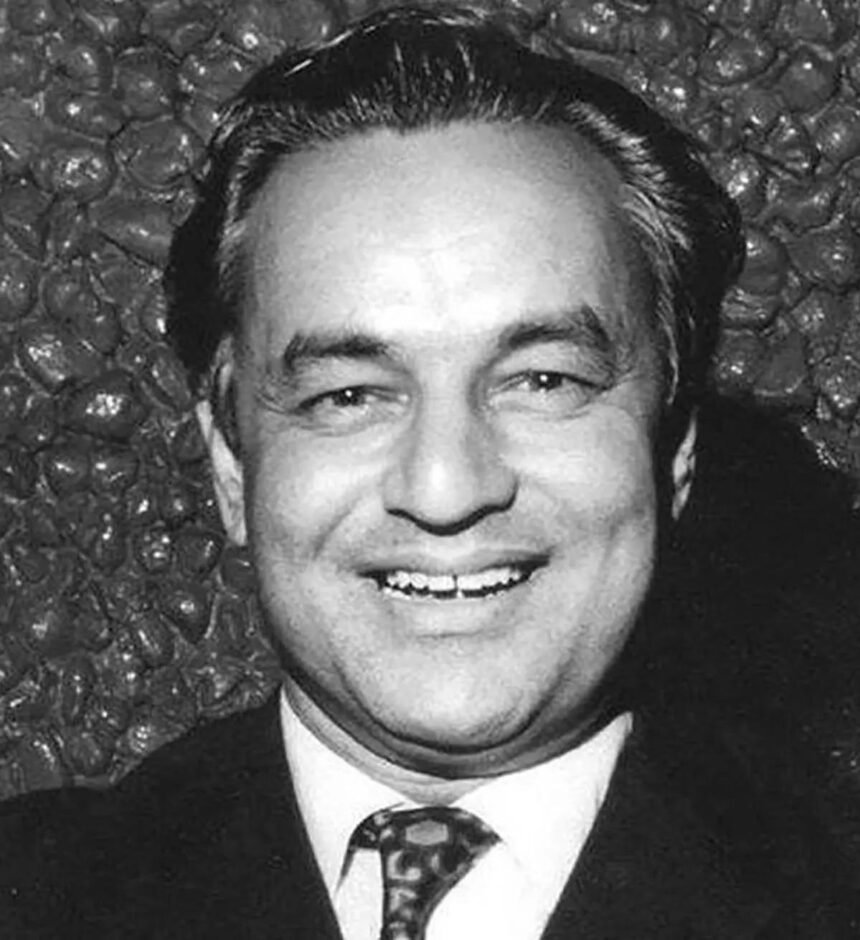
Heart-Touching Facts About Mukesh Ji That Keep His Voice Alive Forever

- Introduction
- 1. His Voice Became Closely Associated With Raj Kapoor
- 2. He Did Not Begin With an Easy, Straight-Line Career
- 3. His Early Musical Inspiration Included K. L. Saigal
- 4. Mukesh’s Simplicity Was One of His Most Recognizable Qualities
- 1. Develop your own identity
- 2. Do not underestimate simplicity
- 3. Practice emotional expression
- 4. Respect collaboration
- 5. Keep learning
- Communication is not only about what you say.
- 🎵 Voice
- 🎬 Cinema contribution
- 🏆 Recognition
- 📚 Educational value
- ❤️ Emotional connection
- 🌍 Cultural reach
- 🎂 Birth Anniversary
- 🕯️ Death Anniversary
- Who was Mukesh Ji?
- When was Mukesh born?
- When did Mukesh die?
- Why is Mukesh famous?
- What is Mukesh’s most famous song?
- Did Mukesh win a National Film Award?
- Did Mukesh win Filmfare Awards?
- Was Mukesh Raj Kapoor’s singing voice?
- What can students learn from Mukesh?
- How can students study Mukesh without spending much money?



Introduction
Some voices entertain us. Some voices become part of our memories.
Mukesh Ji belonged to the second category.
Even decades after his passing, his songs continue to be heard by students, parents, grandparents, music lovers and new generations discovering the golden era of Hindi cinema. His voice had a distinctive emotional quality—often simple, gentle, vulnerable and deeply human. That quality helped his songs communicate feelings that listeners could easily recognize in their own lives.
Mukesh Chand Mathur was born in Delhi on 22 July 1923 and died in Detroit, United States, on 27 August 1976, at the age of 53. He became one of Hindi cinema’s most recognizable playback singers, particularly associated with the screen persona of Raj Kapoor. (Wikipedia)
The Government of India’s commemorative brochure for his 100th birth anniversary highlights songs such as “Mera Joota Hai Japani” and “Main Pal Do Pal Ka Shayar Hoon” as examples of his lasting musical contribution. (India Post)
For students, Mukesh’s life is not only a story about music. It is also a story about practice, simplicity, emotional expression, perseverance and finding one’s own voice.
Who Was Mukesh Ji?
Mukesh Chand Mathur, popularly known simply as Mukesh, was an Indian playback singer whose career stretched from the early 1940s until 1976.
He worked with many important composers, lyricists, actors and filmmakers of Hindi cinema. His musical association with Raj Kapoor became particularly famous, with Mukesh providing the playback voice for several of Kapoor’s memorable screen performances.
His repertoire included romantic songs, philosophical songs, songs of loneliness, patriotic and socially themed compositions, as well as light-hearted numbers.
His career also included recognition from major awards. Filmfare’s official winners archive records Mukesh winning the Best Playback Singer (Male) award for songs including “Sab Kuchh Seekha Humne,” “Sabse Bada Nadan,” “Jai Bolo Beimaan Ki,” and “Kabhi Kabhie Mere Dil Mein.” (Filmfare)
10 Heart-Touching Facts About Mukesh Ji
1. His Voice Became Closely Associated With Raj Kapoor
One of the most memorable chapters of Mukesh’s career was his artistic association with actor-filmmaker Raj Kapoor.
Songs from films such as Awaara, Shree 420, Anari and Mera Naam Joker helped establish a recognizable connection between Kapoor’s screen personality and Mukesh’s voice.
The Indian Express, in a retrospective on Mukesh, described how his voice could express innocence, vulnerability, sadness and the everyday emotions of ordinary people.
This teaches students something important:
A successful creative partnership can become greater than the individuals involved when their talents complement each other.
2. He Did Not Begin With an Easy, Straight-Line Career
Mukesh’s early life was not simply a story of immediate fame.
Biographical accounts record that he was born in Delhi and initially worked with the Public Works Department before pursuing a career in films. His interest in singing developed while listening to music lessons being given to his sister. (Wikipedia)
This is particularly meaningful for students.
Sometimes a person’s first educational qualification, first job or first career direction does not completely define the future.
The important lesson is not to abandon responsibility, but to recognize one’s abilities and work patiently toward developing them.
3. His Early Musical Inspiration Included K. L. Saigal
Mukesh was influenced by the great singer K. L. Saigal during his early development.
Filmfare’s retrospective based on memories shared by Mukesh’s son Nitin Mukesh notes that Mukesh initially absorbed elements of Saigal’s singing style but gradually developed an identity of his own. (Filmfare)
That is an excellent lesson for aspiring singers, writers, artists and content creators:
Learn from your heroes—but do not remain a copy of them.
A student may begin by studying someone else’s method. With practice, experience and experimentation, a personal style can emerge.
4. Mukesh’s Simplicity Was One of His Most Recognizable Qualities
Mukesh was not remembered only for technical display.
His greatest strength was often the emotional directness of his singing.
Songs such as:
- “Kahin Door Jab Din Dhal Jaye” – Anand
- “Kabhi Kabhie Mere Dil Mein” – Kabhi Kabhie
- “Main Pal Do Pal Ka Shayar Hoon” – Kabhi Kabhie
- “Jeena Yahan Marna Yahan” – Mera Naam Joker
- “Mera Joota Hai Japani” – Shree 420
- “Dost Dost Na Raha” – Sangam
continue to be discussed and remembered by generations of listeners.
Filmfare records several of these songs among notable parts of his musical legacy. (Filmfare)
For students, the message is powerful:
Complexity is not always the same thing as excellence.
Sometimes clear communication and genuine feeling matter more than showing off one’s abilities.
5. He Won Major Recognition During His Career
Mukesh received significant recognition for his playback singing.
The official Government of India brochure commemorating his 100th birth anniversary notes his National Film Award recognition for “Kai Baar Yun Bhi Dekha Hai” from Rajnigandha. (India Post)
Filmfare’s official archive also records multiple Best Playback Singer (Male) wins for Mukesh, including the award associated with “Kabhi Kabhie Mere Dil Mein” in the 1977 awards listing for films released in 1976. (Filmfare)
These achievements demonstrate that a voice known for emotional simplicity could also receive formal recognition from major institutions.
6. His Songs Crossed Generations and Languages
Mukesh’s influence was not restricted to one generation of Hindi film audiences.
The Government of India’s commemorative publication notes that he also contributed songs in several regional languages, including Gujarati, Marathi, Bengali, Rajasthani, Punjabi and Sanskrit. (India Post)
That is significant because music can cross boundaries that ordinary communication sometimes cannot.
A song can travel:
from one generation → to another generation → from one city → to another country.
For students, this demonstrates the cultural power of creative work.
7. “Mera Joota Hai Japani” Became a Cultural Memory
One of Mukesh’s best-known songs is “Mera Joota Hai Japani” from Shree 420.
The song is remembered not simply as entertainment but as a cultural expression associated with the character and themes of the film.
The Government of India’s commemorative material specifically highlights the song as one of Mukesh’s enduring classics. (India Post)
The larger lesson is fascinating:
A song can become more than a song.
It can become a phrase people remember, a cultural reference and a piece of history.
8. His Emotional Singing Connected With Ordinary Human Feelings
Mukesh’s voice was particularly effective in songs involving:
- loneliness
- love
- separation
- hope
- friendship
- uncertainty
- memories
- everyday struggles
- philosophical reflection
The Indian Express described his ability to convey emotions associated with love, loss and human relationships.
This is one reason students can learn from his work even if they are not planning a career in music.
Emotional intelligence is useful in every profession.
A teacher needs it.
A doctor needs it.
A manager needs it.
A journalist needs it.
An entrepreneur needs it.
A parent needs it.
Understanding what people feel can improve how we communicate with them.
9. His Legacy Continued Through His Family
Mukesh’s musical legacy continued through his son Nitin Mukesh, who also became a singer.
In a Filmfare interview, Nitin Mukesh recalled his father’s advice about being a good human being and singing with simplicity and feeling. (Filmfare)
This makes Mukesh’s story interesting beyond his recordings.
Legacy is not only about awards or famous songs.
It can also be about:
values → habits → knowledge → inspiration → the next generation.
For students, teaching another person what you have learned can itself become a form of legacy.
10. His Voice Survived His Lifetime
Mukesh died in 1976, but his recordings did not disappear.
His voice remains accessible through films, radio, streaming platforms, archival recordings, television, concerts and music education.
That is perhaps the most heart-touching fact of all.
A human life has a limited duration.
But creative work can continue communicating with people long after its creator is gone.
Mukesh’s career therefore offers a beautiful reminder:
A person’s life may end, but meaningful work can continue speaking.
Mukesh Ji’s Life Timeline
| Year | Important Event |
|---|---|
| 1923 | Mukesh Chand Mathur was born in Delhi. |
| Early years | Developed interest in music and listened to his sister’s music lessons. |
| Early 1940s | Moved toward a career in films and singing. |
| 1940s | Began establishing himself as a playback singer. |
| 1945 | “Dil Jalta Hai” from Pehli Nazar became an important early recording associated with his career. (Filmfare) |
| 1950s | Became increasingly prominent in Hindi cinema. |
| 1955 | “Mera Joota Hai Japani” from Shree 420 became one of his signature songs. (India Post) |
| 1960s | Continued major collaborations with composers, actors and filmmakers. |
| 1970s | Received major awards and recorded several enduring songs. |
| 1974 | Received National Film Award recognition for “Kai Baar Yun Bhi Dekha Hai,” according to the Government of India’s commemorative brochure. (India Post) |
| 1976 | Sang major songs including those associated with Kabhi Kabhie. |
| 27 August 1976 | Passed away in Detroit at age 53. (Wikipedia) |
| 1977 | Filmfare’s archive records his posthumous Best Playback Singer (Male) award for “Kabhi Kabhie Mere Dil Mein.” (Filmfare) |
| 2023 | India commemorated his 100th birth anniversary. (India Post) |
Famous Mukesh Songs Students Can Explore
Students interested in Indian music history can create a listening project around songs such as:
- Mera Joota Hai Japani – Shree 420
- Jeena Yahan Marna Yahan – Mera Naam Joker
- Kahin Door Jab Din Dhal Jaye – Anand
- Kabhi Kabhie Mere Dil Mein – Kabhi Kabhie
- Main Pal Do Pal Ka Shayar Hoon – Kabhi Kabhie
- Dost Dost Na Raha – Sangam
- Sab Kuchh Seekha Humne – Anari
- Jo Tumko Ho Pasand – Safar
- Kahin Baar Yun Bhi Dekha Hai – Rajnigandha
- Sajan Re Jhooth Mat Bolo – Teesri Kasam
These songs can also become useful material for students studying Hindi literature, cinema, music, cultural history and communication.
What Can Students Learn From Mukesh Ji?
1. Develop your own identity
Mukesh’s early inspiration came from established singers, but his career eventually developed a distinctive identity.
Lesson: Inspiration is the beginning; originality is the journey.
2. Do not underestimate simplicity
You do not always have to make something complicated to make it memorable.
Lesson: Make your message clear and meaningful.
3. Practice emotional expression
A technically correct performance can still feel empty if there is no emotional connection.
Lesson: Understand what you are communicating.
4. Respect collaboration
Mukesh’s career involved composers, lyricists, actors, directors and musicians.
Lesson: Great work is often created through teamwork.
5. Keep learning
His career developed over decades.
Lesson: Education does not end when school or college ends.
Costs: How Much Does It Cost for a Student to Study Mukesh’s Musical Legacy?
There is no special “Mukesh course fee” required to begin learning about his work.
A student can explore his contribution at different budget levels:
| Learning Activity | Possible Cost |
|---|---|
| Reading biographies and public articles | Free |
| Listening to legally available recordings | Free to subscription-based |
| School/college music discussion | Usually included in education |
| Basic vocal training | Varies by teacher/institute |
| Private Hindustani vocal lessons | Varies significantly by teacher and location |
| Music books/biographies | Approximately ₹200–₹1,000+ depending on edition |
| Advanced music education | Institution-dependent |
These are indicative educational costs, not fees charged by Mukesh’s family or estate.
For students, the most valuable starting point can actually be inexpensive: listen carefully, read about the historical context, study lyrics, understand the film in which a song appeared, and write down what emotions the singer communicates.
Why Mukesh Ji Is Important in Our Life
Mukesh’s importance is not limited to Bollywood history.
His work can teach us about human expression.
When students hear a song about separation, they may think about someone they miss.
When they hear a song about dreams, they may think about their future.
When they hear a philosophical song, they may begin asking questions about life.
That is the power of art.
Music gives people a safe way to experience emotions.
It can make a difficult day feel lighter and an old memory feel close again.
Significance of Mukesh Ji in Indian Society
Mukesh belongs to a generation of artists whose recordings became part of India’s cultural memory.
His music represents an important period in Hindi cinema when:
- poetry had a central place in film songs;
- composers played a major creative role;
- playback singers became household names;
- radio helped songs reach mass audiences;
- cinema connected different regions and communities;
- film music became an important part of everyday life.
His songs therefore provide students with a way to study Indian cinema, social history, poetry, music and popular culture together.
Mukesh Ji and Emotional Intelligence
One particularly valuable lesson is emotional expression.
Students today often focus heavily on marks, exams, degrees and careers.
But communication also requires the ability to understand emotions.
Mukesh’s singing demonstrates how tone, pauses, pronunciation and feeling can change the way words are received.
This can help students understand that:
Communication is not only about what you say.
It is also about:
how you say it + why you say it + what the listener feels.
Review Section: Mukesh Ji’s Musical Legacy
🎵 Voice
Distinctive and emotionally expressive.
🎬 Cinema contribution
Closely associated with several landmark Hindi films and especially with Raj Kapoor’s screen persona.
🏆 Recognition
Received major awards including Filmfare honours and National Film Award recognition. (India Post)
📚 Educational value
His life can be studied through music, history, cinema, literature and communication.
❤️ Emotional connection
His recordings continue to resonate because they often deal with universal human experiences.
🌍 Cultural reach
His music reached audiences beyond Hindi-speaking India and his songs became part of wider cultural memory. (India Post)
Rather than measuring a historical artist with a simple numerical score, it is more useful to examine the different dimensions of his contribution: voice, repertoire, collaborations, awards, cultural reach and continuing audience interest.
Observance and Remembrance of Mukesh Ji
Mukesh’s two important annual remembrance dates are:
🎂 Birth Anniversary
22 July
🕯️ Death Anniversary
27 August
His 100th birth anniversary was commemorated in India, including through a Government of India publication celebrating his life and contribution. (India Post)
Schools and colleges can use these occasions for:
- music appreciation sessions;
- old Hindi song listening activities;
- biography-writing competitions;
- singing competitions;
- discussions on Indian cinema;
- poetry and lyric analysis;
- presentations about playback singing.
10 Important Points to Remember
- Mukesh’s full name was Mukesh Chand Mathur.
- He was born on 22 July 1923.
- He was born in Delhi.
- He became a major Hindi playback singer.
- His voice became strongly associated with Raj Kapoor.
- “Mera Joota Hai Japani” is among his best-known recordings.
- He received several Filmfare Best Playback Singer awards. (Filmfare)
- He received National Film Award recognition for “Kai Baar Yun Bhi Dekha Hai.” (India Post)
- He died on 27 August 1976 in Detroit. (Wikipedia)
- His recordings continue to introduce new generations to the emotional world of classic Hindi film music.
Frequently Asked Questions About Mukesh Ji
Who was Mukesh Ji?
Mukesh Chand Mathur was a celebrated Indian playback singer, particularly known for his emotionally expressive voice and his association with Hindi cinema.
When was Mukesh born?
Mukesh was born on 22 July 1923 in Delhi. (Wikipedia)
When did Mukesh die?
He died on 27 August 1976 in Detroit, United States. (Wikipedia)
Why is Mukesh famous?
He is remembered for his distinctive playback singing, memorable collaborations with leading filmmakers and composers, association with Raj Kapoor, and songs that remain popular across generations.
What is Mukesh’s most famous song?
There is no single universally accepted answer. Among his widely remembered recordings are “Mera Joota Hai Japani,” “Jeena Yahan Marna Yahan,” “Kahin Door Jab Din Dhal Jaye” and “Kabhi Kabhie Mere Dil Mein.”
Did Mukesh win a National Film Award?
Yes. The Government of India’s commemorative brochure records his National Film Award recognition for “Kai Baar Yun Bhi Dekha Hai” from Rajnigandha. (India Post)
Did Mukesh win Filmfare Awards?
Yes. Filmfare’s official winners archive records multiple Best Playback Singer (Male) awards for Mukesh. (Filmfare)
Was Mukesh Raj Kapoor’s singing voice?
Mukesh became particularly famous for providing playback for Raj Kapoor in several important films, creating one of Hindi cinema’s most recognizable actor-singer partnerships.
What can students learn from Mukesh?
Students can learn about perseverance, originality, collaboration, emotional communication, simplicity and the long-term value of creative work.
How can students study Mukesh without spending much money?
They can begin with biographies, library resources, legally available recordings, documentaries, film-history resources and school or college music activities.
Final Conclusion: Why Mukesh Ji’s Voice Still Matters
Mukesh Ji’s story is ultimately about something much bigger than singing.
It is about human emotion.
He showed that a voice does not have to be loud to be powerful. A performance does not have to be complicated to be memorable. And a person does not need to live forever to leave something that lasts.
His journey from Delhi to the world of Hindi cinema, his evolution as a singer, his association with Raj Kapoor, his awards, his unforgettable songs and his continuing cultural presence together explain why generations continue to remember him. (India Post)
For students, perhaps the most valuable message is simple:
Find your own voice, keep learning, respect your craft and put genuine feeling into whatever you create.
Mukesh’s physical life ended in 1976, but his recordings continue to speak to people who were not even born when he was alive.
That is one of the most beautiful forms of legacy.
His voice became history—but it never stopped becoming memory. ❤️🎶










Thanks for sharing. I read many of your blog posts, cool, your blog is very good.
Thanks for sharing. I read many of your blog posts, cool, your blog is very good. https://accounts.binance.com/es-MX/register?ref=A00OPRX4