

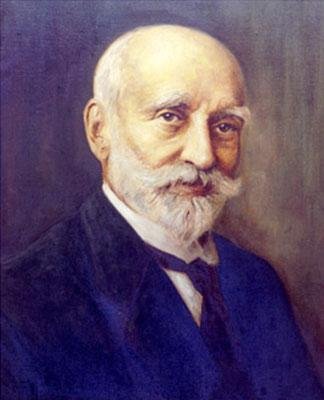
🚀 The Lessons from the Life of Sir Dorabji Tata Ji That Can Change Society Forever

- Introduction: Why Sir Dorabji Tata Ji Still Matters
- 1. Turn Someone Else’s Vision into Reality
- Lesson for students
- In modern life, calculated risk can mean:
- What does this teach us?
- Student lesson
- Why does this matter today?
- Instead of asking:
- Historical financial figures
- What does it cost to follow his lessons today?
- 1. Industry
- 2. Science
- 3. Education
- 4. Sports
- 5. Philanthropy
- 6. Community development
- 7. Nation-building
- Historical Review
- Leadership Review
- Philanthropy Review
- Student Review
- Social Review
- Who was Sir Dorabji Tata?
- When was Sir Dorabji Tata born?
- Who was Sir Dorabji Tata’s father?
- What was Dorabji Tata’s contribution to sports?
- Did Dorabji Tata establish a trust?
- What was the Lady Tata Memorial Trust?
- When did Sir Dorabji Tata die?
- Was Dorabji Tata India’s first Olympic representative?
- What is the biggest lesson from his life?


Introduction: Why Sir Dorabji Tata Ji Still Matters
Some people build businesses. Some build institutions. And some leave behind ideas that continue influencing society long after they are gone.
Sir Dorabji Tata Ji (1859–1932) belongs to the third category.
The elder son of industrialist Jamsetji Nusserwanji Tata, Dorabji Tata played a major role in turning his father’s ambitious ideas into functioning institutions and industries. His contribution extended beyond business into science, education, philanthropy and sports. The Tata Group’s historical records describe him as the person who helped give concrete shape to Jamsetji Tata’s vision. (Tata)
His story is particularly relevant for students and young entrepreneurs because it demonstrates an important idea:
Success is not only about what you accumulate; it can also be measured by what you help build for others.
From supporting India’s industrial development to helping institutionalise the Olympic movement in India and eventually dedicating his fortune to philanthropy, Dorabji Tata’s life provides several lessons that remain relevant today.
Who Was Sir Dorabji Tata Ji?
Sir Dorabji Tata was born on 27 August 1859. He studied at the Proprietary High School in Bombay and later attended Gonville and Caius College, Cambridge. His years at Cambridge also developed his passion for sports, where he participated in cricket, football, tennis, rowing and athletics. (Tata)
After returning to India, he joined the Tata business world and eventually became one of the key figures responsible for implementing Jamsetji Tata’s unfinished ambitions.
These included projects connected with:
- Iron and steel
- Electric power
- Scientific research
- Industrial development
- Sports
- Philanthropy
Tata Central Archives records that after Jamsetji Tata’s death, Dorabji, together with Sir Ratan Tata, R.D. Tata and other colleagues, helped bring several of Jamsetji’s major projects toward completion. (Tata Central Archives)
In recognition of his contribution to India’s industrial development, he received a knighthood in 1910. (Tata Central Archives)
🕰️ Sir Dorabji Tata Ji Timeline
| Year | Important Event |
|---|---|
| 1859 | Sir Dorabji Tata was born on 27 August |
| 1870s | Studied in England and developed a strong interest in sports |
| 1882 | Completed his B.A. after returning to Bombay and studying at St. Xavier’s College |
| 1880s–1900s | Became increasingly involved in Tata’s industrial projects |
| 1910 | Received a knighthood for his contribution to India’s industrial advancement |
| 1920 | Supported India’s Olympic participation |
| 1924 | Financed India’s contingent to the Paris Olympics |
| 1927 | Became founding President of the Indian Olympic Association |
| 1931 | His wife, Lady Meherbai Tata, died after suffering from leukaemia |
| 1932 | Established the Sir Dorabji Tata Trust and Lady Tata Memorial Trust |
| 1932 | Died on 3 June at Bad Kissingen, Germany |
The timeline is based primarily on Tata’s archival and historical records and the Indian Olympic Association’s history. (Tata)
🚀 7 Powerful Lessons from Sir Dorabji Tata Ji’s Life
1. Turn Someone Else’s Vision into Reality
One of the biggest lessons from Dorabji Tata’s life is that leadership does not always mean starting something yourself.
His father, Jamsetji Tata, had several ambitious ideas. After Jamsetji’s death, many of those projects still required enormous effort, resources and determination.
Dorabji Tata helped carry these ideas forward.
Tata’s historical records specifically credit him and his associates with helping bring Jamsetji’s major projects—including steel, scientific research and hydro-electric development—towards reality. (Tata Central Archives)
Lesson for students
You don’t always have to invent a completely new idea.
You can:
- Continue your family’s work.
- Improve an existing project.
- Complete unfinished research.
- Help a teacher’s idea become reality.
- Support your friend’s startup.
- Build upon previous generations’ achievements.
Great progress often comes from continuation, not just invention.
2. Courage Means Taking Calculated Risks
Dorabji Tata’s industrial career also illustrates the importance of taking difficult decisions during uncertain periods.
A particularly dramatic episode came in 1924, when Tata Iron and Steel faced serious financial pressure after an ambitious expansion programme encountered falling steel prices, transportation and labour difficulties and other problems.
According to Tata Central Archives, Dorabji Tata and R.D. Tata went to the Imperial Bank and pledged his personal fortune, estimated at about ₹1 crore at the time, including his wife’s jewellery, to obtain financing. (Tata Central Archives)
This should not be interpreted as a lesson that people should recklessly risk everything.
The broader lesson is about responsibility, conviction and calculated risk.
In modern life, calculated risk can mean:
- Learning a new skill.
- Starting a business after research.
- Investing in education.
- Changing careers carefully.
- Supporting an innovative idea.
- Continuing after an initial failure.
Courage is strongest when combined with preparation.
3. Wealth Can Become a Social Responsibility
Perhaps the most powerful part of Dorabji Tata’s legacy came near the end of his life.
In 1932, he established the Sir Dorabji Tata Trust and dedicated his fortune toward learning, research, relief and charitable purposes. Tata Trusts records describe the trust as one of India’s oldest non-sectarian philanthropic organisations. (Tata Trusts)
Tata’s historical timeline records the value of his wealth contributed to the trust as approximately ₹10 million at the time. (Tata)
His philanthropy was not limited to cash.
Tata Trusts records that his fortune included substantial shareholdings, property and jewellery, including the famous Jubilee Diamond. (Tata Trusts)
What does this teach us?
You don’t need to be extremely wealthy to contribute.
A person can donate:
- Money
- Books
- Time
- Knowledge
- Mentorship
- Food
- Educational resources
- Professional skills
A student’s contribution may be teaching another student.
A professional’s contribution may be mentoring a beginner.
A business owner’s contribution may be creating employment.
Giving is not limited to money.
4. Education and Research Can Transform Society
Dorabji Tata’s philanthropic philosophy placed strong importance on learning and research.
The Sir Dorabji Tata Trust was created to support advancement in learning and research, relief and other charitable purposes. (Tata Trusts)
This matters because education does something that temporary assistance often cannot: it can create long-term capability.
Education can help people:
- Understand opportunities.
- Develop professional skills.
- Conduct scientific research.
- Solve community problems.
- Create businesses.
- Become teachers.
- Improve public institutions.
The Trust’s historical contributions later included institutions such as the Tata Institute of Social Sciences, Tata Memorial Hospital and Tata Institute of Fundamental Research, among others. (Tata Central Archives)
Student lesson
If you have limited resources, investing in knowledge can still be transformative.
Read.
Ask questions.
Learn technology.
Study history.
Understand finance.
Develop communication skills.
And most importantly, share what you learn.
5. Sports Can Build a Nation
Dorabji Tata’s relationship with sport is one of the fascinating parts of his biography.
He had developed a passion for sport during his Cambridge years. Later, he became an important supporter of the Olympic movement in India. (Tata)
The Indian Olympic Association’s history explains that his involvement was particularly important around India’s participation in the 1920 and 1924 Olympic Games and the development of an organised Olympic structure in India. (Indian Olympic Association)
Tata records state that he financed the Indian contingent for the 1924 Paris Olympics and served as president of the Indian Olympic Council. (Tata)
In 1927, the Indian Olympic Association was formed, with Dorabji Tata as its founding President, according to the IOA’s historical account. (Indian Olympic Association)
He also helped support sporting institutions and associations in Bombay.
Why does this matter today?
Sports can teach:
- Discipline
- Teamwork
- Patience
- Leadership
- Handling failure
- Physical fitness
- Respect for opponents
For students, sports should not necessarily be viewed as the opposite of education.
Sport itself can be an education.
6. Build Institutions, Not Just Personal Success
A short-term achievement can disappear.
An institution can continue serving people for generations.
That is an important theme in Dorabji Tata’s legacy.
His contribution was not simply about personal wealth or business success. It included supporting institutions, trusts, sports organisations and scientific and educational development. (Tata Central Archives)
This gives us a powerful modern lesson:
Instead of asking:
“What can I achieve?”
Also ask:
“What can I build that will continue helping people after I am gone?”
For a student, that might be:
- A free educational website.
- A student community.
- A library.
- A scholarship initiative.
- An open-source project.
- A research project.
- A local environmental initiative.
The size does not matter as much as the sustainability and usefulness of the idea.
7. Success and Service Can Exist Together
Perhaps the deepest lesson is that business and social responsibility do not have to be treated as completely separate worlds.
Dorabji Tata was involved in major industrial development while also supporting education, sports, research and philanthropy. (Tata)
His story therefore raises a useful question for today’s entrepreneurs:
Can a business create value for customers while also creating value for society?
Modern businesses increasingly discuss:
- Social impact
- Sustainability
- Employee welfare
- Responsible innovation
- Education
- Healthcare
- Community development
Dorabji Tata’s era was very different from ours, so modern companies cannot simply copy historical models. But the underlying principle—using capability and resources constructively—remains relevant.
💰 Costs and Financial Facts Associated with Sir Dorabji Tata
A biography of Dorabji Tata is also interesting from a financial perspective.
Historical financial figures
₹1 crore: Tata Central Archives records that in the 1924 financial crisis, Dorabji Tata pledged his personal fortune, estimated at approximately ₹1 crore, to help secure financing for Tata Iron and Steel. (Tata Central Archives)
₹10 million: Tata’s historical timeline records that he donated wealth valued at approximately ₹10 million at the time when establishing the Sir Dorabji Tata Trust in 1932. (Tata)
These are historical amounts, not today’s equivalent prices.
What does it cost to follow his lessons today?
There is no fixed cost.
| Lesson | Possible modern cost |
|---|---|
| Reading & learning | Free–₹2,000+ depending on resources |
| Online skill development | Free–₹50,000+ |
| Sports participation | Free–₹20,000+ annually depending on sport |
| Volunteering | Often ₹0 |
| Mentoring others | Usually ₹0 |
| Starting a community project | ₹0–₹50,000+ |
| Starting a business | Highly variable |
The central message is that social contribution does not require great wealth.
🏭 Dorabji Tata and India’s Industrial Development
Dorabji Tata’s industrial contribution cannot be separated from the larger Tata story.
Tata Central Archives records that under his stewardship, the Tata enterprise expanded into areas including:
- Integrated steel
- Electric power
- Edible oils and soap
- Cement
- Insurance
- Aviation
He also helped advance the Indian Institute of Science project. (Tata Central Archives)
His involvement in steel development was particularly significant. Historical records describe his exploration for iron ore in Central India, including difficult journeys through remote areas. (Tata Central Archives)
This was a period when India’s industrial infrastructure was still developing under colonial rule.
His work therefore forms part of the broader history of Indian industrialisation.
🏙️ Dorabji Tata and Jamshedpur
Dorabji Tata’s legacy also connects strongly with Jamshedpur, India’s major steel city.
Tata Central Archives notes that his contribution to Jamshedpur extended beyond industrial activity into town planning. The development of parks and recreational spaces reflected the idea that an industrial city should also provide a quality living environment. (Tata Central Archives)
This offers an important lesson for modern urban development:
A city should not only produce economic output; it should also provide spaces where people can live, work and grow.
🏅 Sir Dorabji Tata and the Olympic Movement
There is an important historical nuance here.
India’s first Olympic appearance was in 1900, when Norman Pritchard represented India at Paris. (Indian Olympic Association)
Therefore, it would be inaccurate to say that Dorabji Tata personally brought India’s first-ever Olympic appearance in 1900.
His major contribution came later, particularly around India’s Olympic participation in 1920 and 1924 and the creation of an organised national Olympic structure. The Indian Olympic Association identifies his role in the development of this movement and records him as its founding President in 1927. (Indian Olympic Association)
This distinction is important when writing responsible history.
❤️ Dorabji Tata and Lady Meherbai Tata
Dorabji Tata’s philanthropic story was also deeply connected with his wife, Lady Meherbai Tata.
Lady Meherbai died in 1931 after suffering from leukaemia. In her memory, Dorabji established the Lady Tata Memorial Trust in 1932, supporting research into leukaemia and related blood diseases. (Lady Tata Trust)
This is a powerful example of how personal grief can sometimes be transformed into support for scientific research.
The Lady Tata Memorial Trust continues to support research in the field of leukaemia and related disorders. (Lady Tata Trust)
🌍 Significance of Sir Dorabji Tata Ji in Society
Dorabji Tata’s significance extends across several fields:
1. Industry
He helped develop major Tata industrial enterprises.
2. Science
His philanthropic legacy supported scientific research and institutions.
3. Education
His trust supported advancement of learning.
4. Sports
He played a significant role in the institutional development of India’s Olympic movement.
5. Philanthropy
He dedicated his fortune to a charitable trust.
6. Community development
The industrial and urban development associated with the Tata enterprise included attention to living conditions and recreation.
7. Nation-building
His work contributed to institutions that continued beyond his lifetime.
📌 10 Important Facts About Sir Dorabji Tata
- He was born on 27 August 1859. (Tata)
- He was the elder son of Jamsetji Nusserwanji Tata. (Tata Central Archives)
- He studied at Gonville and Caius College, Cambridge. (Tata)
- He had a strong interest in cricket, football, tennis, rowing and athletics. (Tata Central Archives)
- He received a knighthood in 1910. (Tata Central Archives)
- He played a major role in supporting India’s Olympic movement during the 1920s. (Indian Olympic Association)
- He financed India’s contingent to the 1924 Paris Olympics. (Tata)
- He became founding President of the Indian Olympic Association in 1927, according to the IOA’s historical account. (Indian Olympic Association)
- He established the Sir Dorabji Tata Trust in 1932. (Tata Trusts)
- He died on 3 June 1932 in Bad Kissingen, Germany. (Tata Trusts)
📅 Important Dates and Observance
There is no widely established official national observance known as “Sir Dorabji Tata Day.”
However, his birth anniversary, 27 August, can be used by schools, educational organisations and community groups as an opportunity to discuss:
- Responsible entrepreneurship
- Indian industrial history
- Philanthropy
- Scientific research
- Sports development
- Leadership
- Education
Schools could organise an essay competition, biography reading, sports event or community-service activity around his life.
📝 Review: What Can We Learn from His Life?
Historical Review
Sir Dorabji Tata’s life provides an important window into India’s early industrial and institutional development.
Leadership Review
His career demonstrates the importance of taking responsibility for long-term projects rather than focusing only on immediate personal achievement.
Philanthropy Review
His decision to dedicate his fortune to a charitable trust represents one of the most notable parts of his legacy. (Tata Trusts)
Student Review
Students can particularly learn from his combination of education, sport, leadership and service.
Social Review
His story shows how institutions can potentially create effects that extend beyond an individual’s lifetime.
Overall, rather than reducing his life to a simple success story, it is more useful to study the different choices, institutions and historical circumstances that shaped his contribution.
❓ Frequently Asked Questions About Sir Dorabji Tata
Who was Sir Dorabji Tata?
Sir Dorabji Tata was an Indian industrialist, philanthropist and sports supporter who helped develop the Tata enterprise and contributed to India’s industrial, educational, scientific and sporting institutions. (Tata)
When was Sir Dorabji Tata born?
He was born on 27 August 1859. (Tata)
Who was Sir Dorabji Tata’s father?
His father was Jamsetji Nusserwanji Tata, founder of the Tata Group. (Tata Central Archives)
What was Dorabji Tata’s contribution to sports?
He was an important supporter of India’s Olympic movement, helped finance India’s 1924 Paris Olympic contingent and later became founding President of the Indian Olympic Association in 1927. (Tata)
Did Dorabji Tata establish a trust?
Yes. He established the Sir Dorabji Tata Trust in 1932, dedicating his fortune toward learning, research, relief and charitable purposes. (Tata Trusts)
What was the Lady Tata Memorial Trust?
It was established by Dorabji Tata in memory of Lady Meherbai Tata and supports research related to leukaemia and related disorders. (Lady Tata Trust)
When did Sir Dorabji Tata die?
He died on 3 June 1932 at Bad Kissingen, Germany. (Tata Trusts)
Was Dorabji Tata India’s first Olympic representative?
No. India’s first Olympic representation came in 1900, when Norman Pritchard represented India. Dorabji Tata’s major contribution was to the organisation and financing of India’s Olympic participation during the 1920s. (Indian Olympic Association)
What is the biggest lesson from his life?
One useful lesson is that personal achievement can be connected with institution-building and service to society.
🌱 How Students Can Apply the 7 Lessons Today
You don’t have to become an industrialist to apply Dorabji Tata’s ideas.
As a student:
Learn consistently and help another student.
As an entrepreneur:
Think about customers, employees and society—not only revenue.
As a professional:
Share your knowledge with people starting their careers.
As a teacher:
Create learning opportunities beyond the classroom.
As a sportsperson:
Develop discipline and teamwork.
As a citizen:
Support useful community initiatives.
As a human being:
Ask yourself how your knowledge, time and resources can benefit someone else.
🙏 Wishing and Tribute to Sir Dorabji Tata Ji
Remembering Sir Dorabji Tata Ji is not simply about remembering an industrialist from history. It is about remembering the possibilities of education, courage, institution-building, sport and responsible philanthropy.
On his birth anniversary, we can share a simple message:
“May the life of Sir Dorabji Tata Ji inspire us to learn with humility, work with courage, build with responsibility and serve society with compassion.”
His legacy reminds us that the value of achievement can extend far beyond the individual who creates it.
🌟 Conclusion: A Legacy Beyond Business
Sir Dorabji Tata Ji lived during a period when modern Indian industry and institutions were still developing. He inherited enormous responsibilities after the death of his father, helped advance major industrial projects, supported India’s sporting ambitions and eventually dedicated his fortune to philanthropy. (Tata)
His story offers seven powerful lessons:
- Continue meaningful visions.
- Take calculated risks.
- Use wealth responsibly.
- Invest in education and research.
- Support sports and healthy development.
- Build institutions, not only personal success.
- Connect achievement with service.
Perhaps the most relevant lesson for today’s generation is simple:
Your success becomes more meaningful when it creates opportunities for other people.
For students, entrepreneurs, teachers and professionals, the life of Sir Dorabji Tata Ji can therefore be studied not merely as a chapter in Indian business history, but as a case study in leadership, institution-building, philanthropy and social responsibility.









Some times its a pain in the ass to read what blog owners wrote but this website is real user genial! .
I don’t think the title of your article matches the content lol. Just kidding, mainly because I had some doubts after reading the article. https://accounts.binance.info/da-DK/register?ref=V3MG69RO
I don’t think the title of your article matches the content lol. Just kidding, mainly because I had some doubts after reading the article.
I don’t think the title of your article matches the content lol. Just kidding, mainly because I had some doubts after reading the article.