Powerful Reasons Why Indian State Formation Days Inspire Pride, Unity, and a Brighter Future
Introduction: What Are State Formation Days?
India is a country of remarkable diversity. Different regions have their own languages, festivals, food, traditions, historical experiences, and cultural identities. Despite these differences, all states and Union Territories are part of one nation.
State Formation Days commemorate the establishment of a state or, in some cases, a significant constitutional or administrative change that shaped its present identity. These occasions help people remember the historical events, public movements, political decisions, and aspirations that influenced India’s geographical and administrative development.
From Maharashtra Day on 1 May to Telangana Formation Day on 2 June, and from Haryana Foundation Day on 1 November to Jharkhand Foundation Day on 15 November, these observances tell stories of identity, perseverance, development, and belonging.
For students, teachers, researchers, and ordinary citizens, learning about these days is an opportunity to understand Indian history beyond textbooks. They also remind us that regional pride and national unity can complement each other.
In this article, we explore the history, important dates, timeline, facts, celebrations, significance, wishes, frequently asked questions, and everyday lessons associated with State Formation Days in India.
1. History of State Formation Days in India
The history of India’s state boundaries reflects centuries of cultural development, political change, and administrative reorganisation. The boundaries we see on today’s map did not all emerge at the same time.
Before independence
Before 1947, the Indian subcontinent included British-administered provinces and numerous princely states. These regions differed in their administrative arrangements, languages, traditions, and political histories.
After independence, integrating these territories and creating a workable administrative structure became a major national task.
The reorganisation of states after independence
Initially, the country inherited a complicated arrangement of provinces and princely states. People increasingly demanded administrative units that recognised linguistic and cultural identities.
In 1953, Andhra State was established following a movement for a separate Telugu-speaking state. This development contributed to wider discussions about linguistic reorganisation.
The States Reorganisation Commission examined the question, and the States Reorganisation Act, 1956, brought substantial changes to India’s state boundaries. Several states, including Kerala and the state then called Mysore, emerged in their reorganised forms on 1 November 1956. <Cite refs={[“turn324924search20″,”turn324924search6”]}/>
The creation of new states in later decades
State formation continued after 1956.
- 1960: Maharashtra and Gujarat were formed following the division of Bombay State.
- 1963: Nagaland became a state.
- 1966: Haryana was created from the former Punjab state.
- 1971–1972: Himachal Pradesh attained full statehood, followed by important changes involving Manipur, Meghalaya, and Tripura.
- 1975: Sikkim became a state of India.
- 1987: Arunachal Pradesh, Mizoram, and Goa attained statehood.
- 2000: Chhattisgarh, Uttarakhand, and Jharkhand were created.
- 2014: Telangana became India’s newest state at that time. <Cite refs={[“turn324924search20″,”turn324924search6”]}/>
These events demonstrate that India’s federal structure has evolved in response to historical circumstances, public aspirations, constitutional processes, and administrative considerations.
2. Important State Formation Days in India
India’s state-related anniversaries are observed on different dates. Some commemorate the establishment of a state, while others mark a major reorganisation or the adoption of a present-day name.
| Date | State or states | Significance |
|---|---|---|
| 21 January | Manipur, Meghalaya, Tripura | Statehood in 1972 |
| 20 February | Arunachal Pradesh, Mizoram | Statehood in 1987 |
| 22 March | Bihar | Bihar Day, commemorating its separation from Bengal in 1912 |
| 30 March | Rajasthan | Rajasthan Day, associated with the formation of Greater Rajasthan in 1949 |
| 1 April | Odisha | Utkal Divas, marking the formation of a separate province in 1936 |
| 1 May | Maharashtra, Gujarat | Formation in 1960 |
| 16 May | Sikkim | Statehood in 1975 |
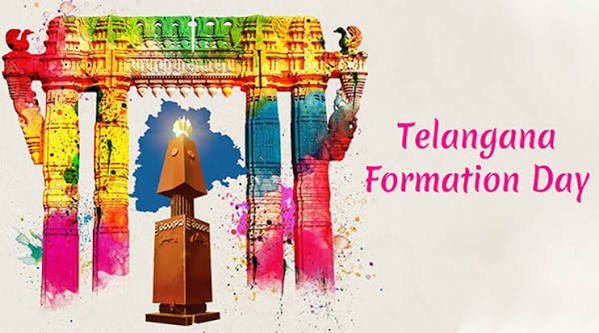
| 2 June | Telangana | Formation in 2014 |
| 15 November | Jharkhand | Formation in 2000 |
| 1 November | Haryana, Karnataka, Kerala, Madhya Pradesh, Punjab | Major state formation or reorganisation anniversaries associated with this date |
Important note: The meaning of an anniversary can differ. For example, Bihar Diwas commemorates an event before independence, whereas Telangana Formation Day marks the creation of a new state in 2014. Karnataka Rajyotsava commemorates the state’s unification in 1956, when it was initially called Mysore; the name Karnataka was adopted later. <Cite refs={[“turn324924search6″,”turn324924search3”]}/>
Other states observe important statehood or regional anniversaries on different dates. Always verify the relevant state’s official government website when preparing a calendar of observances.
3. Timeline of State Formation in India
The following timeline provides a simplified overview of major milestones.
- 1947: India becomes independent, beginning a new phase of political and administrative integration.
- 1950: The Constitution comes into force, establishing India’s constitutional framework.
- 1953: Andhra State is established for Telugu-speaking people.
- 1956: Major linguistic reorganisation takes place under the States Reorganisation Act.
- 1960: Maharashtra and Gujarat are formed from the former Bombay State.
- 1963: Nagaland becomes a state.
- 1966: Haryana is created through the reorganisation of Punjab.
- 1971: Himachal Pradesh attains full statehood.
- 1972: Manipur, Meghalaya, and Tripura become states.
- 1975: Sikkim becomes a state of India.
- 1987: Goa, Arunachal Pradesh, and Mizoram attain statehood.
- 2000: Chhattisgarh, Uttarakhand, and Jharkhand are created.
- 2014: Telangana is formed from the former state of Andhra Pradesh.
- 2019: The former state of Jammu and Kashmir is reorganised into the Union Territories of Jammu and Kashmir and Ladakh.
This timeline illustrates that India’s political map has changed through constitutional and legislative decisions over several decades. <Cite refs={[“turn324924search20″,”turn324924search6”]}/>
4. Ten Powerful Reasons Why State Formation Days Matter
1. They preserve history
Every state has a story. Formation days help preserve the events, movements, negotiations, and decisions that shaped its present identity.
When students learn why a state was established, history becomes more than a list of dates. It becomes a story about people, aspirations, and change.
2. They celebrate linguistic identity
Language is an important part of cultural identity. India’s state boundaries were substantially reorganised along linguistic lines in 1956, although language was not the only consideration.
These anniversaries encourage people to appreciate regional languages and understand the importance of protecting linguistic diversity.
3. They promote national unity
Celebrating a state’s identity does not have to divide people. It can help Indians understand one another’s traditions and appreciate the many contributions that different regions make to the country.
4. They educate students
State formation is an important topic for history, civics, geography, and competitive examinations.
Students can use these occasions to create timelines, practise map-reading, research constitutional amendments, and learn about important leaders and public movements.
5. They recognise public participation
Some state formation movements involved decades of campaigning, public debate, and political negotiation. Remembering these processes helps citizens appreciate peaceful democratic participation and constitutional methods.
6. They encourage regional development
Formation Day is an opportunity to review a state’s progress in education, health, transport, agriculture, employment, and infrastructure.
Celebration becomes more meaningful when communities also consider what remains to be achieved.
7. They preserve cultural traditions
Folk music, dance, local literature, traditional clothing, regional food, and festivals all contribute to a state’s identity.
Cultural programmes organised around these anniversaries can help younger generations learn about traditions that might otherwise receive less attention.
8. They inspire young people
Students can learn from the determination of people who worked for regional recognition and development.
The lessons are relevant to everyday goals: set a clear objective, understand the challenges, cooperate with others, and work patiently towards progress.
9. They strengthen civic responsibility
A state’s development depends on its citizens as well as its government. Responsible voting, environmental protection, public cleanliness, and respect for others all contribute to better communities.
10. They connect the past with the future
State formation anniversaries invite citizens to remember history while planning for the next generation.
The goal should be to build states that are economically strong, environmentally responsible, culturally confident, and inclusive.
5. Interesting Facts About State Formation Days
- India’s state boundaries have changed over time. The present map is the result of several rounds of reorganisation and statehood changes.
- Language was an important factor. Linguistic aspirations played a major role in the reorganisation of 1956.
- Not all anniversaries mean the same thing. Some mark statehood, some commemorate an earlier administrative separation, and others celebrate regional unification or naming.
- Several states share 1 November as an important date. Haryana and Punjab mark their 1966 reorganisation, while several southern and central states commemorate events associated with 1956.
- Maharashtra and Gujarat share 1 May. Both were formed in 1960 after the division of Bombay State.
- Jharkhand’s date has a special connection. Its 15 November foundation date coincides with the birth anniversary of tribal leader Birsa Munda.
- Telangana became a state in 2014. Its formation was a major development in India’s modern state reorganisation.
- Constitutional law matters. Article 3 of the Constitution provides Parliament with the power to form new states and alter state areas, boundaries, and names, subject to the constitutional procedure.
- Statehood and independence are different. An Indian state remains part of the Indian Union; state formation is not the creation of an independent country.
- Union Territories have their own histories too. Some formation-day programmes commemorate Union Territories alongside states. <Cite refs={[“turn324924search6″,”turn324924search3”]}/>
6. How Are State Formation Days Celebrated?
The way an anniversary is observed depends on the state, local administration, and occasion.
Official ceremonies
Governments may organise commemorative events, speeches, cultural performances, exhibitions, and programmes highlighting public achievements. The exact arrangements vary from year to year.
Schools and colleges
Educational institutions can organise:
- Essay-writing and speech competitions.
- State history and geography quizzes.
- Poster-making and drawing contests.
- Traditional music and dance performances.
- Presentations about state formation movements.
- Discussions about the Constitution and Indian federalism.
Community participation
Local organisations and residents may hold cultural programmes, exhibitions, heritage walks, and educational events. These activities can bring different generations together.
Digital celebrations
People can share historical photographs, informative videos, greetings, and short educational articles on social media.
Teachers can also encourage students to create digital maps showing how India’s political boundaries changed over time.
Community service
A particularly meaningful way to celebrate is through public service. Tree planting, cleanliness drives, book donations, literacy activities, and support for local schools can turn a historical anniversary into a positive community experience.
7. Importance of State Formation Days in Daily Life
These occasions may appear to be purely historical, but they offer lessons that can influence our behaviour every day.
Respect for differences: Learning about other states encourages us to respect different languages, customs, and ways of life.
Better historical understanding: Knowing how state boundaries developed helps citizens understand contemporary politics and public administration.
Educational motivation: Students can use state anniversaries to develop research skills, improve general knowledge, and explore careers in public service, teaching, history, and cultural preservation.
Community participation: The day can encourage people to contribute to local initiatives instead of expecting others to solve every problem.
Cultural confidence: Learning regional songs, stories, and traditions can help younger people feel connected to their heritage.
Environmental responsibility: Celebrations can include practical activities such as waste reduction, water conservation, and planting suitable native trees.
Responsible citizenship: Understanding the constitutional process of state formation can strengthen appreciation for democratic institutions and peaceful political participation.
The most important lesson is that loving our state should also mean caring for its people, public resources, environment, and future.
8. Why State Formation Days Are Important to Society
Historical importance
They preserve the memory of important constitutional and political changes and help future generations understand how modern India developed.
Cultural importance
They provide opportunities to preserve languages, literature, regional art, traditional knowledge, and community customs.
Educational importance
These occasions help schools explain Indian federalism, constitutional law, political geography, and regional history through real examples.
Social importance
Cultural events can bring people together and encourage respect among communities with different backgrounds.
Economic importance
Anniversaries can be opportunities to discuss economic development, investment, industrial growth, agriculture, tourism, infrastructure, and employment.
Democratic importance
The creation and reorganisation of states illustrate how constitutional procedures and political decisions can respond to public aspirations.
National importance
India’s strength comes partly from its diversity. Understanding each state’s history helps people appreciate the wider story of the Indian Union.
However, celebrations should also encourage honest reflection. Regional pride should never become hostility towards people from another state. A stronger India requires mutual respect and equal dignity.
9. State Formation Days: Wishes and Greetings
Here are some human-friendly messages suitable for WhatsApp, Facebook, Instagram, school programmes, and educational websites.
Short greetings
- Happy State Formation Day! May our state continue to grow in peace, prosperity, and unity.
- Let us celebrate our heritage, honour our history, and work together for a brighter future.
- Proud of our state, proud of our culture, and proud to be part of a diverse India.
- Warm wishes on this special day. May our communities become stronger, kinder, and more inclusive.
Wishes for students
- Happy State Formation Day! Learn from history, respect every culture, and become a responsible citizen.
- May the story of our state inspire you to study sincerely, dream confidently, and contribute positively to society.
- Let us celebrate our heritage by gaining knowledge and helping create a better future for the next generation.
Social media captions
- One state, many stories, one India. Celebrating the history, culture, and aspirations that make our regions special.
- Our roots, our pride, our future. Happy State Formation Day!
- History teaches us where we came from; responsibility determines where we go next.
- Celebrate diversity, respect every community, and build a stronger India together.
A heartfelt message
On this State Formation Day, let us remember the people and events that shaped our region, celebrate the traditions that bring us together, and commit ourselves to a better tomorrow. May our state progress in education, health, employment, equality, and environmental protection. Let us honour our heritage through kindness, cooperation, and responsible citizenship.
10. Review Section: State Formation Days in India
Overall review: State Formation Days are valuable historical and cultural observances that connect regional identity with India’s wider democratic journey.
Historical value: They help explain the development of India’s political map and the role of constitutional processes.
Educational value: They provide engaging subjects for essays, classroom projects, general knowledge preparation, and historical research.
Cultural value: They encourage people to preserve regional languages, traditional arts, literature, and local heritage.
Social value: They offer opportunities for cultural exchange, community participation, and greater understanding between states.
What could be improved? Celebrations can become more meaningful when they include accurate historical information, student participation, local heritage projects, and community service rather than relying only on speeches and decorations.
Final assessment: State Formation Days deserve recognition because they help citizens understand both their regional roots and their shared national identity. Their greatest value lies in turning historical awareness into responsible action.
11. Frequently Asked Questions (FAQs)
Q1. What are State Formation Days?
State Formation Days are anniversaries commemorating the establishment of a state or an important historical event associated with its present political or administrative identity.
Q2. Why are State Formation Days celebrated in India?
They help preserve history, recognise regional identity, promote cultural traditions, educate students, and encourage citizens to contribute to development.
Q3. Which Indian states celebrate their formation day on 1 November?
Haryana and Punjab commemorate their 1966 reorganisation on this date. Karnataka, Kerala, and Madhya Pradesh also observe important state anniversaries associated with 1 November 1956.
Q4. When are Maharashtra Day and Gujarat Day celebrated?
Both are celebrated on 1 May, commemorating the formation of Maharashtra and Gujarat in 1960.
Q5. When is Telangana Formation Day?
Telangana Formation Day is observed on 2 June, marking the state’s establishment in 2014.
Q6. When is Jharkhand Foundation Day?
Jharkhand Foundation Day is celebrated on 15 November. The state was formed in 2000.
Q7. Why is Bihar Diwas celebrated on 22 March?
Bihar Diwas commemorates the separation of Bihar from the Bengal Presidency in 1912.
Q8. What is the role of language in state formation?
Language was a major factor in several reorganisations, particularly in 1956. However, historical, cultural, administrative, political, and geographical considerations have also influenced state boundaries.
Q9. Are State Formation Days national public holidays?
There is no single rule making every state formation anniversary a nationwide public holiday. Holiday arrangements depend on the relevant government notifications and institution-specific policies.
Q10. How can students celebrate State Formation Days?
Students can participate in history quizzes, essays, speeches, cultural programmes, map activities, and community-service projects.
Q11. What is the difference between state formation and statehood?
The terms can overlap, but they are not always identical. Formation may refer to the creation or reorganisation of a state, while statehood can refer specifically to acquiring full state status within the Indian Union.
Q12. What is the main message of State Formation Days?
Their central message is to respect history, celebrate cultural diversity, value constitutional democracy, and work towards inclusive development.
12. Conclusion: Celebrating Our Roots and Building Our Future
State Formation Days are much more than dates on a calendar. They represent the historical experiences, cultural identities, public aspirations, and constitutional developments that have shaped modern India.
From the linguistic reorganisation of 1956 to the formation of Telangana in 2014, these milestones demonstrate that India’s political map has evolved over time. Each region has its own story, and understanding these stories helps us appreciate the country’s diversity.
For students, these anniversaries are opportunities to learn history, geography, and civics in a practical way. For families and communities, they provide reasons to preserve traditions and share knowledge across generations. For governments and citizens, they offer opportunities to evaluate progress and consider future priorities.
The real value of a state anniversary is not limited to remembering the past. It lies in using that understanding to improve everyday life through education, equality, environmental responsibility, cultural respect, and community service.
Let us celebrate our states without forgetting our shared responsibilities as Indians. Let us protect our heritage, respect other communities, and help build a future in which every citizen has the opportunity to thrive.
Happy State Formation Day to every state and region of India! May our diversity remain our strength, our history remain our teacher, and our collective future continue to inspire hope.
Publishing checklist for Minorstudy
References and Further Reading
For reliable historical research and fact-checking, consult:
- India Code: The official legislative database for acts governing state reorganisation.
- Constitution of India: Article 3, concerning the formation of new states and alteration of existing state boundaries and names.
- India Institute of Public Administration: Chronology of States Formation.
- Press Information Bureau: Government of India information on state formation anniversaries.
- State government portals: Consult the official websites of individual states for their histories, formation dates, and annual observance announcements.