

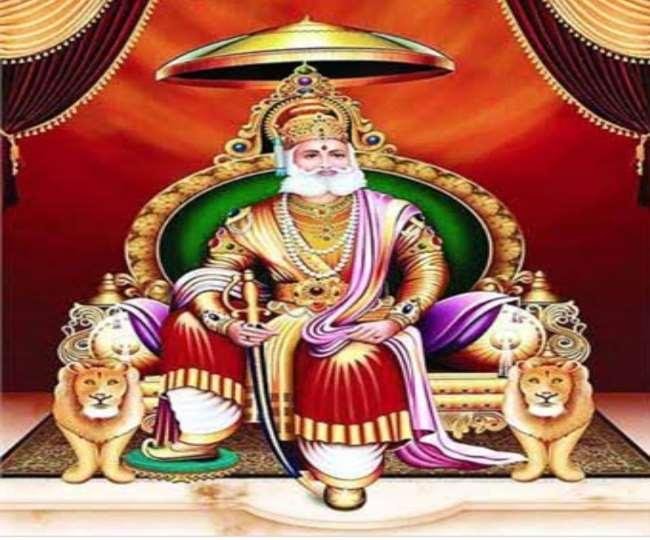
Remarkable Facts About Maharaja Agrasen Ji That Will Inspire You
Introduction: Who Was Maharaja Agrasen Ji?
Maharaja Agrasen Ji: India has a rich history of kings, leaders, philosophers, and social reformers whose lives continue to inspire generations. Among these respected historical and traditional figures is Maharaja Agrasen Ji, remembered for his principles of equality, compassion, non-violence, entrepreneurship, cooperation, and social welfare.
Maharaja Agrasen Ji is particularly respected by the Agrawal and Agarwal communities. His legacy is associated with a society in which people supported one another, economic opportunities were shared, and no individual was left without the basic resources needed to establish a livelihood.
His story is not simply about a king who ruled a kingdom. It is also about a leader whose ideals remind us that the real strength of a society comes from its people, their unity, and their willingness to help one another.
In today’s world, where economic competition, inequality, and social divisions remain important challenges, the traditional teachings associated with Maharaja Agrasen Ji have considerable inspirational value.
Let’s explore his history, seven remarkable facts, timeline, significance, celebrations, and lessons for modern life.
1. History of Maharaja Agrasen Ji
Maharaja Agrasen Ji is traditionally regarded as an ancient Indian king associated with Agroha, a historic settlement in present-day Hisar district of Haryana. He is widely respected as the progenitor of the Agrawal community.
According to traditional accounts, Maharaja Agrasen Ji was born into a royal Suryavanshi family. His father is identified as King Vallabh (also written Ballabh), the ruler of Pratapnagar. His mother’s name is given as Bhagwati Devi in some traditional accounts.
He is traditionally associated with Princess Madhavi, whom he married. Stories about their marriage and family form an important part of the community’s cultural heritage.
As the story goes, Agrasen Ji believed that a ruler’s responsibility was not limited to protecting his kingdom or expanding his wealth. A good king had to ensure that ordinary people could live with dignity, earn a livelihood, and participate in the development of society.
The establishment and development of Agroha
Agroha is central to the traditional history of Maharaja Agrasen Ji. It is remembered as a prosperous centre where trade, cooperation, and community life developed.
The archaeological site of Agroha provides evidence of a settlement with a long history. The Haryana government’s archaeological publication describes several cultural phases, including evidence dating from approximately the fourth century BCE to the fourteenth century CE. Excavations have uncovered coins, seals, residential remains, and other historical objects. These discoveries establish Agroha’s historical importance, although they do not independently prove every detail of Maharaja Agrasen Ji’s traditional biography.
Maharaja Agrasen Ji’s traditional legacy is particularly associated with:
Social equality and brotherhood.
Compassion towards living beings.
Support for business and economic development.
Cooperation among families.
Respect for work and entrepreneurship.
Welfare of ordinary people.
A king with a vision of social welfare
One of the most memorable traditions associated with Maharaja Agrasen Ji is the belief that a prosperous kingdom should welcome newcomers rather than leave them struggling.
This idea is reflected in the famous principle of one brick and one coin. According to the traditional story, every established family in Agroha contributed one brick and one coin to a newly arriving family.
The brick helped the newcomers build a house, while the coin helped them begin a business or livelihood.
It is a beautiful example of community cooperation. Instead of depending entirely on the king or wealthy people, everyone contributed something small to create a meaningful opportunity for another family.
The story continues to inspire discussions about social responsibility, financial inclusion, and collective development.
2. Seven Remarkable Facts About Maharaja Agrasen Ji
Here are seven remarkable facts that explain why Maharaja Agrasen Ji remains an inspirational figure in Indian society.
Fact 1: Maharaja Agrasen Ji is regarded as the founder of the Agrawal community
Maharaja Agrasen Ji is traditionally considered the founding figure of the Agrawal community, one of India’s prominent business and trading communities.
His name is closely connected with Agroha, which is regarded as an important ancestral and cultural centre by many Agrawals.
The community’s traditional history also associates its 18 gotras with his 18 sons. These accounts are important elements of community identity, although their ancient genealogical details are not independently established by archaeological evidence.
Life lesson: Our identity becomes meaningful when we use our heritage to encourage responsibility, unity, and positive contributions to society.
Fact 2: He promoted the principle of one brick and one coin
Perhaps the most famous tradition associated with Maharaja Agrasen Ji is the one-brick-and-one-coin system.
According to this tradition, every family in Agroha contributed one brick and one coin whenever a new family arrived.
Imagine moving to a completely new place without a house, money, business connections, or support. A community that offers you a building material and financial assistance can transform your future.
This idea represents:
Helping people become independent.
Supporting newcomers.
Encouraging entrepreneurship.
Sharing community resources.
Reducing economic difficulties.
It is a powerful reminder that even a small contribution can make a major difference in someone’s life.
Fact 3: He is remembered for compassion and non-violence
Maharaja Agrasen Ji is traditionally associated with compassion towards animals and opposition to unnecessary violence.
Community narratives describe him as discouraging animal sacrifice in religious rituals and promoting a more compassionate approach to religious life.
This principle is relevant today because humanity faces numerous challenges involving violence, environmental destruction, and cruelty towards living beings.
Life lesson: True strength is not demonstrated by hurting others. It is demonstrated by protecting those who cannot protect themselves.
Fact 4: He encouraged trade, business, and entrepreneurship
Maharaja Agrasen Ji’s legacy is strongly connected with trade and economic activity.
He is traditionally remembered for encouraging people to participate in business and build independent livelihoods. Rather than considering wealth merely a personal achievement, his social vision linked prosperity with collective well-being.
In modern India, entrepreneurship creates employment, supports families, generates economic activity, and contributes to national development.
His traditional ideals can inspire:
Young entrepreneurs.
Small business owners.
Startup founders.
Traders and shopkeepers.
Students interested in business and management.
Life lesson: Earning money is important, but earning it honestly and using it responsibly is even more meaningful.
Fact 5: He believed in equality and mutual cooperation
Another important principle associated with Maharaja Agrasen Ji is social equality.
The traditional account of Agroha presents a community where established residents helped newcomers instead of treating them as outsiders.
This idea challenges discrimination and encourages people to recognise the dignity of every individual.
Today, equality is essential in education, employment, business, healthcare, and public life.
Life lesson: A society becomes stronger when people receive opportunities based on their abilities rather than their financial background or social status.
Fact 6: Agroha remains an important centre of his legacy
Agroha, in Haryana’s Hisar district, remains closely associated with Maharaja Agrasen Ji.
The archaeological mound at Agroha is an important historical site. Excavations have revealed ancient coins, seals, structural remains, and evidence of different cultural periods.
The site also reflects Agroha’s historical significance as a centre of trade and political activity.
For people interested in Indian history, visiting Agroha provides an opportunity to explore the relationship between archaeological heritage and community traditions.
Fact 7: His teachings continue to inspire modern generations
Maharaja Agrasen Ji’s traditional teachings remain relevant because they address problems that still affect society.
Economic inequality, unemployment, lack of opportunities, social discrimination, and insufficient community support are not new challenges.
His legacy encourages us to think beyond individual success.
For example:
A successful entrepreneur can support new entrepreneurs.
An educated person can help disadvantaged students.
A financially stable family can assist someone in need.
A business community can create employment opportunities.
Young people can promote honesty and cooperation.
Life lesson: The real success of an individual is not measured only by personal wealth but also by the positive difference they create in other people’s lives.
3. Maharaja Agrasen Ji’s Important Teachings and Principles
The following values are commonly associated with his traditional legacy.
| Principle | Meaning in modern life |
|---|---|
| Equality | Respect everyone without discrimination |
| Compassion | Care for humans and animals |
| Cooperation | Work together for shared progress |
| Entrepreneurship | Create opportunities through business |
| Charity | Help people facing difficulties |
| Non-violence | Choose peace over unnecessary conflict |
| Social responsibility | Contribute to community development |
These principles can guide individuals, families, educational institutions, business organisations, and social welfare groups.
4. Timeline of Maharaja Agrasen Ji’s Traditional History
It is important to understand that an exact, independently verified chronological biography of Maharaja Agrasen Ji is not available. The following timeline presents the major stages of his traditional life story rather than established historical dates.
Birth and royal background
Traditional accounts describe Agrasen Ji as a Suryavanshi prince and son of King Vallabh of Pratapnagar.
Education and early life
Community narratives remember him as a prince who developed an understanding of leadership, governance, and public welfare.
Marriage to Princess Madhavi
Traditional stories describe his marriage to Madhavi and associate their family with the origins of the Agrawal community.
Development of Agroha
He is traditionally associated with the establishment and development of Agroha as a centre of community life and economic activity.
Promotion of cooperation
The one-brick-and-one-coin tradition represents his remembered vision of welcoming newcomers and helping them establish independent lives.
A lasting community legacy
His name and teachings continue to be honoured through community celebrations, educational activities, social service, and cultural institutions.
5. Maharaja Agrasen Jayanti: Significance and Celebration
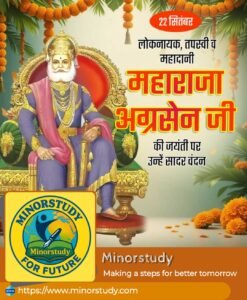
Maharaja Agrasen Jayanti is celebrated to honour the birth anniversary of Maharaja Agrasen Ji.
It is an important cultural and community occasion, particularly among members of the Agrawal community.
The observance generally falls on the Pratipada Tithi of Shukla Paksha in the Hindu month of Ashwin. Depending on the Hindu calendar and local observance, its Gregorian date changes each year.
For example, Maharaja Agrasen Jayanti in 2026 was observed on 11 October 2026, according to the New Delhi Panchang calendar.
How is Maharaja Agrasen Jayanti celebrated?
Celebrations can include:
Special prayers: Devotees offer prayers and remember Maharaja Agrasen Ji.
Community processions: Cultural processions and public gatherings are organised in different places.
Charity programmes: Food, clothing, and essential supplies may be distributed to people in need.
Educational activities: Schools and organisations arrange essay competitions, speeches, and cultural programmes.
Medical camps: Some community organisations arrange health check-up camps.
Community meetings: People gather to discuss social development, education, and welfare.
Cultural programmes: Bhajans, devotional performances, and traditional events are organised.
The celebration is not only about remembering a historical or traditional figure. It is also an opportunity to practise the values associated with his legacy.
6. Why Is Maharaja Agrasen Ji Significant in Modern Society?
The significance of Maharaja Agrasen Ji goes beyond community identity. His traditional principles offer lessons that can be applied to modern social and economic challenges.
Importance in education
Education is one of the strongest tools for social transformation.
His legacy of cooperation inspires people to support students who cannot afford quality education. Scholarships, libraries, free learning resources, and mentoring programmes are practical ways to carry forward this spirit.
Importance in business
Modern businesses need more than profits. They also need trust, honesty, responsibility, and social contribution.
Entrepreneurs can learn from the cooperative ideals associated with Maharaja Agrasen Ji by supporting small businesses, creating employment, and helping new entrepreneurs.
Importance in family life
Families can practise his teachings by sharing responsibilities, supporting relatives during difficult times, and encouraging children to become compassionate individuals.
Importance in social equality
People from different financial and social backgrounds should have access to opportunities.
The spirit of mutual assistance can help build communities where nobody is excluded simply because they lack resources.
Importance for young generations
Young people can take inspiration from his traditional legacy by becoming responsible citizens, developing entrepreneurial skills, respecting others, and contributing to society.
A successful generation is not simply one that earns more money. It is one that creates a better future for everyone.
7. Daily Life Impacts: What Can We Learn from Maharaja Agrasen Ji?
The teachings associated with Maharaja Agrasen Ji can be practised in everyday life. We do not need to be kings, wealthy business owners, or influential personalities to follow his principles.
We can begin with small actions.
1. Help someone start their journey: If someone wants to start a small business, guide them, share knowledge, or connect them with useful resources.
2. Respect every profession: Whether someone is a teacher, farmer, shopkeeper, worker, entrepreneur, or student, every honest profession deserves respect.
3. Support poor and needy people: Helping someone with education, food, shelter, or employment can make a lasting difference.
4. Practise honesty in business: Avoid cheating customers, exploiting workers, and making false promises.
5. Encourage equality: Never judge someone by their financial condition, family background, or social position.
6. Protect living beings: Show kindness towards animals and support environmental protection.
7. Build a helpful community: Encourage people to work together rather than compete unnecessarily.
These small actions can create a society based on trust, kindness, and mutual respect.
8. Important Facts About Maharaja Agrasen Ji
Here are some important points for students, readers, and people interested in Indian history.
| Topic | Information |
|---|---|
| Name | Maharaja Agrasen Ji |
| Traditional identity | Ancient Indian king |
| Traditional dynasty | Suryavanshi |
| Father | King Vallabh (Ballabh), according to tradition |
| Wife | Princess Madhavi, according to tradition |
| Associated kingdom | Agroha |
| Present location | Hisar district, Haryana |
| Community association | Agrawal community |
| Famous principle | One brick and one coin |
| Main values | Equality, compassion, cooperation and non-violence |
| Birth anniversary | Maharaja Agrasen Jayanti |
| Jayanti calendar | Ashwin Shukla Pratipada |
Historical note: These details combine community traditions and historical information about Agroha. The precise dates, genealogy, and personal biography of Maharaja Agrasen Ji are not independently established by available archaeological evidence.
9. Review Section: Maharaja Agrasen Ji and His Inspirational Legacy
Article Review: 9.5/10
Maharaja Agrasen Ji represents an inspiring example of leadership, cooperation, and social responsibility in Indian cultural tradition.
What makes his legacy particularly interesting is the famous one-brick-and-one-coin principle. It communicates a simple but powerful message: when a community shares its resources, even a person with very little support can build a better future.
Our review highlights:
Historical importance: Agroha provides an important archaeological connection to the region’s ancient history.
Social importance: His traditional ideals encourage equality and collective welfare.
Economic importance: His legacy promotes entrepreneurship and independent livelihoods.
Cultural importance: Maharaja Agrasen Jayanti keeps community traditions alive.
Educational importance: His principles provide useful lessons for students and young entrepreneurs.
What makes his story relevant today?
In a world where people often focus on individual success, Maharaja Agrasen Ji’s traditional legacy reminds us that collective progress is equally important.
The review also recognises that traditional stories and archaeological evidence should be presented separately. This makes the article more informative and historically responsible.
10. Frequently Asked Questions (FAQs) About Maharaja Agrasen Ji
Q1. Who was Maharaja Agrasen Ji?
Maharaja Agrasen Ji is traditionally remembered as an ancient Indian king associated with Agroha in present-day Haryana. He is regarded as the founding figure of the Agrawal community.
Q2. Where was Maharaja Agrasen Ji’s kingdom?
His traditional kingdom was associated with Agroha, an ancient settlement in the present-day Hisar district of Haryana.
Q3. Who was the father of Maharaja Agrasen Ji?
According to traditional accounts, his father was King Vallabh, also known as Ballabh, of Pratapnagar.
Q4. Who was the wife of Maharaja Agrasen Ji?
Princess Madhavi is traditionally identified as his wife. Their marriage is an important part of the stories associated with his life.
Q5. What is the one-brick-and-one-coin principle?
It is a famous tradition associated with Maharaja Agrasen Ji. According to the story, every established family contributed one brick and one coin to help a newcomer build a house and establish a livelihood.
Q6. Why is Maharaja Agrasen Ji famous?
He is famous for his traditional association with Agroha, the Agrawal community, social cooperation, compassion, non-violence, and economic development.
Q7. When is Maharaja Agrasen Jayanti celebrated?
Maharaja Agrasen Jayanti is generally observed on Ashwin Shukla Pratipada according to the Hindu lunar calendar. Its Gregorian date changes every year.
Q8. How is Maharaja Agrasen Jayanti celebrated?
People celebrate the occasion through prayers, processions, cultural programmes, community gatherings, charity activities, educational programmes, and social welfare initiatives.
Q9. What are the main teachings of Maharaja Agrasen Ji?
His traditional teachings are associated with equality, compassion, cooperation, honesty, non-violence, entrepreneurship, and helping people in need.
Q10. What is the connection between Maharaja Agrasen Ji and the Agrawal community?
The Agrawal community traditionally regards Maharaja Agrasen Ji as its founding ancestor. Its 18 gotras are also associated with the traditional account of his 18 sons.
Q11. Is Agroha a historical place?
Yes. Agroha is an archaeologically important ancient settlement in Haryana. Excavations have revealed coins, seals, structural remains, and evidence of different cultural periods.
Q12. What can students learn from Maharaja Agrasen Ji?
Students can learn the importance of honesty, hard work, compassion, entrepreneurship, equality, teamwork, and helping others achieve their goals.

11. Wishes and Inspirational Messages for Maharaja Agrasen Jayanti
Maharaja Agrasen Jayanti is a wonderful opportunity to share positive messages, blessings, and wishes with friends, family members, colleagues, and community members.
Here are some wishes you can share on social media.
1. Happy Maharaja Agrasen Jayanti! May his teachings of equality, compassion, and cooperation inspire us to create a better society.
2. May the blessings of Maharaja Agrasen Ji bring happiness, prosperity, peace, and success to your family.
3. Let us follow the path of honesty, kindness, and social responsibility. Happy Maharaja Agrasen Jayanti!
4. May we learn to help others, respect everyone, and contribute to the progress of our nation.
5. On this auspicious occasion, let us remember the powerful message of one brick and one coin: a small contribution can change someone’s life.
6. May the ideals of Maharaja Agrasen Ji inspire our young generation to become responsible citizens and successful entrepreneurs.
7. Wishing everyone a joyful and inspiring Maharaja Agrasen Jayanti. May unity and humanity always guide our lives.
Inspirational message:
“True prosperity is not simply having more wealth; it is having the kindness to help others become prosperous too.”
12. Importance of Maharaja Agrasen Ji in Indian Society
Maharaja Agrasen Ji holds a respected place in Indian cultural and community traditions. His legacy provides an opportunity to discuss how historical memory, social values, and community responsibility can contribute to national development.
A symbol of unity
His traditional legacy encourages people to remain united and support one another during difficult times.
A symbol of entrepreneurship
His association with trade and business reminds society of the importance of economic independence and productive work.
A symbol of humanity
His traditional emphasis on compassion encourages people to care for those who are vulnerable or disadvantaged.
A symbol of social welfare
The one-brick-and-one-coin tradition represents an approach to community development in which everyone contributes according to their ability.
A source of inspiration for India
India needs educated citizens, responsible entrepreneurs, ethical businesses, compassionate leaders, and socially conscious young people.
The principles associated with Maharaja Agrasen Ji can inspire these qualities.
13. How Can We Follow Maharaja Agrasen Ji’s Ideals Today?
Remembering great personalities should involve more than sharing photographs, organising celebrations, or posting greetings.
We should also try to practise the values associated with them.
Here are five meaningful ways to carry forward his legacy:
Provide educational support to children from economically weaker families.
Help small entrepreneurs and people starting their first businesses.
Organise food distribution and community welfare programmes.
Promote equality, honesty, and respect in everyday life.
Encourage environmental protection and kindness towards animals.
If every individual takes even one positive step, the collective impact can be enormous.
14. Conclusion: The Timeless Inspiration of Maharaja Agrasen Ji
Maharaja Agrasen Ji is remembered as an inspirational figure whose traditional legacy represents compassion, equality, cooperation, entrepreneurship, and social welfare.
His association with Agroha and the Agrawal community makes him an important part of India’s cultural heritage. The famous one-brick-and-one-coin tradition offers a particularly meaningful lesson for modern society: when people support one another, opportunities become accessible to more individuals.
His legacy reminds us that leadership is not simply about power, wealth, or position. Real leadership is about understanding people’s problems, creating opportunities, and helping society move forward.
For students, his story offers lessons about discipline, honesty, teamwork, and social responsibility. For entrepreneurs, it encourages ethical business practices and community development. For families, it teaches kindness, unity, and mutual support.
Today, we should not limit his teachings to one particular community or annual celebration. The values of humanity, cooperation, and equality belong to everyone.
The greatest tribute to Maharaja Agrasen Ji is not only to remember his name but also to practise the positive values associated with his legacy.
Let us work towards a society where everyone receives respect, every young person gets an opportunity, and every individual can contribute to a better future.
Spread kindness, support humanity, encourage entrepreneurship, and build a stronger society.
15. References and Further Reading
For historical accuracy and further research, readers can explore the following sources:
Editorial note: Traditional accounts are presented as traditions, while archaeological findings are used to explain the history of Agroha. Readers should not interpret traditional dates or genealogies as independently verified historical facts.
Publishing Checklist for Minorstudy
Visit Suggested internal linking:
Indian Historical Personalities
Famous Indian Kings and Their Contributions
Maharaja Agrasen Jayanti
Indian Culture and Traditions
Importance of Entrepreneurship in India
Social Reformers Who Changed Indian Society
social media caption:
“Seven remarkable facts about Maharaja Agrasen Ji teach us that true prosperity comes from unity, compassion, equality, and helping others. Discover the inspiring legacy of a respected figure in Indian tradition.”
Published for educational and informational purposes by Minorstudy. Historical and traditional accounts should be read with the source distinctions explained above.










**mind vault**
mind vault is a premium cognitive support formula created for adults 45+. It’s thoughtfully designed to help maintain clear thinking
Great paintings! This is the type of info that are meant to be shared around the web. Shame on Google for now not positioning this submit higher! Come on over and visit my website . Thank you =)
Great site. Plenty of useful information here. I am sending it to some pals ans also sharing in delicious. And obviously, thanks on your effort!
Very interesting details you have remarked, regards for putting up. “A big man is one who makes us feel bigger when we are with him.” by John C. Maxwell.
Good post but I was wondering if you could write a litte more on this topic? I’d be very thankful if you could elaborate a little bit more. Cheers!
Great post. I am facing a couple of these problems.
Hi there! This post couldn’t be written any better! Reading through this post reminds me of my previous room mate! He always kept talking about this. I will forward this article to him. Pretty sure he will have a good read. Thank you for sharing!
I’ve been absent for a while, but now I remember why I used to love this website. Thank you, I will try and check back more often. How frequently you update your web site?
I like this post, enjoyed this one thankyou for posting.
Thank you for your sharing. I am worried that I lack creative ideas. It is your article that makes me full of hope. Thank you. But, I have a question, can you help me? https://www.binance.info/register?ref=IXBIAFVY
Thank you for your sharing. I am worried that I lack creative ideas. It is your article that makes me full of hope. Thank you. But, I have a question, can you help me?
Reading your article helped me a lot and I agree with you. But I still have some doubts, can you clarify for me? I’ll keep an eye out for your answers. https://accounts.binance.com/register-person?ref=IXBIAFVY
I don’t think the title of your article matches the content lol. Just kidding, mainly because I had some doubts after reading the article.
Yeah bookmaking this wasn’t a bad determination outstanding post! .
Well I truly liked studying it. This information provided by you is very helpful for good planning.
I have been browsing online greater than three hours nowadays, but I never found any attention-grabbing article like yours. It is beautiful value sufficient for me. Personally, if all site owners and bloggers made excellent content as you probably did, the internet will probably be much more helpful than ever before.
Can you be more specific about the content of your article? After reading it, I still have some doubts. Hope you can help me. https://accounts.binance.info/id/register?ref=UM6SMJM3
Thanks for sharing. I read many of your blog posts, cool, your blog is very good. https://www.binance.com/register?ref=IHJUI7TF
Your article helped me a lot, is there any more related content? Thanks!
Thank you for your sharing. I am worried that I lack creative ideas. It is your article that makes me full of hope. Thank you. But, I have a question, can you help me? https://accounts.binance.bh/register/person?ref=IHJUI7TF
A lot of what you articulate happens to be supprisingly appropriate and it makes me wonder the reason why I hadn’t looked at this with this light previously. This particular piece truly did switch the light on for me as far as this subject goes. However there is just one position I am not too comfy with and whilst I attempt to reconcile that with the actual central theme of the point, let me see just what all the rest of your readers have to point out.Nicely done.
I got what you mean , appreciate it for posting.Woh I am thankful to find this website through google. “Spare no expense to make everything as economical as possible.” by Samuel Goldwyn.
Your point of view caught my eye and was very interesting. Thanks. I have a question for you. https://accounts.binance.bh/register/person?ref=GGYHGRE
You could certainly see your expertise in the work you write. The arena hopes for even more passionate writers like you who are not afraid to mention how they believe. At all times go after your heart. “A second wife is hateful to the children of the first a viper is not more hateful.” by Euripides.
Your point of view caught my eye and was very interesting. Thanks. I have a question for you.