About Lotus Temple Delhi: The Ultimate Budget Travel Guide & Inspiring History

- Estimated Travel Budget
- Total Student Budget
- 1. Why is Lotus Temple famous?
- 2. Where is Lotus Temple located?
- 3. Is there an entry fee?
- 4. Which religion does it belong to?
- 5. Can people of other religions visit?
- 6. Is photography allowed?
- 7. What is the best time to visit?
- 8. Why does the temple have nine sides?
- Overall Rating: ⭐⭐⭐⭐⭐ (4.8/5)


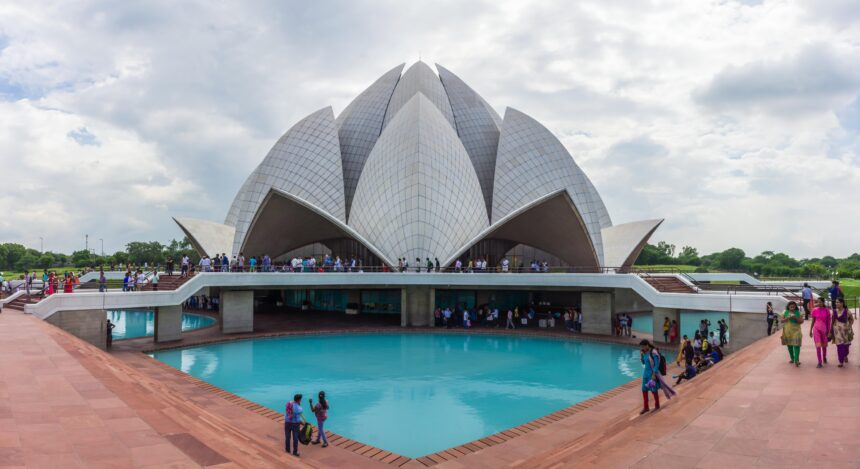
The Lotus Temple in New Delhi is one of India’s most recognizable landmarks and among the world’s most visited places of worship. Famous for its lotus-shaped architecture, the temple welcomes people of all religions, cultures, and nationalities. Unlike many religious sites, it has no idols, rituals, or sermons. Instead, it offers a peaceful place for silent prayer, meditation, and reflection.
Completed in 1986, the Lotus Temple is a Baháʼí House of Worship, representing the Baháʼí belief in the unity of humanity and the harmony of all religions. Its stunning white marble structure, surrounded by nine pools and lush gardens, makes it a favorite destination for students, families, tourists, photographers, and architecture enthusiasts.
For students, the Lotus Temple is not just a tourist attraction—it is a place to learn about architecture, engineering, peace studies, religious harmony, environmental design, and India’s cultural diversity. This guide covers everything you need to know, including history, budget travel, costs, facts, FAQs, timeline, significance, observance, review, and practical travel tips.
Overview of Lotus Temple Delhi
| Feature | Details |
|---|---|
| Location | Kalkaji, New Delhi |
| Religion | Baháʼí Faith |
| Opened | 1986 |
| Architect | Fariborz Sahba |
| Architectural Style | Expressionist / Modern |
| Shape | Lotus Flower |
| Material | White Marble |
| Famous For | Universal prayer hall and lotus-shaped design |
| Best Time to Visit | October to March |
History of Lotus Temple


The Lotus Temple was built by the Baháʼí community to create a place where people of every faith could gather for silent prayer and meditation.
Construction began in the early 1980s and was completed in 1986. The temple was designed by architect Fariborz Sahba, whose vision was inspired by the lotus flower—a symbol of purity, peace, and spiritual awakening in many cultures.
The temple consists of 27 marble petals, arranged in clusters to form nine sides, a design that reflects the importance of the number nine in the Baháʼí Faith, symbolizing unity and completeness.
Since its opening, the Lotus Temple has welcomed millions of visitors from around the world and has become one of the most photographed buildings in India.
Timeline of Lotus Temple
| Year | Event |
|---|---|
| 1970s | Planning for the temple begins |
| Early 1980s | Construction starts |
| 1986 | Lotus Temple officially opens |
| 1990s | Becomes a major tourist attraction |
| 2001 onward | Recognized among the world’s most visited buildings |
| Today | Continues to welcome visitors from all religions |
Architecture of Lotus Temple
The Lotus Temple is celebrated for its modern engineering and elegant design.
Key architectural features include:
- 27 free-standing marble petals.
- Nine entrances leading to the central hall.
- Seating capacity of about 2,500 people.
- White marble imported from Greece.
- Nine surrounding reflecting pools.
- Natural ventilation and lighting.
- Beautiful landscaped gardens.
- No idols, altars, or pulpits.
The design combines aesthetics with functionality, creating a calm and welcoming environment.
21 Amazing Facts About Lotus Temple
- Shaped like a blooming lotus flower.
- Open to people of all religions.
- Completed in 1986.
- Designed by Fariborz Sahba.
- Built with white marble from Greece.
- Has 27 marble petals.
- Features nine entrances.
- Seats around 2,500 visitors.
- Surrounded by nine reflecting pools.
- One of the world’s most visited buildings.
- No idols or religious images inside.
- Silent prayer is encouraged.
- Represents unity and peace.
- Uses natural light beautifully.
- Award-winning architectural design.
- Popular among photographers.
- Environmentally conscious design.
- Major educational destination.
- Symbol of religious harmony.
- A landmark of modern Delhi.
- Inspires visitors through simplicity and serenity.
Religious and Cultural Significance
The Lotus Temple is the Baháʼí House of Worship for the Indian subcontinent.
Its significance includes:
- Promoting unity among all religions.
- Encouraging peaceful meditation.
- Welcoming people without discrimination.
- Inspiring respect for humanity.
- Demonstrating that prayer transcends religious boundaries.
The temple reminds visitors that compassion, peace, and mutual respect are universal values.
Importance for Students
Students can learn about:
- Modern Architecture
- Civil Engineering
- Environmental Design
- Comparative Religion
- Peace Studies
- Tourism Management
- Landscape Architecture
- Indian Culture
- Sustainable Construction
- Public Space Design
Educational visits encourage critical thinking and appreciation of diversity.
Budget Travel Guide for Students
Estimated Travel Budget
| Expense | Approximate Cost |
|---|---|
| Delhi Metro | ₹20–₹80 |
| DTC Bus | ₹10–₹50 |
| Auto-rickshaw | ₹50–₹200 |
| Budget Hotel | ₹800–₹2,000 |
| Hostel | ₹500–₹1,200 |
| Meals | ₹150–₹500 |
| Local Sightseeing | ₹200–₹800 |
| Souvenirs | ₹100–₹500 |
Total Student Budget
- One-day trip: ₹500–₹1,200
- Two-day trip: ₹2,000–₹4,000
- Three-day educational tour: ₹4,000–₹6,500
Traveling by Delhi Metro is one of the most economical and convenient options.
Entry Fees and Other Costs
| Item | Approximate Cost |
|---|---|
| Temple Entry | Free |
| Parking | Charges may apply |
| Photography (Outside) | Free |
| Photography (Inside) | Not allowed |
| Guide | Optional |
| Donations | Voluntary |
Best Time to Visit
The ideal months are:
- October
- November
- December
- January
- February
- March
Early mornings and late afternoons are pleasant for sightseeing and photography.
Observance and Visitor Etiquette
To maintain the peaceful atmosphere, visitors should:
- Maintain complete silence inside the prayer hall.
- Remove loud electronic devices or keep them on silent mode.
- Dress modestly.
- Avoid eating inside the temple.
- Follow staff instructions.
- Respect visitors from all faiths.
- Keep the surroundings clean.
Unlike many temples, there are no rituals or offerings required.
Importance in Our Life
The Lotus Temple teaches timeless values:
- Peace
- Equality
- Respect
- Unity
- Compassion
- Tolerance
- Self-reflection
- Harmony
These principles help people become more understanding and responsible members of society.
Daily Life Impacts
The message of the Lotus Temple can influence daily life by encouraging us to:
- Respect people with different beliefs.
- Listen before judging others.
- Practice kindness every day.
- Resolve conflicts peacefully.
- Appreciate silence and mindfulness.
- Protect public spaces.
- Build friendships across cultures.
- Live with empathy and gratitude.
These values contribute to healthier families, schools, and communities.
Importance to Society
The Lotus Temple plays an important role by:
- Promoting religious harmony.
- Encouraging interfaith dialogue.
- Supporting tourism in Delhi.
- Inspiring modern architecture.
- Providing a peaceful public space.
- Promoting environmental awareness through thoughtful design.
- Encouraging volunteer service.
- Representing India’s diversity on the global stage.
Important Points for Students
- Located in Kalkaji, New Delhi.
- Opened in 1986.
- Belongs to the Baháʼí Faith.
- Shaped like a lotus flower.
- Designed by Fariborz Sahba.
- Built with white marble.
- Entry is free.
- Open to people of all religions.
- One of Delhi’s most famous landmarks.
- Excellent destination for educational tours.
Frequently Asked Questions (FAQs)
1. Why is Lotus Temple famous?
It is famous for its lotus-inspired architecture and for welcoming people of all religions for silent prayer and meditation.
2. Where is Lotus Temple located?
It is located in Kalkaji, New Delhi.
3. Is there an entry fee?
No. Entry is free for all visitors.
4. Which religion does it belong to?
It is a Baháʼí House of Worship.
5. Can people of other religions visit?
Yes. Everyone is welcome, regardless of religion or nationality.
6. Is photography allowed?
Photography is generally allowed outside the temple but not inside the prayer hall.
7. What is the best time to visit?
October to March offers pleasant weather.
8. Why does the temple have nine sides?
The number nine symbolizes unity and completeness in the Baháʼí Faith.
Visitor Review
Overall Rating: ⭐⭐⭐⭐⭐ (4.8/5)
| Category | Rating |
|---|---|
| Architecture | ⭐⭐⭐⭐⭐ |
| Peaceful Atmosphere | ⭐⭐⭐⭐⭐ |
| Educational Value | ⭐⭐⭐⭐⭐ |
| Cleanliness | ⭐⭐⭐⭐⭐ |
| Accessibility | ⭐⭐⭐⭐☆ |
| Budget Friendliness | ⭐⭐⭐⭐⭐ |
| Photography | ⭐⭐⭐⭐⭐ |
Honest Review
The Lotus Temple is one of the most peaceful places in Delhi. Its elegant lotus-shaped architecture, quiet prayer hall, and beautifully maintained gardens create a relaxing experience for visitors. Students will enjoy learning about modern architecture, engineering, and the idea of religious harmony. Since entry is free and public transport is easily available, it is an excellent destination for budget-friendly educational trips.
Wishing Messages
- May your life bloom with peace and happiness like a lotus flower.
- Wishing you wisdom, kindness, and harmony in every step of your journey.
- May your heart remain calm, compassionate, and open to all.
- May peace and unity guide your life and inspire your dreams.
Why Students Should Visit Lotus Temple
A visit to the Lotus Temple helps students:
- Understand modern architectural innovation.
- Learn about the Baháʼí Faith and interfaith harmony.
- Experience a peaceful environment for reflection.
- Appreciate sustainable and symbolic design.
- Develop respect for cultural and religious diversity.
Conclusion
The Lotus Temple is much more than an architectural wonder—it is a global symbol of peace, unity, and human dignity. Its unique lotus-inspired design, welcoming atmosphere, and message of harmony make it one of India’s most inspiring landmarks.
For students, the temple offers valuable lessons in architecture, engineering, religion, environmental design, and social values. Affordable travel, free entry, and easy access through Delhi’s public transport make it an ideal educational destination.
Whether you visit to admire its beauty, study its design, or spend a few quiet moments in reflection, the Lotus Temple leaves visitors with a lasting reminder that understanding, compassion, and unity are essential for building a better society and a more peaceful world.