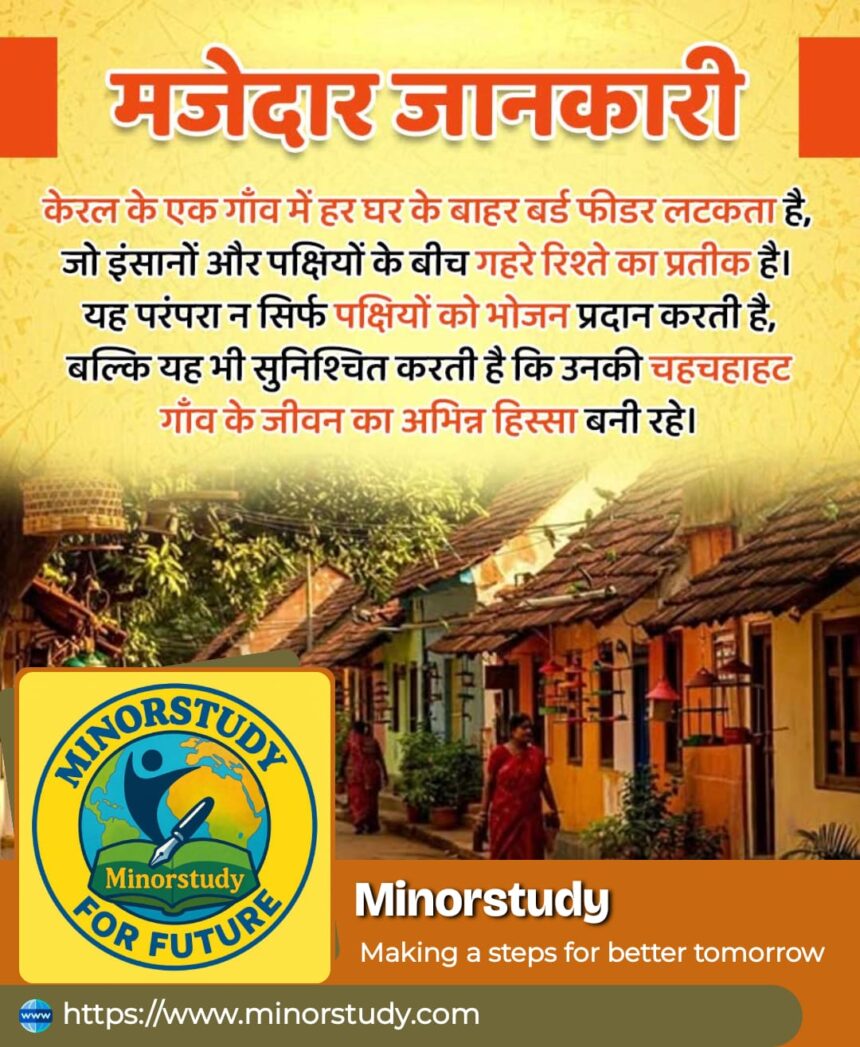
🐦 7 Heartwarming Truths Behind Kerala’s Bird Feeder Villages – A Beautiful Bond Worth Celebrating
In an era where urbanization often separates humans from nature, a village in Kerala stands as a touching reminder of how small traditions can foster deep harmony between people and the environment. Here, each household lovingly hangs a bird feeder outside its home, offering grains, water, and a safe perch to the avian visitors of the day.
- 🕰️ History of Bird Feeder Tradition in Kerala
- 📌 Interesting Facts About Kerala’s Bird-Feeding Tradition
- ❓ Frequently Asked Questions (FAQs)
- 🧭 Timeline & Evolution of the Practice
- 🌼 Spiritual and Cultural Significance
- 🤝 Human Behaviour and Values Reflected
- 🧘 Why This Matters in Modern Life
- 🌺 Heartfelt Wishes Inspired by the Tradition
- 🛕 Observance and Local Involvement
- 🧠 Important Points to Remember
- 💥 Social Significance
- 🔚 Conclusion: The Whisper of Wings Is a Cry for Connection
This isn’t just an act of charity—it’s a lifestyle, a philosophy, and an ancient ecological practice that blends compassion, culture, and sustainability. Let us explore this soulful tradition in depth—its history, significance, facts, timeline, FAQs, and impact on life and society—through a warm, human-centered lens.
🕰️ History of Bird Feeder Tradition in Kerala
While there is no official record pinpointing the exact beginning of this beautiful practice, oral histories and local wisdom suggest that this tradition has been passed down for generations in select villages of Kerala—especially in regions close to forests and backwaters.
Rooted in the principles of Sanatan Dharma, Vaishnavite philosophy, and eco-spiritual living, villagers believed that birds are messengers of the divine. It was considered a dharma (duty) to feed all living beings, including birds.
This age-old habit transformed into a village-wide tradition, where every home commits to maintaining a bird feeder, sometimes carved from coconut shells, bamboo, or earthen pots.
📌 Interesting Facts About Kerala’s Bird-Feeding Tradition
🏡 Every house has a unique feeder – made from eco-friendly, handcrafted materials.
🐦 Birds are considered family guests, not pests or outsiders.
📚 Schools educate children about bird care and environment conservation.
🌾 Local farmers grow extra grains for birds as part of their crop planning.
🌴 Even during festivals, birds are remembered with special offerings.
🎵 Birdsong is welcomed as a sign of peace, and homes are said to feel “incomplete” without it.
🌏 The tradition has inspired ecotourism and birdwatching trails in nearby areas.
❓ Frequently Asked Questions (FAQs)
Q1: Which village in Kerala is known for this tradition?
While many villages across Kerala uphold this practice, Pakkanar Village near Palakkad and Kumarakom in Kottayam are notable for their deep-rooted bird-feeding rituals.
Q2: Do all families in the village participate?
Yes. It’s considered a social norm, and even new residents or migrants are encouraged to follow it.
Q3: Are there specific bird species they feed?
Primarily sparrows, mynas, parrots, bulbuls, and occasionally migratory birds like the Asian Koel and Indian Pitta.
Q4: Is there a specific time of day for feeding?
Morning (around 6–8 AM) and evening (around 5–6 PM) are the preferred times, synced with the birds’ natural feeding cycles.
Q5: Are there any festivals or rituals associated?
Yes. During Vishu, Onam, and Makara Sankranti, special grains and fruits are added to the feeders.
🧭 Timeline & Evolution of the Practice
| Period | Description |
|---|---|
| Ancient Era | Feeding birds was associated with dharma and compassion in daily routines. |
| Medieval Kerala | Namboodiri and local households institutionalized the act with handmade feeders. |
| Post-Independence | With ecological movements rising, many eco-sensitive communities revived the tradition. |
| Modern Times | Social media, NGOs, and birdwatching groups helped spread awareness outside Kerala. |
🌼 Spiritual and Cultural Significance
1. Symbol of Coexistence
Kerala’s bird-feeding tradition reflects the Sanatan belief of Vasudhaiva Kutumbakam—the whole world is one family. Birds are not ‘others’; they are guests, relatives, companions.
2. Act of Karma Yoga
Feeding birds is a selfless, daily practice that aligns with the concept of Karma Yoga, promoting purity in action without expectation.
3. Voice of Nature in Domestic Life
Instead of alarms or electronics, villagers wake up to the natural orchestra of birdsong, preserving a rhythm of life deeply tied to nature.
🤝 Human Behaviour and Values Reflected
Empathy: Residents develop deep sensitivity to the needs of animals.
Mindfulness: Regular feeder maintenance and observation promotes attentive living.
Community Cohesion: A shared tradition promotes unity and environmental pride.
Eco-Consciousness: It instills responsibility towards non-human lives in children from a young age.
🧘 Why This Matters in Modern Life
In cities, rising noise, air pollution, and glass buildings have decimated bird populations. Human beings are increasingly disconnected from nature. But practices like these remind us that:
🌾 Nature thrives when humans care.
🎶 Birdsong is not just pleasant—it’s healing.
🛑 Habitat destruction can be reversed with small, consistent acts.
🧠 Daily contact with nature improves mental health and emotional well-being.
🌺 Heartfelt Wishes Inspired by the Tradition
“May your home echo with the music of wings and wisdom.”
“Let every grain shared be a blessing multiplied.”
“May your compassion take flight, just like the birds you care for.”
“Let your life be like a feeder—open, welcoming, and nurturing.”
🛕 Observance and Local Involvement
This tradition is not state-mandated—it is community-led, sustained by volunteer groups, elders, and schools. Local temples often incorporate feeding rituals for birds as part of morning pujas.
Feeder making workshops are held before festivals, encouraging children to build their own from:
Coconut shells
Terracotta bowls
Bamboo baskets
Recycled plastic (in rare eco-models)
🧠 Important Points to Remember
Even small villages can lead the way in conservation.
Cultural practices need no formal reward to sustain themselves—shared values are enough.
Children in these villages grow up with a natural respect for all life forms.
This initiative has the power to be replicated across the world.
💥 Social Significance
Revives ancient environmental ethics rooted in Sanatan Dharma.
Inspires policy models for urban wildlife conservation.
Promotes eco-tourism that benefits local artisans and guides.
Builds bridges between spiritual philosophy and practical sustainability.
🔚 Conclusion: The Whisper of Wings Is a Cry for Connection
The bird feeder tradition in Kerala isn’t just about feeding sparrows—it’s about feeding the soul. It’s about learning to live with grace, share with the voiceless, and listen to nature’s language.
This charming village custom sends out a loud message in the quietest way:
“When we give a little love to the birds, the whole world becomes a little lighter.”