Amarnath Cave Temple (Jammu & Kashmir) – Complete Budget Travel Guide, History, Facts, Significance & Review

- Introduction
- Estimated Student Budget
- By Air
- By Train
- By Road
- 1. Where is Amarnath Cave Temple located?
- 2. Why is Amarnath Temple famous?
- 3. Is registration compulsory?
- 4. Is the yatra suitable for students?
- 5. Which route is easier?
- 6. What clothing should I carry?
- 7. Can senior citizens undertake the yatra?
- 8. Is photography allowed?
- Pros
- Cons


Introduction
Nestled high in the majestic Himalayas of Jammu & Kashmir, the Amarnath Cave Temple is one of the most sacred pilgrimage sites dedicated to Lord Shiva. Located at an altitude of approximately 3,888 meters (12,756 feet), the cave is famous for the naturally forming ice Shiva Lingam, which devotees believe symbolizes the divine presence of Lord Shiva.
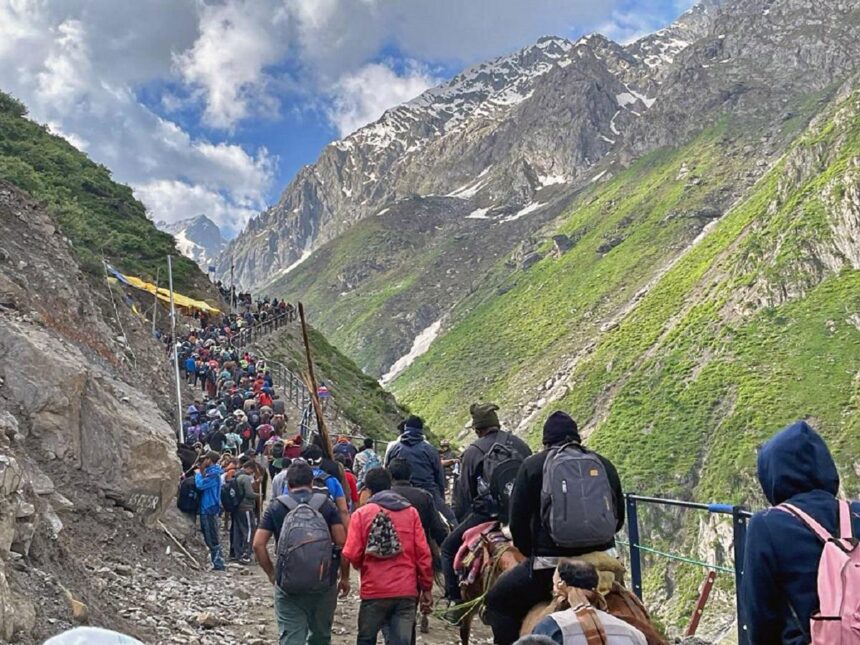
Every year, during the annual Amarnath Yatra, hundreds of thousands of pilgrims undertake a challenging yet spiritually uplifting journey through the mountains. For many devotees, the pilgrimage represents faith, endurance, devotion, and self-discovery.
For students, Amarnath is much more than a religious destination. It offers valuable lessons in geography, Himalayan ecology, history, culture, and personal resilience. The combination of breathtaking landscapes and spiritual significance makes it one of India’s most unforgettable travel experiences.
History of Amarnath Cave Temple
The origins of Amarnath Cave are deeply rooted in Hindu tradition. According to mythology, Lord Shiva chose this secluded cave to reveal the secret of immortality (Amar Katha) to Goddess Parvati. To ensure complete privacy, he is believed to have left behind his companions, including Nandi, the Moon, snakes, and Lord Ganesha, before entering the cave.
Inside the cave, Shiva explained the mystery of life and immortality. According to legend, two pigeons overheard the conversation and became immortal, and stories of these pigeons continue to be associated with the pilgrimage.
Historical references to the cave appear in medieval texts, and the pilgrimage has been practiced for centuries. Local tradition also recounts that a shepherd named Buta Malik helped bring wider attention to the cave after a saint directed him to the sacred site.
Today, the annual yatra is organized with extensive support from the Shri Amarnathji Shrine Board, which oversees pilgrim registration, accommodation, safety, and facilities.
Timeline of Amarnath Cave Temple
| Period | Event |
|---|---|
| Ancient Tradition | Lord Shiva is believed to have narrated the Amar Katha in the cave. |
| Medieval Period | Pilgrimage traditions become more widely documented. |
| Traditional Accounts | Legend of shepherd Buta Malik becomes associated with the shrine. |
| 20th Century | Organized pilgrimage facilities expand. |
| Present Day | Modern registration, security, and medical services support the annual yatra. |
Why is Amarnath Cave Temple Famous?
Amarnath Cave Temple is famous because:
- It houses the naturally forming ice Shiva Lingam.
- It is one of the most revered Shiva pilgrimage sites in India.
- The cave is associated with the legend of immortality (Amar Katha).
- The journey passes through spectacular Himalayan landscapes.
- It attracts devotees from across India and around the world each year.
The Ice Shiva Lingam
The naturally occurring ice formation inside the cave is the temple’s central attraction. It forms through the freezing of water droplets that fall from the cave roof during the pilgrimage season. The size of the ice Lingam varies from year to year depending on weather conditions, and many devotees regard it as a symbol of Lord Shiva’s divine presence.
Budget Travel Guide for Students
With careful planning, students can complete the Amarnath Yatra on a reasonable budget.
Estimated Student Budget
| Expense | Approximate Cost |
|---|---|
| Train to Jammu | ₹400–₹1200 |
| Bus/Shared Taxi to Base Camp | ₹500–₹1500 |
| Budget Accommodation | ₹500–₹1200 |
| Meals | ₹300–₹600 |
| Registration | Generally free (medical certification and related costs may apply) |
| Pony/Palki (Optional) | ₹3000–₹7000 |
| Helicopter (Optional) | Varies by route and season |
| Total Budget | ₹5000–₹10000 |
Traveling with friends and choosing shared transportation can reduce costs.
Routes to Amarnath Cave
Pilgrims typically choose one of two official routes:
1. Pahalgam Route
Pahalgam
- Longer route.
- Gradual ascent.
- Scenic meadows and valleys.
- Suitable for those who prefer a slower pace.
2. Baltal Route
Baltal
- Shorter but steeper.
- Can often be completed more quickly.
- Demands greater physical fitness.
How to Reach Amarnath
By Air
The nearest airport is Sheikh ul-Alam International Airport.
By Train
The nearest major railhead is Jammu Tawi Railway Station.
By Road
Buses and shared taxis connect Jammu and Srinagar with the official yatra base camps.
Best Time to Visit
The Amarnath Cave is open only during the officially announced annual pilgrimage season, generally falling between June and August, depending on weather conditions and the Hindu calendar.
Travelers should always verify the current yatra schedule before planning their trip.
Student Travel Tips
- Complete the required registration process in advance.
- Carry warm layered clothing.
- Wear sturdy trekking shoes.
- Stay hydrated.
- Walk at a steady pace to reduce the effects of altitude.
- Carry essential medicines.
- Avoid littering and help preserve the Himalayan environment.
- Follow official safety instructions throughout the journey.
Estimated Travel Costs from Major Cities
| City | Budget Cost |
|---|---|
| Delhi | ₹6000–₹10000 |
| Chandigarh | ₹5000–₹9000 |
| Jaipur | ₹6500–₹11000 |
| Mumbai | ₹7000–₹12000 |
| Kolkata | ₹8000–₹13000 |
Interesting Facts About Amarnath Cave
- The cave is located at nearly 3,900 meters above sea level.
- The ice Shiva Lingam forms naturally each year.
- The pilgrimage has been observed for centuries.
- Thousands of security personnel and volunteers assist pilgrims during the yatra.
- The Himalayan scenery along both routes is among the most spectacular in India.
- Many pilgrims regard the journey itself as an act of devotion and self-discipline.
Religious Significance
Amarnath Cave represents:
- Devotion.
- Courage.
- Spiritual transformation.
- Faith in Lord Shiva.
- Self-discipline.
- Inner peace.
- The pursuit of higher knowledge.
The pilgrimage encourages reflection on life’s deeper purpose and the importance of perseverance.
Observance and Worship
Common devotional practices include:
- Chanting “Har Har Mahadev.”
- Offering prayers inside the cave.
- Participating in bhajans and devotional singing along the route.
- Practicing meditation and gratitude.
- Respecting fellow pilgrims and the natural surroundings.
Importance in Our Daily Life
The Amarnath pilgrimage teaches values that extend beyond religious practice:
- Determination in the face of challenges.
- Patience during difficult situations.
- Respect for nature.
- Physical and mental discipline.
- Compassion and cooperation with others.
- Gratitude for life’s opportunities.
These lessons can positively influence education, careers, relationships, and personal growth.
Importance to Society
Amarnath Yatra contributes to society by:
- Preserving India’s spiritual traditions.
- Supporting tourism and local livelihoods.
- Encouraging volunteerism and community service.
- Promoting unity among people from different regions.
- Highlighting the importance of protecting fragile mountain ecosystems.
The pilgrimage also demonstrates how large-scale events can be organized with coordination among local communities, volunteers, medical teams, and security personnel.
Important Points for Visitors
- Registration is mandatory before the yatra.
- A prescribed health or medical certification process is generally required.
- Weather conditions can change rapidly.
- High altitude may affect some travelers.
- Follow official route instructions and safety advisories.
- Carry minimal luggage.
- Respect local customs and environmental guidelines.
Wishing Messages
- Har Har Mahadev! May Lord Shiva bless you with strength, wisdom, and peace.
- May Baba Amarnath remove every obstacle from your path and guide you toward success.
- Wishing you a safe, fulfilling, and spiritually enriching Amarnath Yatra.
- May Lord Shiva’s blessings bring health, happiness, and prosperity to you and your family.
Frequently Asked Questions (FAQs)
1. Where is Amarnath Cave Temple located?
It is located in the Himalayas of Jammu & Kashmir at an altitude of about 3,888 meters.
2. Why is Amarnath Temple famous?
It is renowned for the naturally forming ice Shiva Lingam and its association with Lord Shiva’s Amar Katha.
3. Is registration compulsory?
Yes. Pilgrims must complete the official registration process before participating in the yatra.
4. Is the yatra suitable for students?
Yes, provided they are physically fit, meet the health requirements, and prepare adequately for high-altitude travel.
5. Which route is easier?
The Pahalgam route is longer but generally has a more gradual ascent, while the Baltal route is shorter but steeper.
6. What clothing should I carry?
Warm jackets, thermal wear, gloves, waterproof clothing, and sturdy trekking shoes are recommended.
7. Can senior citizens undertake the yatra?
Many do, but they should consult a healthcare professional and carefully consider the official medical guidelines before traveling.
8. Is photography allowed?
Photography is generally permitted in many outdoor areas but may be restricted in or near the cave shrine. Visitors should follow current official guidelines.
Review Section
⭐⭐⭐⭐⭐ Overall Rating: 4.9/5
| Category | Rating |
|---|---|
| Spiritual Experience | ⭐⭐⭐⭐⭐ |
| Scenic Beauty | ⭐⭐⭐⭐⭐ |
| Adventure | ⭐⭐⭐⭐⭐ |
| Student Learning Experience | ⭐⭐⭐⭐⭐ |
| Budget Friendliness | ⭐⭐⭐⭐☆ |
| Facilities | ⭐⭐⭐⭐☆ |
Pros
- One of India’s most sacred Shiva pilgrimage destinations.
- Spectacular Himalayan scenery.
- Deep spiritual and cultural significance.
- Memorable trekking experience.
- Opportunity to learn about Himalayan ecology and traditions.
Cons
- High altitude requires good physical preparation.
- Limited pilgrimage season.
- Weather can be unpredictable.
- Crowds may be heavy during peak yatra dates.
Nearby Attractions
If time permits, you can also visit:
- Pahalgam
- Betaab Valley
- Aru Valley
- Sonamarg
- Baltal
Conclusion
Amarnath Cave Temple is far more than a destination—it is a journey of faith, perseverance, and personal transformation. The sacred cave, the naturally formed ice Shiva Lingam, and the dramatic Himalayan landscape together create an experience that is both spiritually meaningful and emotionally unforgettable.
For students, the Amarnath Yatra offers a rare opportunity to combine affordable adventure with lessons in history, mythology, geography, environmental awareness, and resilience. The pilgrimage encourages qualities such as patience, determination, humility, and respect for nature—values that remain relevant in everyday life.
Beyond its religious importance, the yatra strengthens community spirit, supports local livelihoods, and reminds us of the need to protect the fragile Himalayan environment for future generations.
Whether you undertake the pilgrimage as a devotee, a traveler, or a learner, the experience of Amarnath Cave Temple is likely to leave a lasting impression on your mind and heart.
Har Har Mahadev! May Lord Shiva bless you with courage, wisdom, good health, inner peace, and success in every stage of your life’s journey.