☀️ Facts About Solar Energy That Can Brighten Our Future

- 🌞 What Is Solar Energy?
- 1839 – Photovoltaic effect discovered
- 1954 – Modern silicon solar cell
- 1950s–1960s – Space applications
- 1970s – Energy crisis
- 2000s onwards – Rapid commercial expansion
- 2025 – Record global growth
- 1. The Sun provides enormous energy
- 2. Solar PV can work at many different scales
- 3. India has enormous solar potential
- 4. India’s solar capacity has grown dramatically
- 5. Solar can reduce dependence on conventional electricity sources
- 6. Solar creates new career opportunities
- 7. Solar is becoming increasingly important globally
- Energy access
- Energy security
- Economic development
- Environmental benefits
- Science students
- Engineering students
- Computer science students
- Business students
- 1. Intermittency
- 2. Storage requirements
- 3. Initial investment
- 4. Land requirements
- 5. Recycling
- 6. Grid infrastructure
- Overall educational review
- 1. What is solar energy?
- 2. Who discovered solar energy?
- 3. When was the first practical solar cell developed?
- 4. Is solar energy renewable?
- 5. Can solar panels work on cloudy days?
- 6. Can solar panels generate electricity at night?
- 7. How long do solar panels last?
- 8. Is solar energy completely pollution-free?
- 9. Is solar energy expensive?
- 10. Is solar energy useful for students?


Solar energy is no longer just a scientific idea or an alternative source of electricity. It has become an important part of the modern energy system. From a small solar panel on a village home to enormous solar parks covering thousands of acres, sunlight is being converted into useful electricity around the world.
For students, entrepreneurs, farmers, homeowners and policymakers, understanding solar energy is increasingly important because energy affects almost every part of modern life.
India has particularly strong solar potential. The Ministry of New and Renewable Energy (MNRE) says most parts of India receive around 4–7 kWh of solar energy per square metre per day, while the country receives about 5,000 trillion kWh of solar energy annually over its land area. (Ministry of New and Renewable Energy)
As of 31 August 2026, India’s installed solar capacity had reached 168.04 GW, including 123.99 GW of ground-mounted solar, 32.59 GW of grid-connected rooftop solar, 4.83 GW of solar capacity in hybrid projects and 6.63 GW of off-grid solar. (Ministry of New and Renewable Energy)
So, what exactly is solar energy, how did it develop, how much does it cost, and why does it matter to ordinary people?
Let’s explore it in simple, human-friendly language.
🌞 What Is Solar Energy?
Solar energy is energy obtained from the Sun’s radiation.
There are two major ways we commonly use it:
- Solar photovoltaic (PV) – converts sunlight directly into electricity.
- Solar thermal technology – uses sunlight to produce heat, which can be used for water heating, industrial processes or electricity generation.
Solar PV is particularly flexible. Systems can range from tiny installations for calculators or off-grid devices to massive utility-scale power plants. (IEA)
A typical rooftop solar system contains:
- Solar panels
- Inverter
- Mounting structure
- DC and AC cables
- Protection equipment
- Electricity meter
- Optional battery-storage system
The basic journey is simple:
Sunlight → Solar panel → Electricity → Inverter → Home/business/grid
📜 History of Solar Energy
Human beings have used sunlight for thousands of years, long before modern solar panels existed.
Ancient societies used the Sun for:
- Heating homes
- Drying food
- Agriculture
- Natural lighting
- Water heating
- Building orientation
The scientific development of solar electricity, however, took much longer.
1839 – Photovoltaic effect discovered
French physicist Edmond Becquerel observed that light could produce an electrical current in a material. This became known as the photovoltaic effect. (Alternative Fuels Data Center)
1954 – Modern silicon solar cell
Researchers at Bell Laboratories developed a practical silicon photovoltaic cell. Bell Labs demonstrated a solar cell with roughly 6% efficiency, marking a major milestone in modern solar technology. (The Department of Energy’s Energy.gov)
1950s–1960s – Space applications
Solar cells became particularly useful for satellites because sunlight could provide electricity where conventional fuel-based power systems were difficult to maintain.
1970s – Energy crisis
The oil crisis encouraged greater research into alternative energy technologies. Solar energy started receiving increased attention outside the space industry. (The Department of Energy’s Energy.gov)
2000s onwards – Rapid commercial expansion
Manufacturing scale, technological improvements, investment and government policies helped solar PV become increasingly widespread.
2025 – Record global growth
According to the International Energy Agency (IEA), global solar PV additions exceeded 600 GW in 2025, taking cumulative global solar PV capacity to around 2,800 GW. Solar PV accounted for more than three-quarters of new renewable capacity additions worldwide that year. (IEA)
⏳ Solar Energy Timeline
| Year | Important Development |
|---|---|
| 1839 | Photovoltaic effect observed by Edmond Becquerel |
| 1870s | Further research into photovoltaic materials |
| 1954 | Practical silicon solar cell demonstrated at Bell Labs |
| 1959 | Commercial PV cell efficiency reached approximately 10% |
| 1962 | Telstar telecommunications satellite used solar cells |
| 1970s | Oil crisis increased interest in solar research |
| 2000s | Large-scale solar deployment accelerated |
| 2010s | Rooftop and utility-scale solar expanded rapidly |
| 2020s | Solar became one of the world’s fastest-growing electricity technologies |
| 2025 | Global solar PV additions exceeded 600 GW |
| 2026 | India’s installed solar capacity reached 168.04 GW by 31 August |
The U.S. Department of Energy documents several of these important PV milestones, including the 1954 Bell Labs cell, 1959 commercial efficiency milestone and 1962 Telstar satellite. (The Department of Energy’s Energy.gov)
⚡ 7 Powerful Facts About Solar Energy
1. The Sun provides enormous energy
Solar radiation reaching Earth represents an enormous energy resource. India alone receives around 5,000 trillion kWh of solar energy annually over its land area, according to MNRE. (Ministry of New and Renewable Energy)
The challenge isn’t whether sunlight exists. The challenge is capturing, converting, storing and distributing it economically.
2. Solar PV can work at many different scales
Solar doesn’t have to mean a giant solar park.
A system can be:
- A small solar lamp
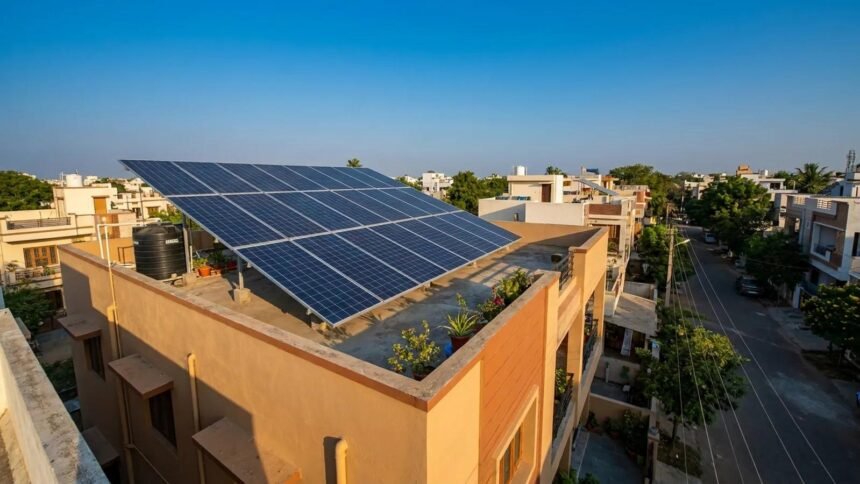
- A rooftop installation
- A school solar system
- A solar water pump
- A commercial building
- A village microgrid
- A utility-scale solar park
This scalability is one of the important characteristics of PV technology. (IEA)
3. India has enormous solar potential
India’s geographical position gives many regions substantial sunlight.
MNRE notes that most parts of India receive approximately 4–7 kWh/m²/day of solar radiation. (Ministry of New and Renewable Energy)
This makes solar particularly relevant for:
- Rajasthan
- Gujarat
- Maharashtra
- Madhya Pradesh
- Karnataka
- Andhra Pradesh
- Telangana
- Bihar and other states
Actual electricity production still depends on location, weather, panel orientation, shading, system quality and other factors.
4. India’s solar capacity has grown dramatically
India’s solar capacity was approximately 2.82 GW by March 2014.
By 31 August 2026, MNRE reported cumulative solar capacity of 168.04 GW. (Ministry of New and Renewable Energy)
That growth illustrates how quickly solar has moved from a niche technology toward a major part of India’s electricity infrastructure.
5. Solar can reduce dependence on conventional electricity sources
Solar electricity can reduce the amount of electricity a household, business or institution needs to purchase from the grid, depending on the system and local electricity rules.
For a rooftop system, electricity generated during sunlight hours can be used directly by the building. Excess electricity may be exported to the grid where applicable under the local net-metering or related framework.
6. Solar creates new career opportunities
Solar energy isn’t only about engineers.
The sector requires people in:
- Electrical engineering
- Mechanical engineering
- Civil engineering
- Electronics
- Data science
- Artificial intelligence
- Project management
- Sales
- Finance
- Installation
- Maintenance
- Manufacturing
- Research
- Environmental studies
Students interested in renewable energy can therefore explore both technical and non-technical careers.
7. Solar is becoming increasingly important globally
The IEA reports that solar PV generated nearly 2,700 TWh of electricity globally in 2025, representing more than 8% of global electricity generation. (IEA)
This demonstrates that solar is no longer a small experimental technology. It has become a significant component of the global electricity system.
💰 Solar Energy Cost in India
One of the first questions people ask is:
“How much does a solar system cost?”
There is no single answer because prices depend on:
- System size
- Panel technology
- Inverter
- Mounting structure
- Installation
- Wiring
- Battery storage
- Location
- Roof condition
- Vendor
- Warranty
- Taxes
- Government subsidy
For example, a rooftop system without batteries can have a substantially different price from an off-grid system with large battery storage.
Under the PM Surya Ghar framework, the published Central Financial Assistance structure for residential rooftop solar provides support for the first 2 kW at 60% of benchmark cost and an additional 1 kW at 40% of benchmark cost, with no additional CFA beyond 3 kW. The cited benchmark structure uses ₹50,000/kW for the first 2 kW and ₹45,000/kW for the additional kW. (Solar Rooftop)
Important: actual vendor quotations can differ from benchmark figures, and subsidy eligibility and procedures should be checked on the current government portal before making a purchase.
The government’s rooftop-solar programme explains that eligible residential consumers can receive CFA/subsidy after installation and verification according to the applicable process. (Ministry of New and Renewable Energy)
National Portal for Rooftop Solar
Simple cost categories
| Solar system | Typical purpose |
|---|---|
| Small solar system | Lights, small appliances |
| 1–2 kW rooftop | Small household |
| 3 kW rooftop | Medium household |
| 5 kW+ rooftop | Larger home/business |
| Commercial system | Offices, shops, institutions |
| Large solar farm | Utility-scale electricity |
| Solar + battery | Backup/off-grid applications |
These are categories rather than fixed prices. A proper quotation should be based on electricity consumption and site conditions.
🏠 Solar Energy in Daily Life
Solar energy can quietly become part of our everyday routine.
At home
Solar can power:
- Fans
- Lights
- Refrigerators
- Computers
- Washing machines
- Water pumps
- Televisions
- Air conditioners, depending on system size
In schools
Solar systems can support:
- Smart classrooms
- Computers
- Lighting
- Laboratory equipment
- Internet infrastructure
In villages
Solar can support:
- Water pumps
- Street lights
- Small businesses
- Communication systems
- Household electricity
On farms
Solar pumps can help provide electricity for irrigation.
The PM-KUSUM programme has included components for decentralized renewable-energy plants and solarisation of agricultural pumps. MNRE’s scheme framework targeted 34,800 MW of additional solar capacity by March 2026, alongside solar agricultural-pump components. (Ministry of New and Renewable Energy)


🌱 Why Solar Energy Is Important to Society
Solar energy can influence society in several ways.
Energy access
Distributed solar can provide electricity in locations where extending conventional infrastructure is difficult or expensive.
Energy security
Sunlight is available domestically and does not need to be imported in the same way as fossil fuels.
Economic development
Solar projects require:
- Engineers
- Technicians
- Construction workers
- Manufacturers
- Installers
- Maintenance professionals
- Financial services
- Researchers
Environmental benefits
Solar electricity generation itself does not require combustion of coal, oil or natural gas. This can help reduce operational greenhouse-gas emissions compared with fossil-fuel electricity generation.
However, solar is not impact-free. Manufacturing requires materials and energy, land use can matter for large projects, and end-of-life panel recycling and waste management require proper systems.
That balanced understanding is important.
🇮🇳 Solar Energy and India’s Future
India has made solar a major component of its renewable-energy strategy.
The country’s solar growth includes:
- Utility-scale solar parks
- Rooftop solar
- Floating solar
- Solar pumps
- Off-grid systems
- Hybrid renewable projects
- Solar manufacturing
- Solar-powered public infrastructure
MNRE reports that solar represented the largest portion of India’s renewable capacity growth, with total renewable capacity excluding large hydro reaching 243.49 GW as of 31 August 2026. (Ministry of New and Renewable Energy)
The government also describes solar as important for India’s energy security because of the country’s abundant solar resource. (Ministry of New and Renewable Energy)
🎓 Why Students Should Learn About Solar Energy
Solar energy connects multiple subjects.
Science students
They can study:
- Photovoltaic effect
- Semiconductors
- Electricity
- Energy conversion
- Thermodynamics
Engineering students
Possible areas include:
- Solar-system design
- Power electronics
- Electrical engineering
- Energy storage
- Grid integration
Computer science students
Solar plants increasingly use:
- Artificial intelligence
- Machine learning
- Predictive maintenance
- Weather forecasting
- Energy forecasting
- Data analytics
Business students
Opportunities exist in:
- Solar financing
- Renewable-energy consulting
- Project management
- Sales
- Entrepreneurship
Solar energy is therefore not simply an environmental topic—it can become an interdisciplinary career field.
⭐ Advantages of Solar Energy
Some major advantages include:
- Renewable energy source
- Abundant sunlight
- Modular technology
- Can be installed on rooftops
- Low operating emissions
- Useful for remote locations
- Can reduce grid electricity purchases
- Creates employment opportunities
- Supports energy diversification
- Can power agricultural applications
⚠️ Challenges of Solar Energy
Solar energy also has limitations.
1. Intermittency
Solar generation depends on sunlight and therefore falls at night and can decline during cloudy weather.
2. Storage requirements
Batteries can help provide electricity when solar generation is unavailable, but they add cost and require materials and maintenance.
3. Initial investment
The upfront cost can be significant even when long-term electricity savings are possible.
4. Land requirements
Very large solar projects can require substantial land areas.
5. Recycling
As solar installations grow, responsible management of old modules and other equipment becomes increasingly important.
6. Grid infrastructure
Large amounts of variable renewable generation require appropriate transmission, distribution, forecasting and grid-management systems.
🔍 Solar Energy vs Conventional Energy
| Feature | Solar Energy | Fossil-Fuel Energy |
|---|---|---|
| Main resource | Sunlight | Coal, oil, gas |
| Renewable | Yes | No |
| Fuel required during operation | Sunlight | Continuous fuel supply |
| Direct operational combustion | No | Yes |
| Night-time generation | No without storage/hybrid support | Generally possible |
| Installation scale | Small to utility-scale | Often centralized, though varies |
| Storage | Often useful | Usually less central to generation |
| Environmental impact | Lower operational emissions, but manufacturing/land impacts exist | Higher operational emissions |
The practical choice in an electricity system is often not simply “solar versus everything else.” Modern grids can combine solar, wind, hydro, nuclear, thermal generation, storage, transmission and demand management.
🗓️ How Is Solar Energy Observed?
Solar energy itself does not have a single universal annual “observance day” comparable to some international awareness days.
However, solar energy is commonly promoted through:
- Renewable-energy campaigns
- Environmental education
- School science projects
- Energy-conservation programmes
- Clean-energy exhibitions
- Government awareness programmes
- World environment-related events
For an educational article, solar energy can be used as a theme for classroom discussions, science exhibitions and sustainability activities.
🎉 Solar Energy Wishing Messages
If you want to create an awareness post, here are some human-friendly wishes:
☀️ May the power of the Sun inspire us to build a cleaner and brighter future.
🌱 Let every ray of sunlight remind us that sustainable choices can create meaningful change.
⚡ Choose clean energy, save resources and help create a healthier planet for future generations.
🌞 May solar energy bring light, opportunity and sustainable development to every community.
📝 Important Points About Solar Energy
Before installing a solar system, remember:
- Calculate your electricity consumption.
- Check available rooftop space.
- Assess shade from trees and buildings.
- Compare different system sizes.
- Understand inverter specifications.
- Ask about warranties.
- Check installation quality.
- Understand maintenance requirements.
- Check current government subsidy rules.
- Verify the vendor and applicable DISCOM procedure.
- Consider whether battery storage is actually necessary.
- Compare expected generation with your electricity consumption.
⭐ Solar Energy Review
Overall educational review
Solar energy is one of the most important renewable-energy technologies to understand today.
Its biggest strengths are its scalability, abundant resource base and ability to generate electricity close to where it is consumed.
For households, rooftop solar can potentially reduce grid electricity purchases. For farmers, solar pumping can provide an alternative source of energy for irrigation. For businesses, solar can become part of an energy-cost and sustainability strategy. For students, it opens opportunities across science, engineering, technology and entrepreneurship.
At the same time, people should avoid assuming that every solar installation will automatically produce the same savings. Location, sunlight, system design, electricity tariffs, financing, maintenance and applicable regulations all affect the outcome.
❓ Frequently Asked Questions About Solar Energy
1. What is solar energy?
Solar energy is energy obtained from sunlight. It can be converted into electricity using photovoltaic technology or into heat using solar thermal systems.
2. Who discovered solar energy?
No single person “discovered” solar energy. Humans have used sunlight for thousands of years. The photovoltaic effect was observed by Edmond Becquerel in 1839. (Alternative Fuels Data Center)
3. When was the first practical solar cell developed?
Bell Laboratories researchers demonstrated a practical silicon solar cell in 1954. (The Department of Energy’s Energy.gov)
4. Is solar energy renewable?
Yes. Sunlight is naturally replenished and is therefore classified as a renewable energy resource.
5. Can solar panels work on cloudy days?
Yes. Solar panels can still generate electricity under cloudy conditions, although output is generally lower than under strong direct sunlight.
6. Can solar panels generate electricity at night?
Standard PV panels cannot generate electricity from sunlight at night. A battery or another electricity source is required for night-time supply.
7. How long do solar panels last?
Many modern solar modules are designed for long operating lives, commonly around two decades or more. Actual performance depends on product quality, environment, installation and maintenance.
8. Is solar energy completely pollution-free?
It is more accurate to say that solar electricity has very low operational emissions compared with fossil-fuel generation. Manufacturing, transportation, installation and end-of-life management still have environmental impacts.
9. Is solar energy expensive?
The answer depends on system size, technology, location, financing and available incentives. The upfront cost can be significant, while the long-term economics depend on electricity consumption and other factors.
10. Is solar energy useful for students?
Absolutely. It connects physics, chemistry, electronics, electrical engineering, environmental science, computer science, economics and entrepreneurship.
🌍 Daily-Life Impact of Solar Energy
Imagine waking up in a home where rooftop panels generated part of yesterday’s electricity.
A farmer may use solar power to operate a water pump.
A village may use solar-powered street lighting.
A school may run computers using electricity generated from its rooftop.
A company may use solar power to reduce part of its daytime electricity demand.
These examples show something important:
Solar energy is not only about solar panels. It is about how society produces, distributes and uses energy.
🔮 The Future of Solar Energy
The next phase of solar development will probably involve much more than simply installing additional panels.
Important areas include:
- Higher-efficiency solar modules
- Battery storage
- Floating solar
- Agrivoltaics
- Building-integrated photovoltaics
- Artificial intelligence
- Smart grids
- Solar-powered electric vehicles
- Green hydrogen
- Better recycling
- Domestic manufacturing
- Advanced power electronics
Globally, the IEA expects renewable electricity capacity to continue expanding rapidly through 2030, with solar PV accounting for a very large share of that expansion. (IEA)
For India, the combination of abundant sunlight, rising electricity demand, rooftop deployment, large solar projects and technological development makes solar an important part of the country’s evolving energy landscape.
🌞 Conclusion: Solar Energy Can Brighten Everyday Life
Solar energy represents a fascinating combination of science, technology, economics and human progress.
From Becquerel’s 1839 observation to the silicon solar cell of 1954 and today’s enormous solar parks, the technology has travelled an extraordinary distance. (Alternative Fuels Data Center)
India’s rapid growth—from only a few gigawatts of solar capacity in the early 2010s to 168.04 GW by August 2026—shows how quickly the technology has expanded. (Ministry of New and Renewable Energy)
But the real importance of solar energy is not simply measured in gigawatts.
It can be seen in a child’s solar-powered study lamp, a farmer’s solar pump, a school’s rooftop installation, a household reducing its electricity purchases and an engineer designing tomorrow’s clean-energy system.
The Sun has been shining for billions of years. The challenge for humanity is learning how to use that enormous resource wisely, affordably and responsibly.
That is why learning about solar energy today can help students, families, businesses and society understand one of the defining energy technologies of the future.