
- Timeline of Indian Influence on Japanese Gods
- List of Japan Gods with Indian Roots
- 1. Benzaiten (Origin: Saraswati)
- 2. Daikokuten (Origin: Mahakala)
- 3. Bishamonten (Origin: Kubera/Vaisravana)
- 4. Kangiten (Origin: Ganesha)
- 5. Enmaten (Origin: Yama)
- 6. Taishakuten (Origin: Indra)
- 7. Bonten (Origin: Brahma)
- 8. Kisshoten (Origin: Lakshmi)
- 9. Marishiten (Origin: Marici)
- 10. Kariteimo (Origin: Hariti)
- 11. Fudō Myōō (Connected to Acala)
- 12. Daiitoku Myōō (Origin: Yamantaka)
- 13. Gozanze Myōō
- 14. Gundari Myōō
- 15. Kongō-Yasha Myōō
- ⭐⭐⭐⭐⭐ Overall Rating: 4.9/5
- Reader Review
- Pros
- Cons
- 1. Which Japanese god came from Saraswati?
- 2. Is Ganesha worshipped in Japan?
- 3. Which Japanese god originated from Lakshmi?
- 4. Did Brahma influence Japanese religion?
- 5. Why did Indian gods reach Japan?
- 6. Are these gods still worshipped today?
- 7. Do these gods have the same roles as in India?
- 8. What is the significance of these gods today?


Japan Gods with Indian Roots: Amazing History, Facts, Timeline & Cultural Significance
Japan Gods with Indian Roots: Japan is famous for its unique traditions, temples, and mythology. However, many students are surprised to learn that several well-known Japanese gods have their origins in ancient India. Over centuries, Buddhism traveled from India through China and Korea before reaching Japan. Along with Buddhist teachings came many Indian deities, who gradually became part of Japanese culture.
Former Japanese diplomats, historians, and scholars have often highlighted the deep cultural relationship between India and Japan. They point out that several Japanese gods were originally Hindu or Buddhist deities from India. Rather than replacing Japanese beliefs, these gods blended beautifully with local traditions.
Today, millions of Japanese people continue to worship these deities for wisdom, wealth, protection, happiness, music, and success. This remarkable cultural exchange demonstrates how civilizations can influence each other peacefully over thousands of years.
Timeline of Indian Influence on Japanese Gods
| Period | Event |
|---|---|
| Around 500 BCE | Buddhism begins developing in India. |
| 1st–5th Century CE | Indian culture spreads along the Silk Road. |
| 6th Century CE | Buddhism reaches Japan through Korea. |
| 7th–8th Century | Indian deities become part of Japanese Buddhist traditions. |
| Heian Period (794–1185) | Worship of Indian-origin gods becomes widespread in Japan. |
| Modern Japan | These deities remain respected in temples across the country. |
List of Japan Gods with Indian Roots
1. Benzaiten (Origin: Saraswati)


Benzaiten is one of Japan’s most beloved goddesses. She originated from the Indian goddess Saraswati, the goddess of knowledge, music, learning, and arts.
Japanese students often pray to Benzaiten before examinations. Musicians and artists also seek her blessings for creativity and success.
Symbolizes:
- Wisdom
- Music
- Education
- Knowledge
- Arts
2. Daikokuten (Origin: Mahakala)
Daikokuten evolved from Mahakala, a form associated with Shiva in Indian traditions. In Japan, he became the god of wealth, agriculture, food, and prosperity.
Farmers and business owners commonly worship him.
Represents
- Prosperity
- Good harvest
- Wealth
- Happiness
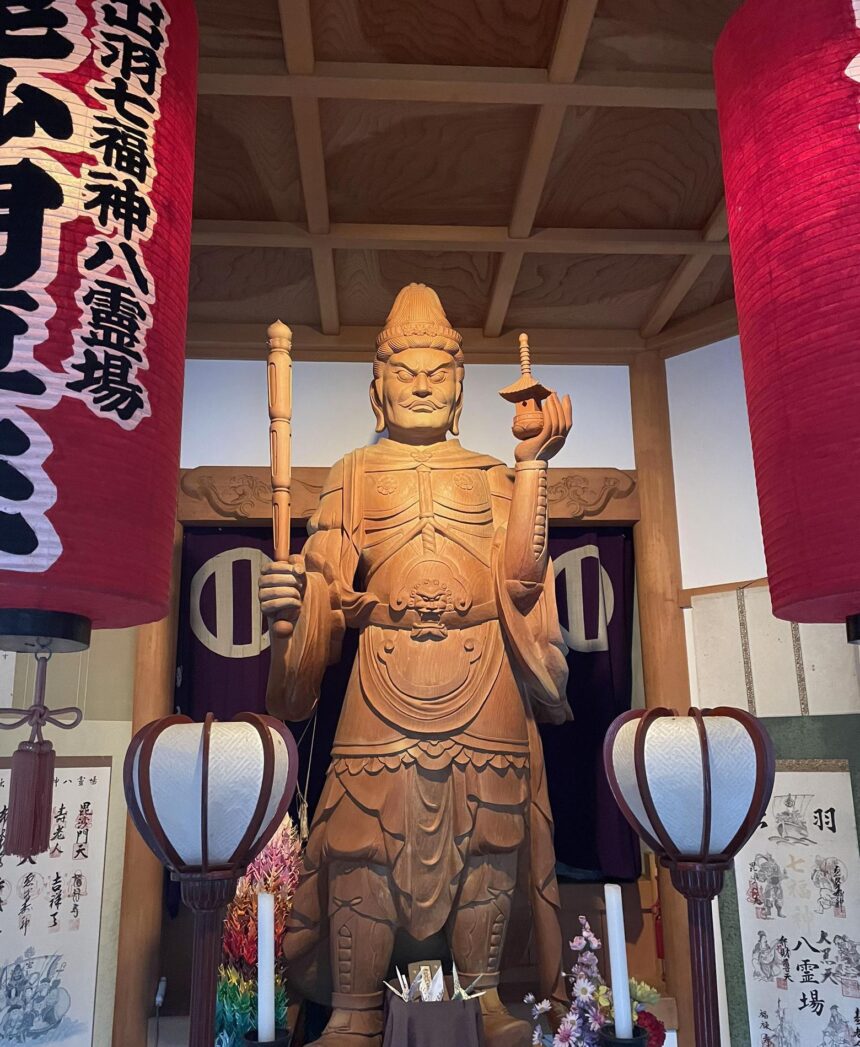
3. Bishamonten (Origin: Kubera/Vaisravana)
Bishamonten is one of Japan’s Seven Lucky Gods.
His roots trace back to Vaisravana (Kubera), the Indian god associated with wealth and guardianship.
He protects people from evil and brings victory.
Known for
- Protection
- Justice
- Courage
- Fortune
4. Kangiten (Origin: Ganesha)


Kangiten is directly connected with Lord Ganesha.
Unlike Indian depictions, Japanese Kangiten often appears as two embracing elephant-headed figures representing harmony and prosperity.
People pray for
- Business success
- Marriage
- Good relationships
- Wealth
5. Enmaten (Origin: Yama)
Enmaten comes from Yama, the Indian god of death and justice.
In Japanese Buddhism, he judges souls after death.
6. Taishakuten (Origin: Indra)
Taishakuten is derived from Lord Indra, the king of gods in Hindu traditions.
He represents
- Protection
- Leadership
- Rain
- Strength
7. Bonten (Origin: Brahma)
Bonten originates from Brahma, the creator deity.
Although not commonly worshipped independently, Bonten appears in many Buddhist temples as a protector.
8. Kisshoten (Origin: Lakshmi)
Kisshoten comes from Goddess Lakshmi.
She symbolizes
- Beauty
- Fortune
- Happiness
- Prosperity
9. Marishiten (Origin: Marici)
Marishiten originated from the Indian goddess Marici.
Ancient samurai worshipped her for victory and invisibility in battle.
10. Kariteimo (Origin: Hariti)
Kariteimo comes from Hariti, once described in Buddhist traditions as a child-snatching spirit who later became a protector of children after being transformed by the Buddha.
Today she is considered a guardian of mothers and children.
11. Fudō Myōō (Connected to Acala)
Fudō Myōō originates from Acala, an important Buddhist protector whose traditions developed in India.
He represents determination, discipline, and protection.
12. Daiitoku Myōō (Origin: Yamantaka)
Derived from Indian Buddhist traditions, Daiitoku symbolizes victory over fear and death.
13. Gozanze Myōō
Originating from Vajrayana Buddhism of India, Gozanze represents conquering ignorance and evil.
14. Gundari Myōō
This deity traces back to Indian esoteric Buddhist traditions and symbolizes spiritual power.
15. Kongō-Yasha Myōō
Another guardian deity from Indian Vajrayana Buddhism protecting Buddhist teachings.
Historical Journey from India to Japan
The movement of these gods did not happen overnight.
Instead, ideas traveled along the Silk Road through merchants, monks, and scholars. Buddhism spread from India into Central Asia, China, Korea, and eventually Japan.
During this journey, Indian deities gradually adopted local artistic styles and Japanese names while preserving many of their original meanings.
This cultural blending is one of history’s finest examples of peaceful exchange.
Interesting Facts
- More than a dozen Japanese Buddhist deities have Indian origins.
- Benzaiten is still worshipped throughout Japan.
- Kangiten closely resembles Lord Ganesha.
- Many Japanese temple chants still contain Sanskrit words.
- Ancient Sanskrit scripts appear in Japanese temples.
- Indian monks greatly influenced Japanese Buddhism.
- Japanese monks historically studied Sanskrit.
- The Silk Road played a major role in spreading Indian culture.
Cultural Significance
These deities represent the strong friendship between India and Japan.
Their presence shows that knowledge, religion, and culture can cross borders peacefully.
They also remind us that civilizations often grow stronger by sharing ideas.
Importance for Students
Students can learn about
- Cultural exchange
- Ancient history
- Buddhism
- Hindu mythology
- International relations
- Religious harmony
- Asian civilization
Understanding these connections broadens global awareness and appreciation for shared heritage.
Importance in Our Daily Life
Even if we do not worship these deities, their values remain meaningful today.
They teach us
- Respect knowledge
- Help others
- Work honestly
- Protect nature
- Practice kindness
- Seek wisdom
- Live peacefully
These values are relevant regardless of religion or nationality.
Observance
In Japan, these deities are honored mainly through Buddhist temple traditions, seasonal festivals, prayers, and personal devotion rather than a single nationwide observance. People visit temples to pray for success in studies, health, prosperity, family well-being, or protection, depending on the deity.
Wishing Message
May the timeless wisdom shared between India and Japan inspire knowledge, peace, prosperity, compassion, and harmony in every home. May we continue to learn from each other’s cultures and build a brighter future together.
Important Points
- Indian culture influenced Japanese Buddhism.
- Several Japanese gods originated in India.
- Names changed, but many symbolic meanings remained similar.
- Cultural exchange occurred through Buddhist monks and the Silk Road.
- These deities continue to be respected in modern Japan.
- They symbolize wisdom, prosperity, protection, courage, and compassion.
Review Section
⭐⭐⭐⭐⭐ Overall Rating: 4.9/5
Reader Review
“This guide clearly explains how Indian deities influenced Japanese religious traditions. The timelines, facts, and easy language make it perfect for students, researchers, and anyone interested in Asian history.”
Pros
- Easy to understand
- Student-friendly language
- Covers history and mythology
- Includes timeline and FAQs
- Helpful for exams and general knowledge
Cons
- Some deities evolved through Buddhist traditions over centuries, so their stories differ from their original Indian forms.
Frequently Asked Questions (FAQs)
1. Which Japanese god came from Saraswati?
Benzaiten is derived from the Indian goddess Saraswati.
2. Is Ganesha worshipped in Japan?
Yes. Ganesha is worshipped in Japan as Kangiten within certain Buddhist traditions.
3. Which Japanese god originated from Lakshmi?
Kisshoten is derived from Lakshmi.
4. Did Brahma influence Japanese religion?
Yes. Brahma is represented as Bonten in Japanese Buddhism.
5. Why did Indian gods reach Japan?
They spread alongside Buddhism through China and Korea over several centuries.
6. Are these gods still worshipped today?
Yes. Many temples across Japan continue to honor them.
7. Do these gods have the same roles as in India?
Some retain similar qualities, while others evolved to fit Japanese Buddhist beliefs and local traditions.
8. What is the significance of these gods today?
They symbolize shared cultural heritage, spiritual values, and the long-standing historical connection between India and Japan.
Conclusion
The story of Japan Gods with Indian Roots is more than a fascinating chapter of religious history—it is a powerful reminder of how cultures can connect across vast distances through learning, trade, and mutual respect. As Buddhism spread from India to East Asia, many Indian deities found new identities in Japan while preserving elements of their original symbolism. Today, figures such as Benzaiten, Daikokuten, Bishamonten, and Kangiten continue to inspire millions with values like wisdom, prosperity, courage, compassion, and harmony.
For students, this shared heritage offers an excellent example of cultural exchange and the evolution of traditions over time. For society, it highlights the importance of openness, respect for diversity, and peaceful cooperation between civilizations. By understanding these historical connections, we gain a deeper appreciation of both Indian and Japanese cultures and the enduring influence they have had on one another.