About Gomateshwara Temple Karnataka: The Ultimate Budget Travel Guide & Powerful History

- Estimated Travel Budget
- Estimated Student Budget
- 1. Why is Gomateshwara Temple famous?
- 2. Where is it located?
- 3. Who built the Gomateshwara Statue?
- 4. How tall is the statue?
- 5. What is Mahamastakabhisheka?
- 6. Is the site suitable for students?
- 7. Is there an entry fee?
- 8. What is the best time to visit?
- Overall Rating: ⭐⭐⭐⭐⭐ (4.9/5)


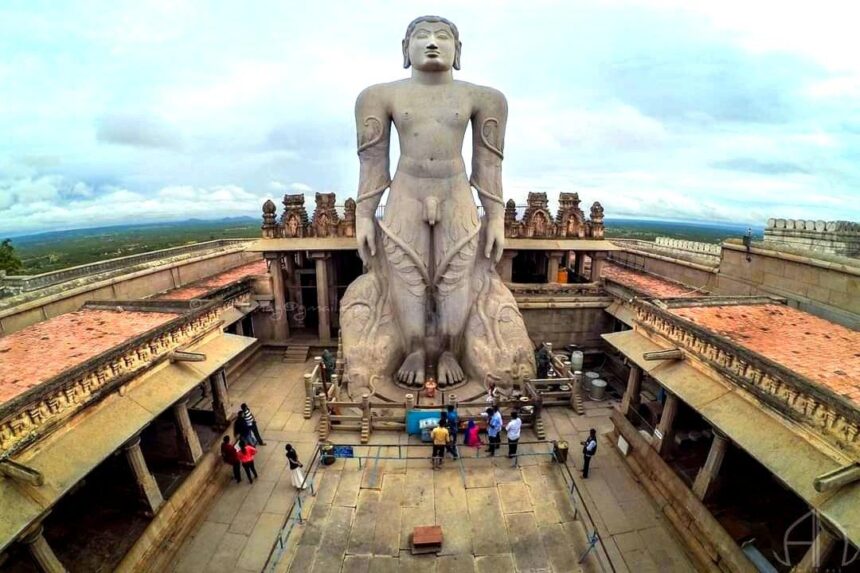
The Gomateshwara Temple, located at Shravanabelagola in Karnataka, is one of the most sacred pilgrimage sites in Jainism. It is famous for the magnificent Gomateshwara (Bahubali) Statue, one of the world’s tallest free-standing monolithic stone statues. Standing majestically on Vindhyagiri Hill, this monument attracts pilgrims, students, historians, architects, photographers, and tourists from around the world.
For students, Gomateshwara Temple is much more than a religious destination. It is a place where history, architecture, philosophy, engineering, ethics, and environmental awareness come together. This comprehensive guide explains everything in simple and human-friendly language, making it ideal for school projects, competitive exams, and educational tours.
Overview of Gomateshwara Temple
| Feature | Details |
|---|---|
| Location | Shravanabelagola, Hassan District, Karnataka |
| Religion | Jainism |
| Main Figure | Bahubali (Gomateshwara) |
| Built In | 981 CE |
| Built By | Chavundaraya |
| Statue Height | About 57 feet (17.4 meters) |
| Material | Single granite rock |
| Famous Festival | Mahamastakabhisheka |
| Best Time to Visit | October to March |
History of Gomateshwara Temple


The Gomateshwara Statue was commissioned in 981 CE by Chavundaraya, a minister and military commander under the Western Ganga Dynasty. The statue represents Bahubali, the son of the first Jain Tirthankara, Rishabhanatha (Adinatha).
According to Jain tradition, Bahubali renounced worldly power after realizing that inner peace and self-control were greater than material success. He meditated in complete stillness for such a long time that vines grew around his legs, symbolizing detachment from worldly desires. This image is beautifully reflected in the statue, where vines are carved climbing around Bahubali’s legs.
Over the centuries, Shravanabelagola became one of the most important Jain pilgrimage centers in India. The site also contains ancient temples, inscriptions, and monuments that provide valuable information about Karnataka’s medieval history.
Timeline of Gomateshwara Temple
| Year/Period | Event |
|---|---|
| Ancient Era | Jainism spreads in southern India |
| 981 CE | Gomateshwara statue completed |
| Medieval Period | Shravanabelagola becomes a major pilgrimage center |
| Every 12 Years | Mahamastakabhisheka ceremony held |
| Modern Era | Protected as an important heritage site |
| Today | Popular pilgrimage and educational tourism destination |
Architecture of Gomateshwara Temple
The Gomateshwara Statue is one of the greatest achievements of ancient Indian sculpture.
Architectural highlights include:
- Carved from a single granite rock.
- Height of approximately 57 feet.
- One of the tallest free-standing monolithic statues in the world.
- Located atop Vindhyagiri Hill.
- Calm facial expression representing inner peace.
- Symmetrical proportions.
- Intricate carving of vines around the legs.
- Surrounded by ancient Jain temples and inscriptions.
The engineering required to carve such a massive statue more than 1,000 years ago continues to amaze historians and architects.
23 Incredible Facts About Gomateshwara Temple
- Home to one of the world’s tallest monolithic statues.
- Built in 981 CE.
- Dedicated to Bahubali.
- Located on Vindhyagiri Hill.
- Statue carved from a single granite rock.
- Represents peace and renunciation.
- Vines symbolize detachment from worldly life.
- Major Jain pilgrimage center.
- Mahamastakabhisheka occurs every 12 years.
- Thousands of devotees attend the ceremony.
- Shravanabelagola has ancient inscriptions.
- Popular among architecture students.
- Offers panoramic hilltop views.
- Demonstrates advanced ancient engineering.
- Protected heritage site.
- Promotes non-violence.
- Encourages meditation and self-discipline.
- Attracts international tourists.
- Important destination for history enthusiasts.
- Represents Jain values of simplicity.
- Surrounded by ancient temples.
- Inspires artists and sculptors.
- Symbolizes spiritual victory over ego.
Religious Significance
The temple is deeply significant because it honors Bahubali’s victory over pride and attachment.
Its teachings emphasize:
- Non-violence (Ahimsa)
- Self-control
- Truthfulness
- Compassion
- Meditation
- Forgiveness
- Simplicity
- Spiritual growth
These values remain relevant in modern society.
Importance for Students
Students can learn about:
- Indian History
- Jain Philosophy
- Sculpture
- Ancient Engineering
- Heritage Conservation
- Karnataka’s Culture
- Archaeology
- Tourism Management
- Environmental Ethics
- Religious Studies
Educational tours provide practical exposure beyond classroom learning.
Budget Travel Guide for Students
Estimated Travel Budget
| Expense | Approximate Cost |
|---|---|
| Train Fare | ₹300–₹900 |
| Bus Fare | ₹200–₹700 |
| Local Transport | ₹100–₹300 |
| Budget Hotel | ₹700–₹1,500 |
| Hostel | ₹500–₹1,000 |
| Meals | ₹150–₹500 |
| Sightseeing | ₹200–₹500 |
| Souvenirs | ₹100–₹400 |
Estimated Student Budget
- One-day trip: ₹1,000–₹1,800
- Two-day educational tour: ₹2,500–₹4,500
- Three-day trip: ₹4,000–₹6,500
Group travel can significantly reduce transportation and accommodation expenses.
Entry Fees and Other Costs
| Item | Approximate Cost |
|---|---|
| Entry | Free or nominal charges for certain areas/events |
| Camera | May vary |
| Guide | ₹300–₹700 |
| Parking | Vehicle dependent |
| Donations | Optional |
Best Time to Visit
The ideal months are:
- October
- November
- December
- January
- February
- March
The Mahamastakabhisheka festival, held approximately every 12 years, is a spectacular occasion, although it attracts very large crowds.
Observance and Visitor Etiquette
Visitors should:
- Wear comfortable and modest clothing.
- Carry drinking water for the hill climb.
- Remove footwear where required.
- Maintain silence in prayer areas.
- Respect temple customs.
- Avoid littering.
- Follow instructions from temple authorities.
- Be mindful that climbing the hill involves many stone steps.
Importance in Our Life
The teachings of Bahubali encourage us to:
- Control anger.
- Avoid greed.
- Practice patience.
- Respect all living beings.
- Value inner peace over material possessions.
- Develop self-confidence through discipline.
- Forgive others.
- Live honestly.
These principles support personal growth and emotional well-being.
Daily Life Impacts
The message of Gomateshwara Temple can inspire everyday habits such as:
- Solving problems peacefully.
- Helping people without expecting rewards.
- Practicing kindness.
- Living simply.
- Reducing unnecessary consumption.
- Respecting nature.
- Managing stress through reflection.
- Developing patience and resilience.
These values contribute to stronger families and healthier communities.
Importance to Society
Gomateshwara Temple contributes by:
- Preserving India’s cultural and religious heritage.
- Supporting tourism and local livelihoods.
- Encouraging heritage conservation.
- Inspiring artists and architects.
- Promoting non-violence and compassion.
- Strengthening community identity.
- Preserving ancient inscriptions for research.
- Promoting interfaith understanding through cultural tourism.
Important Points for Students
- Located in Shravanabelagola, Karnataka.
- Dedicated to Bahubali (Gomateshwara).
- Built in 981 CE.
- Commissioned by Chavundaraya.
- Statue carved from a single granite rock.
- Approximately 57 feet tall.
- Mahamastakabhisheka celebrated every 12 years.
- Important Jain pilgrimage center.
- Excellent destination for educational tours.
- Significant example of ancient Indian engineering.
Frequently Asked Questions (FAQs)
1. Why is Gomateshwara Temple famous?
It is famous for the massive monolithic statue of Bahubali and its importance in Jainism.
2. Where is it located?
At Shravanabelagola in Karnataka’s Hassan district.
3. Who built the Gomateshwara Statue?
It was commissioned by Chavundaraya in 981 CE.
4. How tall is the statue?
Approximately 57 feet (17.4 meters).
5. What is Mahamastakabhisheka?
It is the grand ceremonial anointing of the Bahubali statue, held approximately every 12 years.
6. Is the site suitable for students?
Yes. It offers valuable learning in history, architecture, religion, archaeology, and ethics.
7. Is there an entry fee?
General access is typically free, though charges may apply for certain facilities or special events.
8. What is the best time to visit?
October to March, when the weather is pleasant.
Visitor Review
Overall Rating: ⭐⭐⭐⭐⭐ (4.9/5)
| Category | Rating |
|---|---|
| Spiritual Experience | ⭐⭐⭐⭐⭐ |
| Historical Importance | ⭐⭐⭐⭐⭐ |
| Architecture | ⭐⭐⭐⭐⭐ |
| Educational Value | ⭐⭐⭐⭐⭐ |
| Cleanliness | ⭐⭐⭐⭐☆ |
| Budget Friendliness | ⭐⭐⭐⭐☆ |
| Scenic Beauty | ⭐⭐⭐⭐⭐ |
Honest Review
The Gomateshwara Temple at Shravanabelagola is an inspiring destination that combines spirituality, history, and architectural brilliance. Climbing Vindhyagiri Hill requires some effort, but the breathtaking view and the serene presence of the Bahubali statue make the journey worthwhile. Students will especially appreciate the opportunity to learn about Jain philosophy, ancient engineering, and heritage conservation in a real-world setting.
Wishing Messages
- May Lord Bahubali inspire you with peace, wisdom, and humility.
- Wishing you a life filled with kindness, patience, and success.
- May your journey bring knowledge, happiness, and inner strength.
- May compassion and truth guide every step of your life.
Why Students Should Visit Gomateshwara Temple
Students visiting Gomateshwara Temple can:
- Explore one of India’s greatest monolithic sculptures.
- Learn about Jain philosophy and ethics.
- Understand medieval Indian engineering.
- Study ancient inscriptions and archaeology.
- Experience the importance of heritage conservation.
- Develop appreciation for simplicity, patience, and non-violence.
Conclusion
The Gomateshwara Temple at Shravanabelagola is one of India’s most remarkable spiritual and historical landmarks. Its towering statue of Bahubali, rich Jain heritage, and impressive engineering achievements make it an unforgettable destination for pilgrims, tourists, historians, and students alike.
For students, the site serves as a living classroom where history, architecture, archaeology, ethics, and environmental awareness come together. Budget-friendly travel options and educational value make it an excellent choice for school and college tours.
Whether you visit to admire the monumental sculpture, learn about Jain traditions, or seek a peaceful environment for reflection, Gomateshwara Temple offers timeless lessons in humility, self-discipline, compassion, and respect for cultural heritage—values that continue to enrich both individual lives and society as a whole.