Chhath Puja: 11 Powerful and Heartwarming Reasons Why This Sacred Festival Brings Happiness, Hope and Positive Energy to Our Lives
Introduction: What Is Chhath Puja?
Chhath Puja: India is a country where festivals are not simply occasions for celebration; they are expressions of faith, gratitude, love, family relationships and cultural identity. Among its many beautiful festivals, Chhath Puja holds a particularly special place in the hearts of millions of people, especially in Bihar, Jharkhand, eastern Uttar Pradesh and parts of Nepal.
- Introduction: What Is Chhath Puja?
- 1. What Is the Meaning of Chhath Puja?
- 2. History of Chhath Puja
- Sun worship in ancient India
- Chhath Puja in Hindu traditions
- Chhath Puja and the cultural identity of Bihar
- 3. When Is Chhath Puja Celebrated in 2026?
- 4. Four-Day Chhath Puja Timeline and Rituals
- Day 1: Nahay Khay – 13 November 2026
- Day 2: Kharna – 14 November 2026
- Day 3: Sandhya Arghya – 15 November 2026
- Day 4: Usha Arghya – 16 November 2026
- 5. Why Is Chhath Puja So Significant?
- 1. Worship of Surya Dev
- 2. Devotion to Chhathi Maiya
- 3. Promotes Family Unity
- 4. Teaches Discipline and Patience
- 5. Connects Humanity with Nature
- 6. Promotes Social Equality
- 7. Preserves Traditional Culture
- 8. Encourages Cleanliness
- 9. Strengthens Emotional Connections
- 10. Promotes Gratitude
- 11. Inspires Hope and Positive Thinking
- 6. Important Facts About Chhath Puja
- 7. Traditional Chhath Puja Samagri (Puja Materials)
- 8. How Is Chhath Puja Celebrated Across India?
- 9. Chhath Puja and Its Importance in Our Daily Lives
- 10. Environmental Importance of Chhath Puja
- 11. Health, Safety and Important Precautions During Chhath Puja
- 12. Chhath Puja Wishes, Greetings and Messages 2026
- 15 Best Chhath Puja Wishes in English
- Chhath Puja Wishes in Hindi
- Short Chhath Puja Captions for Social Media
- 13. Chhath Puja and Its Importance in Indian Society
- Cultural preservation
- Economic opportunities
- Community development
- Migration and emotional identity
- Social harmony
- 14. Chhath Puja Review: Why Is This Festival So Special?
- 15. Frequently Asked Questions (FAQs) About Chhath Puja
- 16. Important Lessons We Can Learn from Chhath Puja
- 17. Conclusion: Chhath Puja Is a Celebration of Faith, Nature and Humanity
- 18. References and Further Reading
- Internal linking Checklist for Minorstudy
Chhath Puja is one of the most significant traditional festivals dedicated to Surya Dev (the Sun God) and Chhathi Maiya. During this festival, devotees express gratitude to the Sun for providing light, energy, life and the resources necessary for the survival of all living beings.
Unlike many festivals celebrated with music, fireworks and grand decorations, Chhath Puja is widely recognised for its simplicity, discipline, cleanliness, devotion and spiritual atmosphere. Devotees observe strict fasting, prepare traditional offerings, maintain cleanliness and stand in rivers, ponds or other water bodies to offer Arghya to the setting and rising Sun.
One of the most beautiful aspects of Chhath Puja is that it celebrates both the setting and rising Sun. This reminds us that life includes both difficult and happy moments, and every ending can become the beginning of a new journey.
For families living away from Bihar and other traditional Chhath regions, this festival is also an emotional connection to their homes, childhood memories, grandparents and cultural roots.
Let’s explore the complete history, traditions, timeline, significance, interesting facts, wishes and importance of Chhath Puja in our daily lives and society.
1. What Is the Meaning of Chhath Puja?
The word Chhath is commonly associated with the sixth day of the lunar month. The festival is traditionally observed during Kartik Shukla Shashthi, the sixth day of the bright fortnight of the Hindu month of Kartik.
Chhath Puja is a festival of worship, gratitude, purity and devotion. Its central focus is the worship of Surya Dev and the observance of rituals associated with Chhathi Maiya.
The Sun is essential to life on Earth. It supports agriculture, influences weather and provides the energy that sustains ecosystems. Through Chhath Puja, devotees express their gratitude for these blessings.
The festival teaches several meaningful values:
Gratitude: Appreciate the natural resources that sustain life.
Discipline: Develop patience and self-control through fasting and rituals.
Purity: Maintain cleanliness in food preparation and surroundings.
Equality: Participate in a tradition that brings people from different social backgrounds together.
Family bonding: Strengthen relationships through collective celebration.
Environmental awareness: Respect rivers, ponds, sunlight and nature.
2. History of Chhath Puja
Chhath Puja has a long-standing place in the religious and cultural traditions of the Indian subcontinent. Its exact historical origin and the precise date when the festival first began are not conclusively established.
However, the worship of the Sun has ancient roots in Indian civilisation.
Sun worship in ancient India
In ancient Indian traditions, Surya Dev was regarded as a powerful deity associated with light, health, energy, knowledge and life. References to Sun worship appear in ancient Hindu scriptures, including the Rigveda.
The Sun was not simply considered a celestial object but also a symbol of vitality, truth and divine power.
People traditionally prayed to the Sun for prosperity, good health, agricultural success and the well-being of their families.
Chhath Puja in Hindu traditions
Chhath Puja is associated with several religious beliefs and traditional stories.
Two popular mythological connections are particularly significant.
The story of Draupadi and the Pandavas
According to a popular traditional account, Draupadi and the Pandavas worshipped Surya Dev during difficult times. Their prayers are associated with seeking strength, protection and prosperity.
Different regional retellings describe these traditions differently, and they should be understood as religious narratives rather than verified historical records.
The story of Karna
Karna, one of the central characters of the Mahabharata, is traditionally described as the son of Surya Dev. He is remembered for his devotion to the Sun and his generosity.
Popular traditions associate his worship of Surya Dev with the historical and spiritual background of Sun worship.
Chhath Puja and the cultural identity of Bihar
Over generations, Chhath Puja became deeply rooted in the cultural identity of Bihar, Jharkhand, eastern Uttar Pradesh and neighbouring regions.
Today, it is celebrated by people across India and by Indian communities living abroad.
For many families, Chhath is not just a religious occasion. It is an emotional homecoming that brings relatives, neighbours and entire communities together.
3. When Is Chhath Puja Celebrated in 2026?
Chhath Puja is traditionally observed twice a year:
Chaiti Chhath, during the Chaitra month.
Kartik Chhath, during the Kartik month.
Kartik Chhath is the more widely celebrated observance.
The festival generally takes place in October or November, depending on the Hindu lunar calendar.
For 2026, Kartik Chhath falls in November. The four-day celebration begins with Nahay Khay and continues through Kharna, Sandhya Arghya and Usha Arghya.
Chhath Puja 2026: Important Dates
| Ritual | Date | Day |
|---|---|---|
| Nahay Khay | 13 November 2026 | Friday |
| Kharna | 14 November 2026 | Saturday |
| Sandhya Arghya | 15 November 2026 | Sunday |
| Usha Arghya and Parana | 16 November 2026 | Monday |
Dates according to published 2026 festival calendars. Local sunrise and sunset timings should be checked before performing the rituals.
4. Four-Day Chhath Puja Timeline and Rituals
Chhath Puja is a four-day spiritual journey. Each day has a different ritual and meaning. Together, these four days represent cleanliness, dedication, gratitude and hope.
Day 1: Nahay Khay – 13 November 2026
Nahay Khay marks the beginning of Chhath Puja.
On this day, devotees take a bath, clean their homes and prepare themselves for the upcoming rituals. The kitchen and cooking utensils are carefully cleaned because purity is considered extremely important.
Traditional food is prepared, often including rice, chana dal and pumpkin (kaddu), cooked according to family traditions.
The meal is generally prepared with great care, and the person observing the fast eats first.
Significance: Nahay Khay represents physical and spiritual purification. It reminds us that every meaningful journey begins with cleanliness and preparation.
Day 2: Kharna – 14 November 2026
Kharna, also known as Lohanda, is the second day of Chhath Puja.
Devotees observe a fast throughout the day and perform evening worship. After the rituals, they break their daytime fast by consuming traditional prasad.
Popular offerings include:
Rasiya or jaggery-based kheer.
Roti.
Bananas and other fruits.
Traditional homemade preparations.
After the evening worship, prasad is distributed among family members, neighbours and relatives.
Following Kharna, many devotees begin a rigorous approximately 36-hour fast without food and water, known as Nirjala Vrat, which continues until the concluding morning rituals. Individual family traditions may vary.
Significance: Kharna teaches patience, discipline, dedication and the importance of sharing blessings with others.
Day 3: Sandhya Arghya – 15 November 2026
Sandhya Arghya is one of the most beautiful and important moments of Chhath Puja.
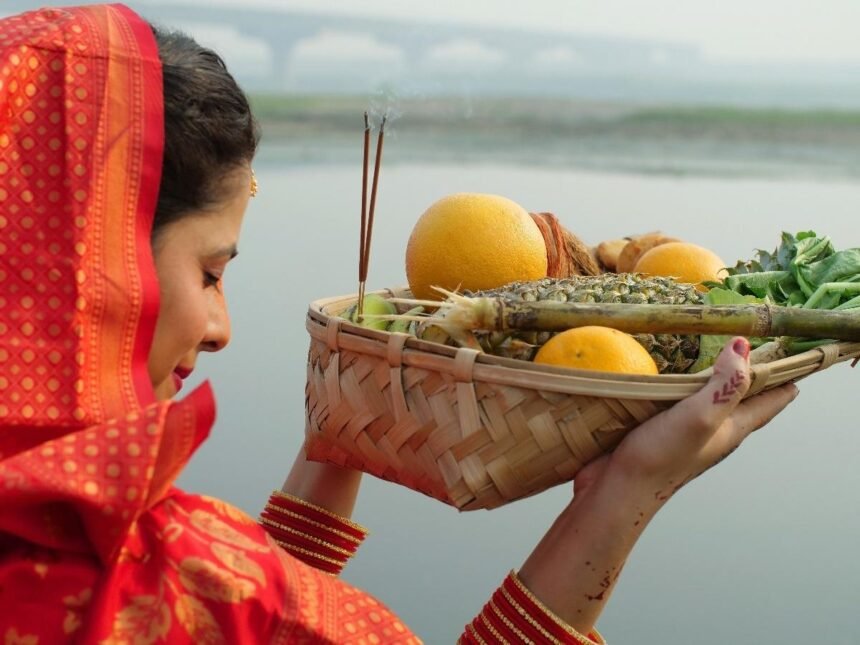
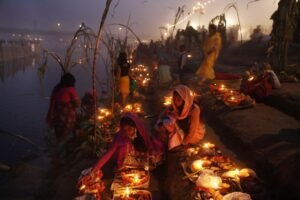
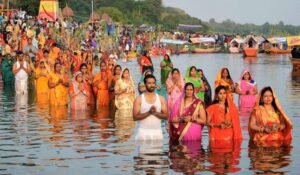
During the evening, devotees gather at riverbanks, ponds, lakes and specially prepared ghats. They carry bamboo baskets (daura) and winnowing baskets (soop) filled with fruits, thekua, sugarcane and other traditional offerings.
As the Sun approaches the horizon, devotees stand in the water and offer Arghya to Surya Dev.
The atmosphere becomes spiritual and emotional. Traditional Chhath songs fill the surroundings, families pray together, and the riverbanks glow with lamps.
Significance: Worshipping the setting Sun represents gratitude for everything life has given us. It also teaches respect for every stage of life, including difficult periods and endings.
Day 4: Usha Arghya – 16 November 2026
Usha Arghya is the final and most emotionally meaningful stage for many devotees.
Before sunrise, devotees return to the ghats with their offerings. They wait for the first rays of the Sun and offer Arghya to Surya Dev.
After the morning worship, devotees complete their fast through a ritual known as Parana.
Prasad is distributed among relatives, neighbours, friends and other visitors.
Significance: Usha Arghya symbolises hope, renewal, new beginnings and the promise of a brighter tomorrow.
The worship of both the setting and rising Sun makes Chhath Puja especially distinctive.
5. Why Is Chhath Puja So Significant?
Chhath Puja is not only a religious celebration. It is a festival that connects human beings with nature, family, society and their inner values.
Here are 11 powerful reasons why this festival is so meaningful.
1. Worship of Surya Dev
The Sun is the primary source of energy for life on Earth. Worshipping Surya Dev expresses gratitude for sunlight, warmth, agriculture and the natural cycles that support life.
2. Devotion to Chhathi Maiya
Chhathi Maiya is traditionally worshipped for the protection, happiness and well-being of children and families. Devotees pray for the prosperity and longevity of their loved ones.
3. Promotes Family Unity
Chhath Puja brings family members together. Children, parents, grandparents and relatives participate in preparations and rituals.
Even people living in distant cities often return home to celebrate the festival.
4. Teaches Discipline and Patience
The four-day observance requires careful preparation, commitment and self-control. These qualities can inspire people to become more disciplined in everyday life.
5. Connects Humanity with Nature
Chhath Puja highlights the importance of rivers, water, sunlight, fruits, plants and agricultural resources.
It reminds us that human survival depends on nature.
6. Promotes Social Equality
People from different economic and social backgrounds gather at common ghats to participate in the festival.
Its community spirit encourages cooperation, mutual respect and togetherness.
7. Preserves Traditional Culture
Traditional songs, thekua, bamboo baskets, folk customs and family rituals help preserve regional heritage.
8. Encourages Cleanliness
Cleaning homes, preparing hygienic offerings and maintaining the ghats are important parts of the celebration.
The festival can inspire communities to care for their surroundings throughout the year.
9. Strengthens Emotional Connections
For people living away from their hometowns, Chhath Puja brings back memories of childhood, family gatherings and village life.
10. Promotes Gratitude
The festival teaches us not to take life’s blessings for granted. Food, water, sunlight, family and health deserve appreciation.
11. Inspires Hope and Positive Thinking
The transition from sunset to sunrise offers a beautiful message: difficult times do not last forever, and every new day brings opportunities.
6. Important Facts About Chhath Puja
Here are some interesting facts about Chhath Puja that students and readers should know.
Ancient tradition: Chhath is rooted in ancient Indian traditions of Sun worship.
Four-day celebration: The main Kartik Chhath observance lasts four days.
Two Sun offerings: Devotees worship both the setting and rising Sun.
Major festival of Bihar: It is particularly important in Bihar and is popularly called Chhath Mahaparv.
No central requirement for idol worship: The rituals focus on direct offerings to the Sun and nature.
Traditional prasad: Thekua is among the most recognised foods associated with the festival.
Natural materials: Bamboo baskets, fruits, sugarcane and earthen lamps are commonly used.
Community participation: Neighbours and volunteers work together to prepare the ghats.
Celebrated internationally: Chhath is observed by Indian and Nepali communities living abroad.
Traditional folk music: Chhath songs preserve regional languages, memories and cultural heritage.
These traditions are documented in descriptions by Bihar Tourism and Incredible India.
7. Traditional Chhath Puja Samagri (Puja Materials)
The preparation of offerings is an important part of the festival. Different families may use different materials depending on regional customs.
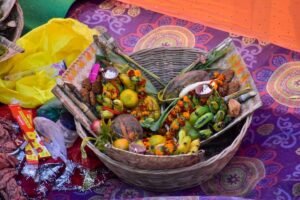
Commonly used Chhath Puja samagri includes:
| Puja material | Traditional importance |
|---|---|
| Bamboo soop | Holding and presenting offerings |
| Daura | Carrying puja materials |
| Thekua | Traditional homemade prasad |
| Sugarcane | Traditional auspicious offering |
| Coconut | Symbol of devotion and offering |
| Banana | Important fruit offering |
| Apple and seasonal fruits | Presented as prasad |
| Rice laddoo | Traditional offering |
| Turmeric and ginger | Used in traditional preparations |
| Earthen diya | Symbol of light and devotion |
| Milk and water | Used in Arghya rituals |
| Flowers | Used in worship |
The most important principle is devotion and respect for the family tradition.
8. How Is Chhath Puja Celebrated Across India?
Although Chhath Puja is especially associated with Bihar, its popularity has expanded across India.
Bihar: Celebrated widely in Patna, Gaya, Muzaffarpur, Darbhanga, Bhagalpur and other districts.
Jharkhand: Families gather around rivers, lakes and community ghats.
Uttar Pradesh: Particularly popular in eastern Uttar Pradesh and the Bhojpuri-speaking region.
Delhi: Large community celebrations take place near designated water bodies and temporary ghats.
West Bengal: Celebrated by communities with cultural and family connections to Bihar and eastern Uttar Pradesh.
Maharashtra: Chhath celebrations are organised by migrant communities in cities such as Mumbai and Pune.
Nepal: The festival is particularly important in the Mithila and Terai regions.
Chhath Puja is also observed by diaspora communities in countries including the United States, the United Kingdom, Mauritius and other parts of the world.
9. Chhath Puja and Its Importance in Our Daily Lives
What can a traditional festival teach us about modern life?
Chhath Puja offers several lessons that remain relevant even after the festival ends.
Respect nature: We depend on clean water, sunlight, fertile soil and healthy ecosystems. We should protect them every day.
Be patient: The festival reminds us that meaningful results often require discipline and commitment.
Respect family: Spending time with loved ones strengthens relationships and creates lasting memories.
Value simplicity: Chhath Puja demonstrates that happiness does not always require expensive celebrations. Simple offerings and sincere prayers can carry deep meaning.
Practise gratitude: Instead of focusing only on what we lack, we should appreciate what we already have.
Help others: Sharing prasad and helping people at the ghats demonstrate the importance of kindness and community service.
For students, Chhath Puja also offers an opportunity to understand India’s cultural diversity, traditional knowledge and relationship with nature.
10. Environmental Importance of Chhath Puja
Chhath Puja has a close relationship with nature. Its rituals are performed around rivers, ponds and other water bodies, making environmental protection especially important.
However, large gatherings can also create environmental challenges if waste is not managed properly.
We can make Chhath Puja more environmentally responsible by following these practices:
Avoid throwing plastic, packaging and other waste into rivers.
Use reusable bamboo baskets and natural decorations.
Keep riverbanks and ghats clean.
Avoid chemical colours and non-biodegradable decorations.
Dispose of पूजा materials responsibly.
Support local volunteers working to clean water bodies.
Avoid unnecessary noise and pollution.
A meaningful message: If we worship the Sun and nature during Chhath Puja, we should also protect the environment throughout the year.
11. Health, Safety and Important Precautions During Chhath Puja
Chhath Puja is known for its demanding fasting traditions. Some devotees observe a prolonged Nirjala fast, but fasting without water can cause dehydration and other health complications.
A few precautions are important:
Avoid entering deep or fast-flowing water.
Follow safety arrangements at crowded ghats.
Children and elderly people should be supervised near water.
Keep drinking water and emergency assistance available for people who are not fasting.
Avoid overcrowding and unsafe temporary structures.
People with medical conditions, pregnant women and those taking regular medication should consult a healthcare professional before undertaking rigorous fasting.
Do not force anyone to observe a fast against their wishes or medical needs.
Religious devotion should always be accompanied by care for human life and health.
12. Chhath Puja Wishes, Greetings and Messages 2026
Chhath Puja is a wonderful opportunity to share happiness, blessings and positive thoughts with family members, friends and loved ones.
Here are some beautiful Chhath Puja wishes that you can share on WhatsApp, Facebook, Instagram and other social media platforms.
15 Best Chhath Puja Wishes in English
1. May Surya Dev bless your family with happiness, good health, prosperity and success. Happy Chhath Puja!
2. May the divine blessings of Chhathi Maiya bring peace, positivity and prosperity into your life.
3. May the rising Sun fill your heart with new hope, courage and endless opportunities. Happy Chhath Mahaparv!
4. On this sacred occasion, may all your dreams come true and your family remain blessed.
5. May the light of Surya Dev remove darkness from your life and guide you towards success.
6. Wishing you and your family a blessed Chhath Puja filled with love, devotion and happiness.
7. May Chhathi Maiya protect your loved ones and bless every home with peace and prosperity.
8. Let us celebrate the festival of faith, nature and gratitude with pure hearts.
9. May every sunrise bring you new opportunities and every sunset teach you gratitude.
10. May your life shine as brightly as the Sun. Happy Chhath Puja 2026!
11. May your family always remain united, healthy and happy.
12. May this Chhath Mahaparv bring success to students and prosperity to every hardworking individual.
13. Let us honour nature and celebrate the beautiful gift of life.
14. May your prayers bring strength, peace and positivity to your family.
15. Happy Chhath Puja! May the blessings of Surya Dev and Chhathi Maiya always remain with you.
Chhath Puja Wishes in Hindi
1. छठी मैया और सूर्य देव की कृपा आप सभी पर सदैव बनी रहे। छठ पूजा की हार्दिक शुभकामनाएँ!
2. भगवान सूर्य देव आपके जीवन को सुख, समृद्धि, स्वास्थ्य और खुशियों से भर दें।
3. इस पावन छठ महापर्व पर आपके परिवार में सुख-शांति और खुशहाली बनी रहे।
4. उगते सूर्य की पहली किरण आपके जीवन में नई उम्मीद और नई खुशियाँ लेकर आए।
5. छठी मैया आपके सभी कष्ट दूर करें और आपके परिवार की रक्षा करें।
6. आस्था, विश्वास और पवित्रता के इस महापर्व की आप सभी को हार्दिक बधाई।
7. सूर्य देव की रोशनी आपके जीवन से सभी अंधकार दूर करे।
8. छठी मैया सबकी मनोकामनाएँ पूर्ण करें। जय छठी मैया!
Short Chhath Puja Captions for Social Media
जय छठी मैया! जय सूर्य देव!
आस्था का महापर्व, छठ पूजा।
प्रकृति के प्रति आभार और जीवन के प्रति सम्मान।
छठी मैया का आशीर्वाद सब पर बना रहे।
Faith, Devotion and Gratitude.
Celebrating the power of nature and the beauty of life.
13. Chhath Puja and Its Importance in Indian Society
Chhath Puja plays an important role in preserving India’s cultural identity, particularly in Bihar and the surrounding regions.
Its contribution to society can be understood through several dimensions.
Cultural preservation
Traditional songs, folk literature, regional languages, food and customs are passed from one generation to another.
Economic opportunities
The festival creates seasonal business opportunities for local vendors, including fruit sellers, sweet makers, bamboo artisans, potters, flower sellers and small shopkeepers.
Community development
Local communities, volunteers and administrative authorities work together to prepare ghats, arrange lighting, manage crowds and maintain cleanliness.
Migration and emotional identity
Many people from Bihar work or study in other states and countries. Chhath Puja gives them a reason to reconnect with their hometowns and families.
Social harmony
The festival brings people together through shared participation, cooperation and community service.
It demonstrates how cultural traditions can strengthen relationships beyond individual households.
14. Chhath Puja Review: Why Is This Festival So Special?
Festival: Chhath Puja
Religious significance: Worship of Surya Dev and Chhathi Maiya.
Duration: Four days.
Main observances: Nahay Khay, Kharna, Sandhya Arghya and Usha Arghya.
Major celebration regions: Bihar, Jharkhand, eastern Uttar Pradesh and Nepal.
Cultural importance: Very high, particularly in the Bhojpuri and Maithili cultural regions.
Traditional highlights: Thekua, folk songs, bamboo baskets, riverbank rituals and family gatherings.
Our review:
Chhath Puja is one of India’s most meaningful traditional festivals because it combines spirituality, discipline, environmental awareness, family relationships and community participation.
Its most beautiful feature is the worship of both the setting and rising Sun. This practice offers a powerful life lesson: we should remain grateful during our achievements, maintain patience during difficult times and welcome every new beginning with hope.
Unlike celebrations that focus mainly on entertainment, Chhath Puja encourages reflection, simplicity and devotion.
Overall verdict: Chhath Puja is more than a religious festival. It is a celebration of life, nature, family, faith and humanity.
15. Frequently Asked Questions (FAQs) About Chhath Puja
Q1. What is Chhath Puja?
Chhath Puja is an ancient Hindu festival dedicated to Surya Dev and Chhathi Maiya. Devotees observe fasting and offer prayers to the setting and rising Sun.
Q2. When is Chhath Puja in 2026?
Kartik Chhath Puja 2026 will be celebrated from 13 November to 16 November.
Q3. Why is Chhath Puja celebrated?
It is celebrated to express gratitude to the Sun for sustaining life and to seek blessings for family health, prosperity, happiness and well-being.
Q4. Who is worshipped during Chhath Puja?
Surya Dev (the Sun God) and Chhathi Maiya are the principal divine figures worshipped during the festival.
Q5. Why do devotees worship the setting Sun?
The setting Sun represents gratitude, acceptance and respect for every phase of life. It is also a distinctive feature of Chhath Puja.
Q6. How many days does Chhath Puja last?
The main Kartik Chhath celebration lasts four days.
Q7. What is Nahay Khay?
Nahay Khay is the first day of Chhath Puja. Devotees take a bath, clean their homes and prepare traditional food.
Q8. What is Kharna?
Kharna is the second day, when devotees fast during the day and perform evening worship before consuming traditional prasad.
Q9. What is Sandhya Arghya?
Sandhya Arghya is the evening offering made to the setting Sun on the third day of Chhath Puja.
Q10. What is Usha Arghya?
Usha Arghya is the morning offering made to the rising Sun on the fourth and final day.
Q11. What is the famous prasad of Chhath Puja?
Thekua is one of the most famous traditional prasad items. Other offerings include fruits, rice laddoo and sugarcane.
Q12. Why is Chhath Puja especially popular in Bihar?
The festival is deeply connected with Bihar’s cultural identity, traditional customs, folk music and family heritage.
Q13. Can Chhath Puja be celebrated outside Bihar?
Yes. It is celebrated across India and in many countries where people from Bihar, Jharkhand, eastern Uttar Pradesh and Nepal live.
Q14. What is the importance of Chhathi Maiya?
Chhathi Maiya is worshipped for family welfare, protection, prosperity and the well-being of children.
Q15. What is the main message of Chhath Puja?
Its central message is gratitude, devotion, purity, discipline, respect for nature and hope for a better future.
16. Important Lessons We Can Learn from Chhath Puja
Chhath Puja is a festival, but its teachings can guide us throughout the year.
| Lesson | Meaning in daily life |
|---|---|
| Faith | Believe in positive possibilities |
| Discipline | Maintain consistency in your goals |
| Gratitude | Appreciate what you have |
| Nature | Protect the environment |
| Family | Respect and support loved ones |
| Patience | Face challenges with courage |
| Simplicity | Find happiness in meaningful things |
| Humanity | Help people without expecting rewards |
For students, professionals, parents and young entrepreneurs, these values can help create a more responsible and balanced life.
17. Conclusion: Chhath Puja Is a Celebration of Faith, Nature and Humanity
Chhath Puja is not simply a festival that arrives once or twice a year. It is an expression of India’s spiritual heritage, cultural identity and deep relationship with nature.
From Nahay Khay to Kharna, from Sandhya Arghya to Usha Arghya, every ritual carries a meaningful message about cleanliness, patience, sacrifice, gratitude and hope.
The sight of devotees standing in water and offering prayers to the setting and rising Sun reminds us that life is full of different phases. We should appreciate our achievements, learn from our failures and continue moving forward with confidence.
For Bihar, Chhath Puja is an emotional celebration that connects generations, families and communities. For the rest of the world, it offers an important lesson about respecting nature and appreciating the resources that sustain human life.
As we celebrate Chhath Puja 2026, let us make a promise to keep our rivers clean, help those in need, respect our traditions and spread happiness in society.
May Surya Dev and Chhathi Maiya bless every family with good health, happiness, prosperity, peace and success.
जय छठी मैया! जय सूर्य देव!
Happy Chhath Puja 2026!
18. References and Further Reading
For readers who want to explore the festival’s history, traditions and 2026 calendar:
Bihar Tourism – Chhath Puja: Traditional rituals and cultural significance.
Incredible India – Chhath Puja: History, four-day observance and festival information.
Bihar State Tourism – Festivals: Chhath’s regional and cultural importance.
Drik Panchang – Chhath Puja Calendar 2026: Festival dates and local Panchang details.
Internal linking Checklist for Minorstudy
Internal linking suggestions: