9 Powerful and Inspiring Facts About Maulana Azad Birth Anniversary: Why His Legacy Still Matters
Maulana Azad Birth Anniversary is observed every year on 11 November to remember Maulana Abul Kalam Azad, a freedom fighter, scholar, journalist, writer, and the first Education Minister of independent India. His birthday is also celebrated as National Education Day, reminding us that education is essential for individual growth, social equality, national development, and a brighter future.
- 1. What Is Maulana Azad Birth Anniversary?
- 2. Who Was Maulana Abul Kalam Azad?
- 3. History of Maulana Azad Birth Anniversary
- Early life and intellectual development
- Role in the freedom struggle
- Contribution after independence
- Establishment of National Education Day
- 4. Timeline of Maulana Azad’s Life and Legacy
- 5. Nine Powerful and Inspiring Facts About Maulana Azad Birth Anniversary
- Fact 1: His birthday is National Education Day
- Fact 2: He was independent India’s first Education Minister
- Fact 3: He was a freedom fighter and intellectual
- Fact 4: He founded the influential journal Al-Hilal
- Fact 5: He supported scientific and technical education
- Fact 6: IIT Kharagpur was established during his tenure
- Fact 7: He valued cultural and educational development
- Fact 8: He received the Bharat Ratna posthumously
- Fact 9: His legacy remains relevant to students
- 6. Significance of Maulana Azad Birth Anniversary
- Importance for education
- Importance for national development
- Importance for social equality
- Importance for national unity
- Importance for democracy
- 7. How Is National Education Day Observed?
- 8. Important Lessons from Maulana Azad’s Life
- 1. Never stop learning
- 2. Use knowledge responsibly
- 3. Respect diversity
- 4. Develop independent thinking
- 5. Remain committed during difficulties
- 6. Connect personal success with social progress
- 9. Importance of Education in Our Daily Lives
- 10. Why Maulana Azad’s Vision Matters for Today’s Students
- 11. Review Section: Maulana Azad Birth Anniversary
- 12. Maulana Azad Birth Anniversary Wishes and Messages
- 13. Frequently Asked Questions (FAQs)
- Q1. When is Maulana Azad Birth Anniversary celebrated?
- Q2. Why is 11 November celebrated as National Education Day?
- Q3. Who was Maulana Abul Kalam Azad?
- Q4. Where was Maulana Azad born?
- Q5. What was Maulana Azad’s contribution to Indian education?
- Q6. What was Al-Hilal?
- Q7. Did Maulana Azad receive the Bharat Ratna?
- Q8. When did Maulana Azad die?
- Q9. How can students celebrate Maulana Azad Birth Anniversary?
- Q10. Why is Maulana Azad important to today’s generation?
- Q11. Is National Education Day a public holiday?
- Q12. What is the main message of Maulana Azad Birth Anniversary?
- 14. Conclusion: Keep Maulana Azad’s Educational Vision Alive
- Sources for fact-checking
Maulana Azad believed that education should empower people to think independently, understand the world, and contribute positively to society. His contribution to India’s freedom struggle and the development of its educational institutions makes his birth anniversary an important occasion for students, teachers, parents, and citizens.
This day is not merely about remembering a great personality from history. It is also an opportunity to ask ourselves an important question: Are we using education to become better human beings and build a better society?
In this article, we will explore the history, biography, timeline, interesting facts, significance, celebrations, educational contributions, daily-life impact, wishes, and frequently asked questions about Maulana Azad Birth Anniversary.
1. What Is Maulana Azad Birth Anniversary?
Maulana Azad Birth Anniversary commemorates the birth of Maulana Abul Kalam Azad on 11 November 1888. He became one of the prominent leaders of India’s freedom movement and played an important role in shaping the educational foundations of independent India.
The Government of India designated his birthday as National Education Day in 2008. Since then, 11 November has been observed across the country to highlight the value of education and honour his contribution to educational development. Source: Press Information Bureau, Government of India
For students, this day offers an opportunity to understand the connection between education and freedom. Political independence gives a nation the power to govern itself, while education helps its people make informed decisions, develop skills, question injustice, and participate responsibly in democracy.
The occasion also reminds schools and colleges that education should not be limited to examinations or certificates. It should nurture curiosity, compassion, creativity, discipline, and critical thinking.
2. Who Was Maulana Abul Kalam Azad?
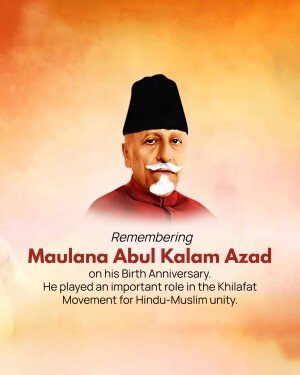
Maulana Abul Kalam Azad was an Indian nationalist, Islamic scholar, journalist, writer, and political leader. He was born in Mecca on 11 November 1888 and later grew up in Calcutta, now known as Kolkata.
His birth name is commonly recorded as Abul Kalam Ghulam Muhiyuddin. He became widely known as Maulana Abul Kalam Azad, with “Azad” meaning “free.”
He received a strong traditional education and developed an interest in literature, religion, politics, and public affairs. His intellectual curiosity encouraged him to explore ideas beyond the boundaries of his early education.
As a journalist, he used publications to communicate political ideas and challenge British colonial rule. His Urdu journal Al-Hilal, launched in 1912, helped establish his reputation as a powerful public voice.
Azad believed in Indian nationalism and cooperation among communities. He opposed the partition of India and supported the idea that people of different religions and cultural backgrounds could belong to one nation.
Following India’s independence in 1947, he became the country’s first Education Minister. He served in this position until his death on 22 February 1958.
His legacy continues through his contribution to education, his writings, his role in the freedom movement, and the annual observance of National Education Day. Source: Indian Council for Cultural Relations
3. History of Maulana Azad Birth Anniversary
To understand why this anniversary matters, we must look at the historical circumstances in which Azad lived and worked.
Early life and intellectual development
Born during British colonial rule, Azad grew up in a period when India was experiencing political change, social debate, and growing demands for independence.
He developed a deep interest in reading, writing, and public discussion. Rather than restricting himself to scholarship alone, he entered journalism and politics, using his knowledge to encourage political awareness.
Role in the freedom struggle
Azad used his writings and public life to support India’s independence. His journal Al-Hilal helped spread nationalist ideas, but the British authorities suppressed his publication.
He continued his public activities despite restrictions and periods of detention. His commitment to national unity and independence made him an influential figure in the Indian National Congress.
He became Congress president in 1923 and again served as president from 1940 to 1946, a critical period in India’s struggle against colonial rule.
Contribution after independence
When India gained independence in August 1947, the country faced enormous challenges, including poverty, illiteracy, social divisions, and the task of building democratic institutions.
As the first Education Minister, Azad helped establish a national vision for education. He supported the expansion of educational opportunities, technical education, scientific learning, and cultural development.
His work helped strengthen the institutional foundations of modern Indian education.
Establishment of National Education Day
In 2008, the Government of India announced that 11 November would be observed annually as National Education Day in honour of Azad’s birth anniversary.
The first National Education Day celebrations took place on 11 November 2008. The occasion has since encouraged schools, colleges, universities, and educational organisations to reflect on the importance of accessible and quality education. Source: Government of India
4. Timeline of Maulana Azad’s Life and Legacy
| Year or date | Important event |
|---|---|
| 11 November 1888 | Born in Mecca. |
| 1912 | Launched the Urdu journal Al-Hilal. |
| 1923 | Became president of the Indian National Congress. |
| 1940–1946 | Served another term as Congress president during a crucial period of the freedom movement. |
| 15 August 1947 | Became independent India’s first Education Minister. |
| 1951 | IIT Kharagpur was established during his tenure as Education Minister. |
| 1953 | The University Grants Commission was established during his tenure. |
| 22 February 1958 | Passed away in Delhi. |
| 1992 | Awarded the Bharat Ratna posthumously. |
| 2008 | His birth anniversary was designated as National Education Day. |
Historical note: The establishment of educational institutions during Azad’s tenure formed part of a broader national effort involving many educators, administrators, scientists, and policymakers. The timeline recognises his leadership without suggesting that he alone created every institution. Sources: Government of India; Indian Council for Cultural Relations
5. Nine Powerful and Inspiring Facts About Maulana Azad Birth Anniversary
Fact 1: His birthday is National Education Day
Every year on 11 November, India celebrates National Education Day in his honour. This makes his birthday an important occasion for reflecting on educational opportunities, literacy, and the future of students.
Fact 2: He was independent India’s first Education Minister
Azad assumed the education portfolio after independence in 1947. He helped guide the development of a national education system at a time when the country needed institutions capable of supporting social and economic progress.
Fact 3: He was a freedom fighter and intellectual
Azad combined scholarship with political action. He used writing, speeches, and public leadership to encourage national awareness and oppose colonial rule.
Fact 4: He founded the influential journal Al-Hilal
Launched in 1912, Al-Hilal became an important Urdu publication associated with nationalist thought. The British authorities eventually suppressed it, demonstrating the political significance of the ideas it circulated.
Fact 5: He supported scientific and technical education
Azad recognised that a developing country needed scientific knowledge, technical skills, and strong higher-education institutions. His tenure coincided with important developments in India’s technical education system.
Fact 6: IIT Kharagpur was established during his tenure
The Indian Institute of Technology Kharagpur was established in 1951, while Azad was Education Minister. Its development formed part of India’s long-term effort to build advanced technical education and research capacity.
Fact 7: He valued cultural and educational development
Azad supported the development of institutions for education, literature, music, and the arts. His broader vision recognised that national progress requires both scientific understanding and cultural knowledge.
Fact 8: He received the Bharat Ratna posthumously
In 1992, Azad was awarded the Bharat Ratna, India’s highest civilian honour, in recognition of his contribution to the nation.
Fact 9: His legacy remains relevant to students
His life encourages students to read widely, think critically, respect differences, and use education for meaningful purposes. His birthday reminds young people that learning should continue throughout life.
Sources: Indian Council for Cultural Relations; Government of India, National Education Day
6. Significance of Maulana Azad Birth Anniversary
Maulana Azad Birth Anniversary has historical, educational, cultural, and social significance. It honours a leader whose life connected the struggle for freedom with the long-term task of building an educated and responsible nation.
Importance for education
Education helps people gain knowledge, develop practical skills, and understand their rights and responsibilities. By celebrating Azad’s birthday as National Education Day, India places education at the centre of its national conversation.
The day also encourages reflection on persistent challenges, such as unequal access to good schools, learning gaps, inadequate educational resources, and the digital divide.
Importance for national development
A country’s progress depends on people who can solve problems, innovate, work responsibly, and make informed decisions.
Azad’s emphasis on educational development reminds us that roads, industries, laboratories, hospitals, and businesses all depend on people with relevant knowledge and skills.
Importance for social equality
Education can create opportunities for people from different economic and social backgrounds. When schools are accessible and inclusive, students have a better chance to develop their abilities and improve their circumstances.
The anniversary therefore encourages society to work towards educational opportunities for girls, children with disabilities, economically disadvantaged students, and communities with limited educational resources.
Importance for national unity
Azad supported a united India in which people of different religious and cultural backgrounds could live together. His life encourages students to respect diversity and reject discrimination.
Education can help people understand different perspectives and resolve disagreements through discussion rather than hostility.
Importance for democracy
Democracy works best when citizens can evaluate information, understand public issues, and question claims responsibly. A strong education system helps develop these abilities.
National Education Day reminds us that education is not only a route to employment; it also supports thoughtful citizenship.
7. How Is National Education Day Observed?
Schools, colleges, universities, and educational organisations may celebrate Maulana Azad Birth Anniversary through activities that promote learning and public awareness.
Common observances include:
- Tributes and commemorative assemblies: Students and teachers remember Azad’s contribution to education and India’s independence.
- Essay-writing competitions: Students write about his life, educational vision, and the importance of learning.
- Debates and speeches: Participants discuss educational equality, digital learning, scientific thinking, and education reform.
- Quiz competitions: Questions about Azad’s life and the Indian freedom movement help students learn history.
- Book-reading activities: Schools can introduce students to biographies, historical writings, and educational literature.
- Poster-making and exhibitions: Creative displays can explain the importance of literacy, inclusive education, and equal opportunity.
- Community education initiatives: Volunteers can support reading programmes, digital literacy, and awareness about educational resources.
- Teacher and student discussions: Classrooms can explore how education can address social problems and encourage responsible citizenship.
These are suggested ways of observing the occasion, rather than a compulsory national programme. Activities differ by institution and location.
The most meaningful celebration is one that leads to a practical improvement in learning, whether by helping a child read, guiding a student towards a career, or encouraging a community to support its local school.
8. Important Lessons from Maulana Azad’s Life
Azad’s life offers valuable lessons for students, professionals, parents, teachers, and public leaders.
1. Never stop learning
Formal education is important, but learning should not end when school or college finishes. Reading, asking questions, learning new skills, and listening to others help us grow throughout life.
2. Use knowledge responsibly
Knowledge becomes more valuable when it helps people solve problems, make thoughtful decisions, and improve the lives of others.
3. Respect diversity
People may have different languages, beliefs, cultures, and experiences. Respecting these differences can build stronger friendships, communities, and institutions.
4. Develop independent thinking
Students should learn how to examine evidence, compare ideas, and reach informed conclusions instead of accepting every claim without question.
5. Remain committed during difficulties
Azad experienced political restrictions and challenges during his public life. His persistence reminds us that meaningful work often requires patience, courage, and dedication.
6. Connect personal success with social progress
Education can help individuals improve their lives, but it can also empower them to teach others, support communities, create opportunities, and contribute to society.
9. Importance of Education in Our Daily Lives
The message of Maulana Azad Birth Anniversary becomes meaningful when we connect it to our everyday choices.
For students: Education builds foundational knowledge, communication skills, confidence, and the ability to plan for the future. It teaches students how to learn from mistakes rather than give up after failure.
For parents: Education helps parents guide children, recognise their abilities, encourage healthy curiosity, and support informed decisions about school and careers.
For teachers: The anniversary highlights the importance of making learning engaging, inclusive, and relevant to students’ lives. Teachers do more than deliver lessons; they help shape values and habits.
For working professionals: Continuous learning can improve workplace performance, support career changes, and help people adapt to new technologies.
For society: Education can improve public awareness of health, financial decisions, environmental protection, civic responsibilities, and the importance of peaceful cooperation.
For the digital generation: Students should develop digital literacy, check the reliability of online information, protect their privacy, and use technology thoughtfully.
Education does not automatically solve every social problem. Its impact depends on quality, opportunity, resources, and how knowledge is applied. Nevertheless, inclusive and effective education gives individuals and communities important tools for positive change.
10. Why Maulana Azad’s Vision Matters for Today’s Students
Today’s students are preparing for a world shaped by artificial intelligence, automation, scientific research, digital communication, and rapid changes in employment.
Azad’s legacy offers several useful principles for this changing environment.
- Build strong foundations: Develop reading, writing, mathematics, scientific reasoning, and communication skills before relying entirely on specialised tools.
- Explore technology responsibly: Learn about artificial intelligence, coding, cybersecurity, and digital safety while understanding their limitations.
- Choose careers thoughtfully: Research course requirements, costs, scholarships, practical training, and employment prospects before making educational decisions.
- Learn beyond textbooks: Participate in projects, experiments, volunteering, internships, and collaborative activities.
- Make education inclusive: Support classmates who need learning assistance and help create welcoming environments for students from different backgrounds.
- Value both science and the humanities: Technical knowledge is powerful, but history, ethics, literature, and social understanding help people use it responsibly.
For Minorstudy readers, the anniversary is also a reminder that reliable educational information should be understandable, useful, and accessible to learners with different levels of knowledge.
11. Review Section: Maulana Azad Birth Anniversary
Overall review: 5/5 for educational and historical relevance
Maulana Azad Birth Anniversary is a meaningful observance because it connects an important historical personality with a continuing public responsibility: improving education.
Its greatest strength is that the occasion goes beyond ceremonial remembrance. It encourages schools and communities to discuss access to education, the development of young people, national unity, and the role of knowledge in democratic life.
For students, the topic is especially valuable because it combines history, civics, biography, and education. It can support school assemblies, essay competitions, general-knowledge preparation, and discussions about career development.
The anniversary is most effective when celebrations include practical learning activities rather than speeches alone. A reading drive, a discussion about educational access, or support for a student who needs help can turn remembrance into action.
What could make the observance more impactful?
- Greater attention to students who face financial, geographical, or accessibility barriers.
- More opportunities for reading, research, debate, and hands-on learning.
- Better awareness of scholarships, libraries, digital resources, and career guidance.
- Continued efforts to make classrooms safe, inclusive, and intellectually stimulating.
Final review: The day deserves recognition not only for honouring Maulana Azad but also for encouraging every generation to make education more accessible, meaningful, and beneficial to society.
12. Maulana Azad Birth Anniversary Wishes and Messages
Here are some thoughtful wishes suitable for school assemblies, social media posts, WhatsApp messages, educational websites, and National Education Day celebrations.
- Happy Maulana Azad Birth Anniversary! May his dedication to education and national unity inspire us to learn continuously and contribute positively to society.
- On National Education Day, let us honour Maulana Abul Kalam Azad by promoting knowledge, equality, curiosity, and lifelong learning.
- May every child receive the opportunity to learn, grow, dream, and achieve a brighter future. Happy Maulana Azad Birth Anniversary!
- Let us celebrate the life of Maulana Azad by respecting diversity, encouraging independent thinking, and making education accessible to all.
- Education is a powerful foundation for personal growth and social progress. May we use our knowledge to create a kinder and more informed world.
- On 11 November, we remember a visionary leader whose contribution to India’s educational development continues to inspire students and teachers.
- May the spirit of National Education Day encourage us to open books, ask questions, help others learn, and turn knowledge into positive action.
- Let us honour Maulana Azad not only with words but also by supporting education, empowering young people, and respecting every learner’s potential.
- Wishing all students, teachers, and lifelong learners an inspiring National Education Day. May the joy of learning remain with us throughout life.
- May Maulana Azad’s legacy remind us that an educated society is better equipped to face challenges, respect differences, and build a peaceful future.
Short social media caption
“Remembering Maulana Abul Kalam Azad on his birth anniversary, 11 November. Let us celebrate National Education Day by promoting knowledge, equality, critical thinking, and education for all. Every learner deserves the opportunity to build a brighter future. #MaulanaAzadBirthAnniversary #NationalEducationDay #EducationForAll”
13. Frequently Asked Questions (FAQs)
Q1. When is Maulana Azad Birth Anniversary celebrated?
It is celebrated on 11 November every year, marking the birth of Maulana Abul Kalam Azad in 1888.
Q2. Why is 11 November celebrated as National Education Day?
The Government of India designated 11 November as National Education Day in 2008 to honour Azad’s contribution to education and remember his role as independent India’s first Education Minister.
Q3. Who was Maulana Abul Kalam Azad?
He was a freedom fighter, scholar, journalist, writer, nationalist leader, and educationist who became India’s first Education Minister after independence.
Q4. Where was Maulana Azad born?
He was born in Mecca on 11 November 1888. His family later settled in Calcutta, where he grew up.
Q5. What was Maulana Azad’s contribution to Indian education?
He helped shape independent India’s educational vision and supported the development of higher, technical, scientific, and cultural education. Several important institutions were established or developed during his tenure.
Q6. What was Al-Hilal?
Al-Hilal was an Urdu journal launched by Maulana Azad in 1912. It became an influential platform for political ideas and Indian nationalism before British authorities suppressed it.
Q7. Did Maulana Azad receive the Bharat Ratna?
Yes. He was awarded the Bharat Ratna posthumously in 1992.
Q8. When did Maulana Azad die?
He died in Delhi on 22 February 1958.
Q9. How can students celebrate Maulana Azad Birth Anniversary?
Students can participate in essays, debates, quizzes, speeches, reading activities, poster competitions, and community initiatives that promote education.
Q10. Why is Maulana Azad important to today’s generation?
His commitment to education, independent thinking, national unity, and cultural understanding remains relevant to students facing modern social, technological, and professional challenges.
Q11. Is National Education Day a public holiday?
National Education Day is an educational observance, not a nationwide compulsory public holiday. Schools and institutions may organise special programmes, but their schedules vary.
Q12. What is the main message of Maulana Azad Birth Anniversary?
Its central message is that education should empower individuals, strengthen society, encourage independent thought, and create opportunities for people from different backgrounds.
14. Conclusion: Keep Maulana Azad’s Educational Vision Alive
Maulana Azad Birth Anniversary is much more than an annual historical commemoration. It is an opportunity to reflect on the power of education and the responsibility we all share in helping others learn.
Maulana Abul Kalam Azad contributed to India’s freedom struggle and helped shape the educational institutions of the newly independent nation. His life demonstrated the importance of scholarship, public service, intellectual courage, and national unity.
As we observe National Education Day on 11 November, we should remember that the real value of education lies not only in degrees, examination results, or professional success. Education should also help us become thoughtful citizens, responsible professionals, compassionate human beings, and lifelong learners.
Every student who discovers a new idea, every teacher who encourages a struggling learner, every parent who supports a child’s ambitions, and every community that makes learning more accessible contributes to this larger vision.
Let us honour Maulana Azad by making education a priority in our homes, schools, workplaces, and communities. Let us encourage children to read, help young people explore opportunities, respect different perspectives, and use knowledge to solve real problems.
The most meaningful tribute to Maulana Abul Kalam Azad is not simply to remember his birthday, but to help make his belief in the transformative power of education a reality for every learner.
Happy Maulana Azad Birth Anniversary, and Happy National Education Day!
Sources for fact-checking
Indian Council for Cultural Relations — Maulana Abul Kalam Azad biography.
Press Information Bureau — First National Education Day celebrations.
Ministry of Education — National Education Day background and significance