Drone Pilot Career in India: 7 Powerful & Positive Facts, Costs, Courses, Skills and Career Guide
- Drone Pilot: A Complete Career Guide for Students
- 1. Remote Pilot Certificate Training
- 2. Drone Mapping and Surveying
- 3. Agricultural Drone Training
- 4. FPV Drone Training
- 5. Drone Data and GIS
- Typical expense categories
- 1. Flying Skills
- 2. Safety
- 3. Regulations
- 4. Technology
- 5. Data
- Drone Pilot
- Drone Survey Technician
- GIS/Drone Mapping Specialist
- Agricultural Drone Operator
- Drone Inspection Technician
- Drone Cinematography Operator
- Drone Data Analyst
- Drone Instructor
- Drone Entrepreneur
- Class 10
- Class 11–12
- After Class 10/12
- After certification
- Next step
- Long-term
- Fact 1: Drone piloting is not just a hobby
- Fact 2: Certification matters
- Fact 3: India has many training organisations
- Fact 4: Agriculture is an important application
- Fact 5: Surveying is another major field
- Fact 6: Flying is only one skill
- Fact 7: Technology changes quickly
- Training Quality Review
- Educational advantages
- Career advantages
- Entrepreneurial advantages
- Technical advantages
- Social advantages
- 1. Can a Class 10 student become a drone pilot?
- 2. Is B.Tech compulsory?
- 3. How long does drone pilot training take?
- 4. Is drone pilot a good career for students?
- 5. Can girls become drone pilots?
- 6. Can drone pilots work in agriculture?
- 7. Can drone pilots work in surveying?
- 8. Can I start a drone business?
- 9. Do drone pilots need computer skills?
- 10. Is drone piloting the same as being an airline pilot?


Drone Pilot: A Complete Career Guide for Students
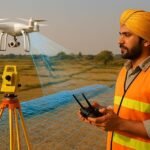
Drone Pilot: Imagine standing in a field with a controller in your hands. A drone rises into the sky, follows a planned route and captures information that may help a farmer understand a crop, an engineer inspect a structure, or a surveyor map an area.
That person operating the aircraft is a drone pilot, also commonly called a remote pilot.
For students, drone piloting is no longer simply about flying a camera drone for fun. It can become part of a wider career involving agriculture, surveying, mapping, construction, infrastructure inspection, filmmaking, disaster management, logistics, environmental monitoring, defence-related applications and drone data analysis.
India’s drone ecosystem has expanded considerably. A February 2026 Government of India backgrounder reported 38,575 registered drones, 39,890 Remote Pilot Certificates (RPCs), and 244 DGCA-approved Remote Pilot Training Organisations (RPTOs) as of February 2026. (Press Information Bureau)
So, if you are a Class 10, Class 12, college or technical student wondering, “Can I make a career with drones?”, the answer depends on the kind of work you want to do, the training you complete and the skills you build around drone operations.
What Is a Drone Pilot?
A drone pilot is a trained person who remotely operates an unmanned aircraft system (UAS).
The job is much more than moving a joystick.
A professional pilot may need to:
- Understand the drone and its components
- Plan a flight
- Check weather and operating conditions
- Understand applicable airspace restrictions
- Perform pre-flight checks
- Operate the drone safely
- Handle emergencies
- Capture photographs or video
- Conduct mapping missions
- Operate agricultural drones
- Maintain flight records
- Follow applicable DGCA requirements
- Process or hand over collected data
- Coordinate with clients and ground teams
This is why students should think of drone piloting as a technical skill plus an industry skill, rather than simply learning to fly.
History of Drone Piloting
The basic idea behind unmanned aircraft is much older than today’s small camera drones.
A simple timeline
| Period | Development |
|---|---|
| Early 20th century | Early experiments with remotely controlled aircraft |
| 1930s | Radio-controlled aircraft technology developed further |
| Late 20th century | Unmanned aircraft became increasingly important for military and research applications |
| 2000s | Smaller commercial UAV technology became more accessible |
| 2010s | Camera drones became increasingly popular with consumers and professionals |
| 2018 | India introduced important civil drone regulatory requirements |
| 2021 | India notified the liberalised Drone Rules, 2021 |
| 2022 | Drone regulatory processes moved further toward online certification through Digital Sky |
| 2023–2024 | Training and instructor frameworks continued to develop |
| 2026 | India reported 39,890 Remote Pilot Certificates and 244 approved RPTOs as of February |
India’s Drone Rules, 2021 replaced the earlier UAS Rules framework and were designed around a more streamlined regulatory approach. (Press Information Bureau)
The government has subsequently continued developing training, certification and digital regulatory systems.
Why Is Drone Piloting Important Today?
Drones can go where people may find it expensive, dangerous or inefficient to work.
For example, instead of sending a person close to certain infrastructure to visually inspect it, an appropriately equipped drone can collect imagery from a safer distance.
Government sources identify applications including:
- Land surveys
- Property mapping
- Precision agriculture
- Infrastructure inspection
- Disaster management
- Railway monitoring
- Highway monitoring
- Defence applications
- Public-service delivery
The SVAMITVA programme is one major example. The February 2026 government backgrounder reported that drones had been used to survey 3.28 lakh villages, with property cards prepared for 1.82 lakh villages across 31 states. (Press Information Bureau)
This demonstrates an important point for students:
The future of drone work is not only about flying. It is also about what you can do with the information collected by the drone.
Drone Pilot Eligibility in India
Eligibility can vary according to the specific training programme and drone category.
For a Remote Pilot Certificate training route, the official IGRUA drone-training page currently lists:
- Minimum Class 10 pass
- Minimum 18 years of age
- Aadhaar
- Secondary government identification
- Medical fitness certificate
IGRUA currently lists DGCA-authorized training for small and medium rotorcraft at several locations, with a listed 5-day course duration for its programme. (Indira Gandhi Rashtriya Uran Akademi)
The government has also previously stated that individuals aged 18–65 years with Class 10 qualification could obtain remote-pilot certification after successful training through an authorised RPTO; students should nevertheless check the current eligibility requirements of the particular RPTO and applicable DGCA framework before admission. (Press Information Bureau)
Important for students
You do not necessarily need a B.Tech degree to start basic professional drone-pilot training.
However, higher education can become extremely useful if you want to move into:
- Drone engineering
- GIS
- Artificial intelligence
- Computer vision
- Robotics
- Photogrammetry
- Data science
- Aerospace engineering
- Drone product development
Drone Pilot Courses
There isn’t just one type of drone course.
1. Remote Pilot Certificate Training
This is the most direct route for someone wanting to become a professional remote pilot under India’s regulated framework.
Training may include:
- Drone regulations
- Airspace
- Flight planning
- Basic aerodynamics
- Drone systems
- Safety
- Emergency procedures
- Practical flying
- Mission planning
DGCA training material includes subjects such as air law, airspace, basic principles of flight, ATC procedures, drone operations and Remote Pilot Certificate-related knowledge. (Digital Sky)
2. Drone Mapping and Surveying
Students can learn:
- GIS
- Photogrammetry
- Orthomosaic generation
- 3D modelling
- Topographical mapping
- Survey data processing
This can be particularly useful for students interested in civil engineering, geography, GIS and surveying.
3. Agricultural Drone Training
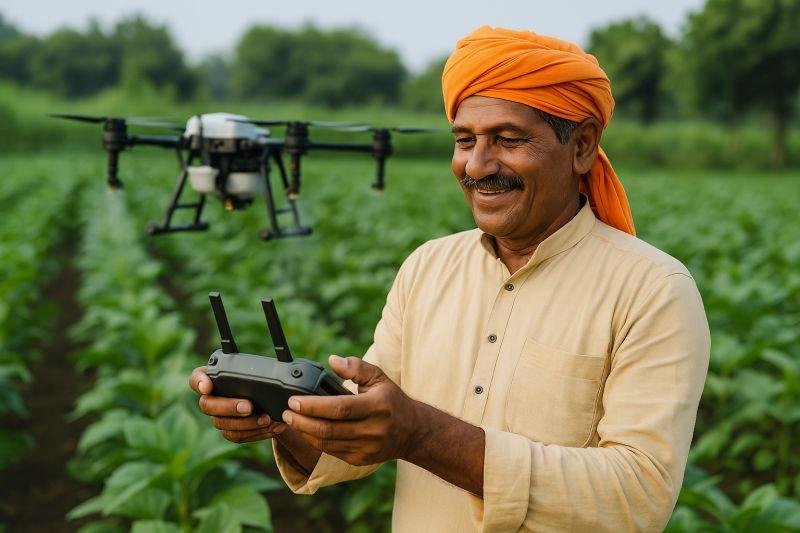
Agricultural drone operations may involve:
- Crop monitoring
- Field mapping
- Spraying operations
- Mission planning
- Payload handling
- Spray calibration
- Farm-data collection
The government’s Namo Drone Didi programme is an example of drones being connected with rural livelihoods and agriculture. A February 2026 government release stated that 1,094 drones had been distributed to women SHGs by fertiliser companies, including 500 under the Namo Drone Didi scheme, and that participating women received drone-pilot training through DGCA-authorised RPTOs. (Press Information Bureau)
4. FPV Drone Training
FPV means First-Person View.
It can be useful for specialised applications such as:
- Cinematic filming
- Sports footage
- Events
- Creative media
- Certain inspection applications
FPV flying requires a different set of skills from conventional camera-drone operations.
5. Drone Data and GIS
This is an especially interesting pathway for students who like computers more than flying.
You can combine drone knowledge with:
Drone + GIS + Python + AI + Computer Vision + Photogrammetry
That combination can open pathways beyond the traditional pilot role.
Drone Pilot Training Costs in India
One of the most important questions students ask is:
“How much does drone pilot training cost?”
There is no single nationwide course price.
Fees depend on:
- RPTO
- Drone category
- Course duration
- Practical flight hours
- Equipment
- Location
- Specialisation
- Advanced certifications
- Accommodation
- Taxes
For example, an IGRUA drone-training brochure available online lists a particular programme at ₹75,000 + GST, plus a ₹100 licence fee in that programme’s stated fee structure. That should not be treated as the universal price for every RPTO or every current course. (Indira Gandhi Rashtriya Uran Akademi)
A student should therefore compare the total fee and exactly what is included, rather than choosing a course only because its advertised price is low.
Typical expense categories
| Expense | What to check |
|---|---|
| Training fee | Theory + practical training |
| Certification-related fee | Whether included or separate |
| Travel | Cost of reaching training centre |
| Accommodation | Particularly for residential programmes |
| Food | Check whether included |
| Equipment | Whether drones/controllers are supplied |
| Advanced software | GIS/photogrammetry courses may charge separately |
| Additional training | Mapping, agriculture, inspection, etc. |
Important: Always verify the latest fee directly with the RPTO before paying.
What Does a Drone Pilot Learn?
A serious student should develop five major areas.
1. Flying Skills
You need to understand:
- Take-off
- Landing
- Hovering
- Direction control
- Altitude
- Turns
- Mission flying
- Emergency recovery
2. Safety
Safety is more important than getting an impressive photograph.
Learn:
- Pre-flight inspection
- Battery safety
- Weather awareness
- Emergency procedures
- Safe operating distances
- People and property considerations
3. Regulations
A professional pilot must understand applicable rules rather than simply assuming that a drone can be flown anywhere.
4. Technology
Understand:
- GPS
- Sensors
- Batteries
- Controllers
- Cameras
- Payloads
- Flight software
- Data storage
5. Data
This is where career opportunities can become much broader.
Learn:
- GIS
- Mapping
- Photogrammetry
- Image processing
- 3D modelling
- Basic Python
- AI/computer vision
Career Opportunities After Drone Training
A trained student may explore roles such as:
Drone Pilot
Operate drones for approved commercial or industrial activities.
Drone Survey Technician
Assist with mapping and surveying projects.
GIS/Drone Mapping Specialist
Combine aerial data with geographical information systems.
Agricultural Drone Operator
Work with farms, agricultural businesses or service providers.
Drone Inspection Technician
Support infrastructure inspection projects.
Drone Cinematography Operator
Work in:
- Film
- Advertising
- Weddings
- Tourism
- Sports
- Real estate
Drone Data Analyst
Process information captured by UAVs.
Drone Instructor
With the appropriate additional qualifications and authorisations, experienced professionals can move toward training roles. DGCA has specific frameworks concerning instructors and training organisations. (Digital Sky)
Drone Entrepreneur
A student can eventually build a Drone-as-a-Service (DaaS) business providing specialised services rather than simply selling flying time.
Salary: What Can a Drone Pilot Earn?
There is no single fixed salary for “drone pilot.”
Earnings depend on:
- Experience
- Location
- Employer
- Drone category
- Industry
- Technical skills
- Number of flight hours
- Mapping/GIS expertise
- Agricultural specialisation
- Freelance versus salaried work
- Ability to acquire clients
A beginner may start with an entry-level operations role, while a person who combines drone flying with surveying, GIS, data processing or specialised industrial knowledge may pursue different and potentially broader career opportunities.
Therefore, students should avoid choosing a course based only on advertisements promising extremely high salaries.
Drone Pilot Skills Checklist for Students
Before entering the profession, ask yourself:
| Skill | Importance |
|---|---|
| Basic mathematics | Useful |
| Physics | Useful |
| Computer skills | Very useful |
| Geography | Useful for mapping |
| Communication | Important |
| Concentration | Very important |
| Patience | Very important |
| Technical curiosity | Very important |
| Safety awareness | Essential |
| Photography/video | Useful for media |
| GIS | Highly useful for surveying |
| Python/AI | Valuable for advanced careers |
Drone Pilot Career Roadmap for Students
Class 10
Build basic knowledge of:
Math + Science + Computer + English
Class 11–12
Students can explore:
- Physics
- Mathematics
- Computer Science
- Geography
- Electronics
After Class 10/12
Explore an authorised Remote Pilot Training Organisation if you meet its current eligibility criteria.
After certification
Gain practical experience.
Next step
Choose a specialisation:
Agriculture | Mapping | Surveying | Photography | Inspection | Data | GIS
Long-term
Add another technical skill.
For example:
Drone Pilot + GIS
or
Drone Pilot + AI
or
Drone Pilot + Agriculture
or
Drone Pilot + Civil Engineering
This approach can make your professional profile broader than simply being able to operate a drone.
7 Important Facts About Drone Pilots
Fact 1: Drone piloting is not just a hobby
Professional operations involve training, safety and applicable regulations.
Fact 2: Certification matters
India has an established Remote Pilot Certificate ecosystem, with 39,890 RPCs reported by the government as of February 2026. (Press Information Bureau)
Fact 3: India has many training organisations
The government reported 244 approved RPTOs as of February 2026. (Press Information Bureau)
Fact 4: Agriculture is an important application
Agricultural drone programmes are creating opportunities for trained operators.
Fact 5: Surveying is another major field
Large-scale government and private projects use drones for mapping and surveying.
Fact 6: Flying is only one skill
Data processing can be just as important for many jobs.
Fact 7: Technology changes quickly
A drone pilot should continue learning because aircraft, sensors, software, regulations and industry applications evolve.
Drone Pilot and Daily Life
You might not realise it, but drones can influence ordinary life.
A drone may help with:
- Mapping land
- Monitoring roads
- Inspecting infrastructure
- Surveying villages
- Assessing crops
- Supporting disaster response
- Capturing news and documentary footage
- Monitoring difficult-to-access locations
- Supporting construction projects
The Government of India’s 2026 drone ecosystem backgrounder describes drones as increasingly integrated into public-service delivery and infrastructure, agriculture and other sectors. (Press Information Bureau)
So the impact of drone pilots isn’t limited to the person holding the controller.
Importance of Drone Pilots to Society
A skilled drone pilot can contribute to society by helping organisations collect information efficiently and safely.
For example, in disaster situations, aerial imagery may help teams understand an affected area. In agriculture, drones can support precision operations. In surveying, aerial data can assist mapping.
The important principle is:
A drone is a tool; a responsible and skilled human decides how that tool should be used.
Privacy, safety, airspace compliance and responsible data handling therefore matter alongside technical ability.
Observance and Drone Awareness
Unlike a traditional festival or national day, Drone Pilot is a career/professional field rather than a specific annual observance.
However, drone-related exhibitions, technology events, training programmes and initiatives such as Bharat Drone Mahotsav and other drone ecosystem programmes help students learn about the sector. The Government of India identifies such platforms as part of the ecosystem supporting innovation and Drone-as-a-Service models. (Press Information Bureau)
Students can use such events to:
- See professional drones
- Meet industry professionals
- Learn about careers
- Understand new technology
- Explore training programmes
- Discover internships
Review Section: Is Drone Pilot Training Worth Exploring?
Instead of giving an artificial star rating to every course, students should review a drone-training programme using practical questions.
Training Quality Review
Check 1: Is the organisation authorised for the training being offered?
Check 2: How much actual flying time is included?
Check 3: What drone categories are covered?
Check 4: Are instructors properly qualified?
Check 5: Is practical emergency training included?
Check 6: Are students taught regulations and airspace?
Check 7: Does the course teach only flying, or also mapping/data skills?
Check 8: Are equipment, accommodation and taxes included in the advertised price?
Check 9: What documentation/certification is actually provided?
Check 10: Can the institute provide transparent information about previous batches and career outcomes?
This is much more useful than choosing a course because a website says “No. 1” or “guaranteed high salary.”
How to Choose a Drone Training Institute
Before paying the fee, students should:
- Verify the organisation’s current authorisation.
- Check the exact course category.
- Ask for the latest fee structure.
- Confirm course duration.
- Ask about practical flight hours.
- Check what drone models are used.
- Ask whether the certificate is a Remote Pilot Certificate or another type of course certificate.
- Understand refund/cancellation rules.
- Check accommodation costs if travelling.
- Speak with recent students where possible.
The official IGRUA programme, for example, currently lists training locations including Gurugram, Gwalior, Bhopal, Kangra/Dharamshala, Bangalore and Coimbatore, illustrating that students can compare locations rather than assuming training is available only in one major city. (Indira Gandhi Rashtriya Uran Akademi)
Advantages of Becoming a Drone Pilot
Educational advantages
You learn practical technology rather than only theory.
Career advantages
The skill can connect with several industries.
Entrepreneurial advantages
Drone services can potentially become a business.
Technical advantages
You can learn electronics, aviation concepts, software and data.
Social advantages
Drone applications can contribute to agriculture, mapping, infrastructure and disaster-related work.
Challenges of the Drone Pilot Career
Students should also understand the difficult side.
- Weather can affect operations.
- Batteries have limited flight time.
- Equipment can be expensive.
- Regulations must be followed.
- Flying requires concentration.
- Some jobs require travel.
- Freelancing can mean irregular income.
- Competition may increase as more people obtain certification.
- Basic flying alone may not be enough for long-term career growth.
The solution is continuous skill development.
Frequently Asked Questions About Drone Pilots
1. Can a Class 10 student become a drone pilot?
For certain Remote Pilot Certificate training routes, Class 10 qualification and age requirements can be sufficient. Current requirements should be verified with the authorised training organisation and applicable DGCA rules. IGRUA currently lists Class 10 and minimum age 18 for its RPC training. (Indira Gandhi Rashtriya Uran Akademi)
2. Is B.Tech compulsory?
No, not for every drone-pilot training route. However, engineering or technical education can be valuable for advanced drone careers.
3. How long does drone pilot training take?
It depends on the course. IGRUA currently lists a five-day programme for its specified training. Advanced programmes can take longer. (Indira Gandhi Rashtriya Uran Akademi)
4. Is drone pilot a good career for students?
It can be a useful career option for students interested in aviation technology, robotics, photography, surveying, agriculture or geospatial technology. Career outcomes depend on skills, certification, experience and the sector entered.
5. Can girls become drone pilots?
Absolutely. Drone operation is a technical skill, not a gender-specific profession. Government programmes such as Namo Drone Didi specifically include training women from Self-Help Groups. (Press Information Bureau)
6. Can drone pilots work in agriculture?
Yes. Agriculture is one of the significant drone applications in India.
7. Can drone pilots work in surveying?
Yes. Surveying and mapping are important applications.
8. Can I start a drone business?
Potentially, subject to the applicable regulations, permissions, equipment requirements and business requirements for the services you intend to provide.
9. Do drone pilots need computer skills?
Basic computer skills are highly useful. GIS, photogrammetry, video editing, Python and data analysis can become valuable advanced skills.
10. Is drone piloting the same as being an airline pilot?
No. An airline pilot physically flies a manned aircraft from inside the aircraft. A drone pilot/remote pilot operates an unmanned aircraft remotely.
Wishing Message for Future Drone Pilots
“May your curiosity take you higher, your skills make you stronger, and your knowledge guide every flight. Keep learning, fly responsibly, respect safety and build a career that creates value for people and society. Best wishes to every future Drone Pilot!”
Final Conclusion
The Drone Pilot career represents an interesting meeting point between aviation, technology and real-world problem-solving.
For today’s students, the biggest opportunity is not simply learning how to make a drone fly. The stronger long-term approach is to combine drone operation with another valuable skill.
For example:
Drone Pilot + GIS → surveying and mapping
Drone Pilot + Agriculture → precision farming
Drone Pilot + Photography → media and cinematography
Drone Pilot + Civil Engineering → infrastructure and construction
Drone Pilot + AI → computer vision and autonomous systems
Drone Pilot + Data Science → drone-data analytics
India’s expanding drone ecosystem—with tens of thousands of certified remote pilots and hundreds of approved training organisations reported in 2026—shows that drone technology has moved well beyond the hobby stage. (Press Information Bureau)
For a student, however, the most important lesson is simple:
Don’t learn only to fly. Learn to solve problems with drones.
That mindset can turn a small flying machine into a much bigger educational and career opportunity.
Authoritative resources
- IGRUA Drone Training – official information
- Digital Sky / DGCA drone framework
- Ministry of Civil Aviation
- Press Information Bureau – India’s Drone Ecosystem 2026