Badrinath Temple: Complete Guide for Students
- Introduction
- ⭐⭐⭐⭐⭐ Overall Rating: 4.9/5
- Spiritual Experience
- Scenic Beauty
- Accessibility
- Facilities
- 1. Where is Badrinath Temple located?
- 2. Which deity is worshipped here?
- 3. Is there an entry fee?
- 4. Why does the temple close during winter?
- 5. What is the best time to visit?
- 6. Is photography allowed?
- 7. Is Badrinath part of the Char Dham?
- 8. Can senior citizens visit?
- 9. What should visitors wear?
- 10. Why is Badrinath famous?


Introduction
Badrinath Temple is one of the most sacred Hindu temples dedicated to Lord Vishnu. Located in the beautiful Chamoli district of Uttarakhand, India, the temple sits at an altitude of around 3,133 meters (10,279 feet) above sea level on the banks of the Alaknanda River. Surrounded by the majestic Himalayan mountains, Badrinath attracts millions of pilgrims and tourists every year.
It is one of the Char Dham pilgrimage sites and also one of the 108 Divya Desams mentioned in Vaishnavite traditions. Beyond being a religious destination, Badrinath Temple is a symbol of faith, peace, devotion, and India’s rich spiritual heritage.
Whether you are a student learning about Indian culture or a traveler planning a pilgrimage, Badrinath Temple offers lessons in history, architecture, spirituality, and environmental awareness.
History of Badrinath Temple
The history of Badrinath Temple dates back thousands of years and is closely connected with Hindu mythology.
According to legends, Lord Vishnu came to this region for deep meditation. During his meditation, Goddess Lakshmi transformed herself into a Badri (berry) tree to protect him from harsh weather. Because of this event, Lord Vishnu became known as Badri Narayan, and the place became famous as Badrinath.
Historians believe that the present temple was revived during the 8th century by the great philosopher Adi Shankaracharya, who discovered the idol of Lord Vishnu in the Alaknanda River and re-established temple worship.
Over the centuries, the temple has been renovated several times because of earthquakes, avalanches, and harsh Himalayan weather. Kings from Garhwal and later governments also contributed to its restoration.
Today, Badrinath Temple remains one of India’s most important pilgrimage destinations.
Timeline of Badrinath Temple
| Year/Period | Event |
|---|---|
| Ancient Times | Lord Vishnu is believed to have meditated here. |
| Mythological Era | Goddess Lakshmi protected Vishnu as a Badri tree. |
| 8th Century | Adi Shankaracharya revived the temple. |
| Medieval Period | Garhwal rulers renovated the temple. |
| Modern Era | Improved roads and pilgrimage facilities. |
| Present Day | Millions of pilgrims visit annually during the opening season. |
Architecture of Badrinath Temple
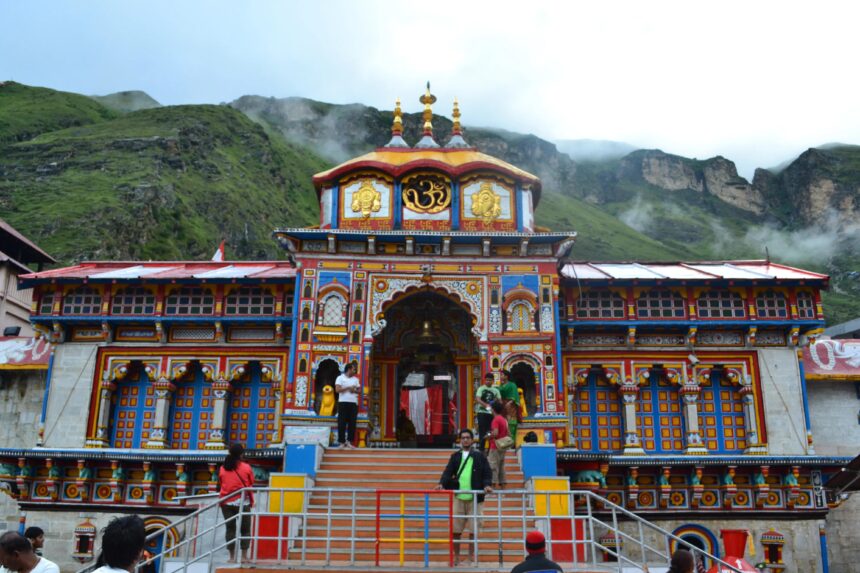
The temple displays a colorful Himalayan architectural style.
Some of its major features include:
- Brightly painted entrance
- Beautiful arched windows
- Golden roof
- Sacred sanctum (Garbha Griha)
- Lord Badrinarayan’s black stone idol
- Assembly hall for devotees
- Traditional carvings and artwork
Despite its simple size, the temple’s location among snow-covered mountains makes it one of India’s most breathtaking religious sites.
Religious Significance
Badrinath Temple holds immense religious importance because:
- It is one of the Char Dham pilgrimage sites.
- It is one of the 108 Divya Desams.
- It is dedicated to Lord Vishnu.
- Visiting the temple is believed to help devotees attain spiritual purification.
- Many Hindus believe a pilgrimage here helps remove sins and brings peace.
For countless devotees, visiting Badrinath is a once-in-a-lifetime spiritual journey.
Importance for Students
Students can learn many valuable lessons from Badrinath Temple:
- Indian history
- Hindu mythology
- Himalayan geography
- Ancient architecture
- Environmental conservation
- Cultural traditions
- Religious harmony
- Tourism management
The temple also teaches discipline, patience, and respect for nature.
Interesting Facts About Badrinath Temple
Here are some fascinating facts:
- Located at over 3,100 meters above sea level.
- Dedicated to Lord Vishnu.
- One of India’s Char Dham pilgrimage sites.
- One of the 108 Divya Desams.
- The idol is made from black stone.
- The temple remains closed during winter because of heavy snowfall.
- Worship continues symbolically during winter at another sacred location.
- The Alaknanda River flows beside the temple.
- Thousands of devotees visit every day during the pilgrimage season.
- The colorful temple stands beautifully against snow-covered mountains.
- Nearby hot springs are considered sacred.
- Pilgrims often combine visits with Kedarnath, Gangotri, and Yamunotri.
Cost of Visiting Badrinath Temple
The temple does not charge an entry fee for darshan.
Approximate travel expenses may include:
| Expense | Approximate Cost (INR) |
|---|---|
| Registration | Usually Free |
| Temple Entry | Free |
| Hotel | ₹800–₹5,000+ per night |
| Meals | ₹150–₹600 per day |
| Taxi | ₹4,000–₹12,000 depending on route |
| Helicopter (where applicable) | Varies by operator and season |
Costs change according to season, accommodation, and transport choices.
Best Time to Visit
The temple generally opens around April or May and closes around October or November, depending on traditional calendars and weather.
Ideal months:
- May
- June
- September
- October
The monsoon season requires extra caution because of landslides.
Daily Rituals and Observance
Daily worship includes:
- Morning prayers
- Sacred bath of the deity
- Vishnu Sahasranama chanting
- Evening Aarti
- Special festival celebrations
- Bhog offerings
These rituals maintain centuries-old traditions.
Major Festivals
Popular festivals celebrated include:
- Badri-Kedar Festival
- Mata Murti Ka Mela
- Janmashtami
- Diwali
- Vijayadashami
These festivals attract thousands of pilgrims.
Why Badrinath Temple Is Important in Our Life
The temple teaches valuable life lessons such as:
- Faith during difficult times.
- Patience while facing challenges.
- Respect for nature.
- Simplicity over luxury.
- Devotion and gratitude.
- Helping others.
- Inner peace through spirituality.
These lessons remain relevant in modern life.
Importance to Society
Badrinath Temple contributes significantly to society by:
- Preserving Indian heritage.
- Supporting local employment.
- Encouraging tourism.
- Protecting cultural traditions.
- Promoting religious harmony.
- Inspiring charity and service.
- Boosting the local economy.
Its influence extends far beyond religion.
Travel Tips
- Carry warm clothes.
- Wear comfortable shoes.
- Drink plenty of water.
- Check weather forecasts.
- Start your journey early.
- Respect temple customs.
- Avoid littering.
- Keep identification documents handy.
Review
⭐⭐⭐⭐⭐ Overall Rating: 4.9/5
Spiritual Experience
⭐⭐⭐⭐⭐
The peaceful atmosphere and divine environment leave visitors with unforgettable memories.
Scenic Beauty
⭐⭐⭐⭐⭐
Snow-capped peaks, the Alaknanda River, and the temple together create a stunning landscape.
Accessibility
⭐⭐⭐⭐☆
Road connectivity has improved, though the mountain journey can be challenging.
Facilities
⭐⭐⭐⭐☆
Hotels, food, medical assistance, and transport have improved over the years, especially during the pilgrimage season.
Overall Verdict: Badrinath Temple offers an extraordinary combination of spirituality, natural beauty, and cultural heritage, making it one of the most rewarding pilgrimage destinations in India.
Frequently Asked Questions (FAQs)
1. Where is Badrinath Temple located?
It is located in Chamoli district, Uttarakhand, India.
2. Which deity is worshipped here?
Lord Vishnu in the form of Badri Narayan.
3. Is there an entry fee?
No, general darshan is free.
4. Why does the temple close during winter?
Heavy snowfall makes the region inaccessible.
5. What is the best time to visit?
May, June, September, and October.
6. Is photography allowed?
Photography rules vary by area; follow temple guidelines.
7. Is Badrinath part of the Char Dham?
Yes.
8. Can senior citizens visit?
Yes, but they should consult a doctor because of the high altitude.
9. What should visitors wear?
Modest, comfortable, and warm clothing.
10. Why is Badrinath famous?
For its spiritual importance, ancient history, and breathtaking Himalayan setting.
Wishing Messages
- May Lord Badri Narayan bless you with happiness, peace, prosperity, and good health.
- May your visit to Badrinath Temple fill your life with positivity and divine blessings.
- Wishing you a safe, peaceful, and spiritually enriching Badrinath Yatra.
- May Lord Vishnu guide your path with wisdom, strength, and compassion.
Key Points to Remember
- One of the Char Dham pilgrimage sites.
- Dedicated to Lord Vishnu.
- Located in Uttarakhand.
- Revived by Adi Shankaracharya.
- Entry is free.
- Open only during the pilgrimage season.
- Famous for its spiritual atmosphere and Himalayan beauty.
- Important for religion, tourism, history, and education.
Conclusion
Badrinath Temple is much more than a place of worship. It represents India’s spiritual traditions, historical legacy, architectural beauty, and deep connection with nature. Its timeless stories inspire millions to live with faith, humility, patience, and compassion.
For students, the temple is a valuable source of knowledge about history, geography, culture, mythology, and environmental awareness. For devotees, it is a sacred destination that strengthens devotion and brings inner peace. For society, it supports cultural preservation, tourism, and local livelihoods.
A journey to Badrinath Temple is not only a pilgrimage through the Himalayas but also a journey toward self-reflection and spiritual growth. Its enduring message reminds us that true happiness comes from faith, kindness, respect for nature, and living a life of purpose.