

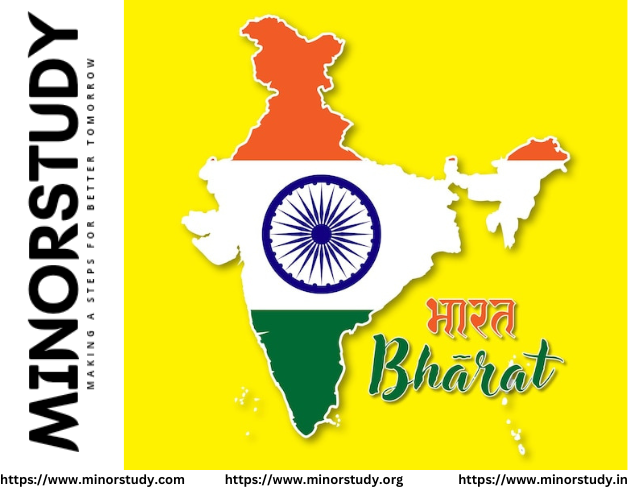
India (Bharat): History, Significance, Legacy, Achievements & the Rise of a Future Superpower
India (Bharat) — A compact, lively guide: history, significance, timeline, big themes, consequences, and its path to becoming a 21st-century superpower.
I’ve kept it balanced: proud, pragmatic, and forward-looking.
1) Quick identity snapshot
- Names: India (English) / Bharat (Sanskrit/Hindi; constitutional name).
- Region: South Asia. A subcontinental civilization with huge linguistic, cultural, religious and ecological diversity.
- Population & scale: One of the world’s most populous countries with vast human capital, a large democracy, and fast-growing urban and digital economies.
2) Why India/Bharat matters (significance)
- Civilizational depth: Millennia of continuous cultural, philosophical, scientific and literary traditions (Vedas, classical languages, mathematics, medicine, trade networks).
- Demographics: Large young population — potential demographic dividend if education, health, and jobs scale.
- Geostrategic location: Bridges West and East Asia; Indian Ocean power with critical sea lanes.
- Economic heft: Rapidly growing market, big IT & services sector, manufacturing ambitions (Make in India).
- Soft power: Cinema (Bollywood), cuisine, diaspora, yoga, spiritual traditions, and cultural exports.
- Political weight: World’s largest democracy; important voice in multilateral fora (G20, BRICS, SCO, climate talks).
3) Short timeline — key milestones
- c. 3000–1500 BCE: Indus Valley Civilization (urban Harappa, Mohenjo-daro).
- c. 1500–500 BCE: Vedic period; foundations of major philosophies, early political formations.
- c. 3rd century BCE: Maurya Empire (Ashoka’s rule and spread of Buddhism).
- 4th–6th century CE: Gupta era — classical ‘golden age’ of art, science, mathematics.
- 8th–12th centuries: Regional kingdoms, temple cultures, flourishing trade.
- 12th–18th centuries: Sultanates, Mughal empire — major cultural, architectural synthesis and global trade links.
- 1612 onwards: European trading companies arrive; East India Company establishes control, leading to British colonial rule by the 19th century.
- 1857: First major pan-Indian uprising against British rule (often called the First War of Independence).
- 1947 (Aug 15): Independence from Britain; partition creates India and Pakistan.
- 1950 (Jan 26): Republic of India — Constitution comes into force.
- 1991: Economic liberalization reforms begin — transition toward market-led growth.
- 2000s–2020s: Rapid expansion in IT, telecom, startups; rising global profile; strategic partnerships globally.
- 2020s onward: Focus on manufacturing, digital public infrastructure, renewables, defence modernization, and space ambitions.
4) Important points to know (condensed)
- Unity in diversity — many languages, religions and regional identities coexisting under one polity.
- Demographic opportunity + challenge — youth bulge can be an advantage if employment, skills, and health improve.
- Economic transformation underway — services-led growth, manufacturing push, infrastructure investments.
- Digital leadership — Aadhaar (ID), UPI (payments), large-scale digital adoption.
- Strategic balancing — engaging major powers while maintaining independence in foreign policy.
- Environmental stakes — climate vulnerability, water stress, air pollution and biodiversity conservation.
- Social development gaps — disparities in education, health, gender outcomes, rural-urban divides.
- Political resilience — strong electoral democracy with active civil society (though stresses exist).
- Science & tech momentum — strong STEM base, space program (satellites, missions), growing R&D.
- Diaspora leverage — global Indian communities amplify economic, political, and cultural influence.
5) Wishes / Aspirations for India (what many Indians and observers hope to see)
- Inclusive prosperity — growth that reduces poverty and narrows inequalities.
- Quality universal education and skilling that matches future jobs.
- Affordable universal healthcare.
- Sustainable development — meeting growth while protecting environment and climate commitments.
- Innovation economy with homegrown global champions in manufacturing, green tech, AI and biotech.
- Stable, effective governance — rule of law, accountable institutions, efficient delivery.
- Peaceful, cooperative neighborhood and constructive global partnerships.
- Cultural flourishing that preserves heritage while enabling modern expression.
6) Likely consequences of India’s rise (regional & global)
Positive consequences
- Economic engine for global demand — stronger trade and investment links with many countries.
- Geopolitical balancing — offers alternatives in Asian strategic architecture (to a unipolar or bipolar order).
- Innovation & markets — cheaper scale for global tech, medicine, and green technologies.
- Climate cooperation — as a major developing economy, India’s climate choices shape global emissions trajectories.
Challenges / negative consequences (if mismanaged)
- Resource stress — higher emissions, water shortages, land use pressures.
- Regional tensions — rivalry with neighbors could escalate without diplomacy.
- Internal inequality & social unrest if growth remains uneven.
- Global competition — trade frictions or protectionist responses from others.
7) Can India become a global superpower? — realistic read
- Possible, but not guaranteed.
- Key enablers: sustained GDP growth, human capital development, technological leadership, physical infrastructure, strong institutions, rule of law, and diplomatic influence.
- Key obstacles: governance bottlenecks, environmental limits, uneven development, geopolitical frictions, and global economic headwinds.
- Time horizon: If reforms and investments continue, major power status (influence across economics, tech, military, and diplomacy) could consolidate over 1–3 decades — but outcomes depend on choices made now.
8) Concrete priorities to accelerate a healthy rise
- Invest massively in universal quality education and vocational training.
- Scale healthcare access and public health systems.
- Fast-track green transition (renewables, efficiency, clean mobility).
- Boost manufacturing & supply chains — simpler regulations, skilled labor, logistics.
- Strengthen institutions — judicial efficiency, anti-corruption, regulatory quality.
- Invest in R&D, frontier tech (AI, biotech, semiconductors).
- Proactive diplomacy & neighborhood strategy — lead by economics, connectivity, and soft power.
9) Suggested timeline / milestones India could aim for (ambitious but plausible)
- Next 5 years: Consolidate digital and financial inclusion; accelerate renewables; build urban infrastructure.
- Next 10 years: Large-scale skill upgrades; significant manufacturing share increase; semiconductor and pharma scale-up.
- By 2035–2045: Matured middle class, leading in selected tech and green sectors, strong influence in multilateral governance — widely seen as a major power.
10) Short list of “must-know” facts for conversation
- Independence: Aug 15, 1947.
- Republic Day: Jan 26, 1950 (Constitution effective).
- Major economic reform pivot: 1991 liberalisation.
- Languages: No single national language; Hindi and English are official for government usage, plus 21 other scheduled languages.
- Government: Federal parliamentary democratic republic.
11) Ready-to-post hashtags (use for social posts / campaigns)
- #IndiaRising
- #BharatVision2047
- #MakeInIndia
- #DigitalIndia
- #GreenIndia
- #YouthOfIndia
- #AncientToFuture
- #IndiaOnTheMove
- #VocalForLocal
- #IndiaInTheWorld
12) A compact “elevator” summary you can use anywhere
India (Bharat) is a millennia-old civilization and the world’s largest democracy with a young population, rising global influence, and deep cultural soft power. Its 21st-century trajectory hinges on converting demographic advantages into skilled labor, balancing rapid growth with environmental stewardship, and strengthening institutions. If it continues reform and invests in education, health, green energy, and technology, India could become a dominant global power in the coming decades — but success is conditional, not automatic.
1. Introduction: India or Bharat – Understanding the Name
The name “India” and “Bharat” both represent a nation that is not only ancient, diverse, and vibrant, but also one of the oldest surviving civilizations on Earth.
Meaning of Bharat
The word Bharat comes from:
- King Bharata from the Mahabharata
- Ancient term “Bharatvarsha”, mentioned in Rig Veda
- Meaning: the land that sustains or the land of seekers of knowledge
Meaning of India
The term India evolved from:
- River Sindhu (Indus) → Hindu → Indos (Greek) → India
- Used historically by foreigners
- Adopted as an international identity
Constitutional Reference
Article 1 of the Constitution states:
“India, that is Bharat, shall be a Union of States.”
Thus, both names are official, and both carry immense cultural weight.
2. Geographical and Cultural Overview
India is:
- The 7th largest country by land area
- The most populous nation in the world (as of 2023 onward)
- Surrounded by:
- Himalayas in the north
- Indian Ocean in the south
- Arabian Sea to the west
- Bay of Bengal to the east
India has:
- 28 States and 8 Union Territories
- 22 officially recognized languages
- Over 2000 dialects
- Thousands of ethnic groups, religions, cuisines, cultural styles
India is known as:
- The Land of Festivals
- The Land of Spirituality
- The Largest Democracy
- The World’s Fastest-Growing Major Economy
3. A Complete History of India (Bharat): From Ancient to Modern
India’s history is long, complex, and influential. It spans more than 5000 years of continuous civilization.
A. Ancient India (Before 500 BCE)
1. Indus Valley Civilization (3300–1700 BCE)
One of the world’s earliest urban civilizations along with Egypt and Mesopotamia.
Famous for:
- Planned cities (Harappa, Mohenjo-Daro)
- Drainage systems
- Trade networks
- Early agriculture
- Use of weights and measures
2. Vedic Age (1500–500 BCE)
The age of:
- The Vedas (Rig, Yajur, Sama, Atharva)
- Development of Sanskrit
- Emergence of kingdoms (Janapadas)
- Rise of early Hindu philosophy
3. Birth of Major Religions
India is the birthplace of:
- Hinduism
- Buddhism (Gautama Buddha)
- Jainism (Mahavira)
- Sikhism (later in medieval period)
B. Classical India (500 BCE – 1200 CE)
1. Maurya Empire (322–185 BCE)
Founded by Chandragupta Maurya, expanded by Ashoka the Great.
Contributions:
- Spread of Buddhism
- Establishment of one of the largest empires
2. Gupta Empire (320–550 CE)
The Golden Age of India:
- Advances in astronomy (Aryabhata)
- Mathematics (concept of zero)
- Literature (Kalidasa)
- Metallurgy
3. Southern Kingdoms
- Cholas
- Cheras
- Pandyas
- Satavahanas
The Chola Empire created the largest naval force in medieval Indian history.
C. Medieval India (1200–1700 CE)
1. Delhi Sultanate
A series of Islamic dynasties:
- Mamluk
- Khilji
- Tughlaq
- Sayyid
- Lodi
Introduced:
- Indo-Islamic culture
- Architectural marvels (Qutub Minar)
2. Mughal Empire (1526–1857)
Founded by Babur, strengthened by Akbar, peaked under Shah Jahan and Aurangzeb.
Achievements:
- Taj Mahal
- Indo-Persian art
- Efficient administration
- Economic prosperity
D. Colonial Era (1757–1947)
The British East India Company gained control after the Battle of Plassey (1757).
Key events:
- 1857 First War of Independence
- British Raj established in 1858
- Exploitation of Indian resources
- Famines & poverty
E. Indian Freedom Struggle
Major Leaders
- Mahatma Gandhi
- Jawaharlal Nehru
- Sardar Vallabhbhai Patel
- Subhas Chandra Bose
- Bhagat Singh
- Rani Lakshmibai
Movements
- Non-Cooperation
- Civil Disobedience
- Quit India
- INA Movement
F. Post-Independence India (1947–Present)
Key achievements:
- Democratic constitution
- Green Revolution
- Economic liberalization (1991)
- IT Revolution
- Space advancements (ISRO)
- Emergence as a global economic power
4. Civilization, Culture & Contributions
India gave the world:
- Zero, decimals, algebra
- Ayurveda
- Yoga & Meditation
- Chess (Chaturanga)
- Sanskrit literature
- Buddhism, Jainism, Sikhism
- World’s oldest continuous spiritual tradition
Cultural richness:
- Classical dance (Bharatanatyam, Kathak, Odissi)
- Music (Carnatic, Hindustani)
- Architecture (temples, forts, monuments)
- Diversity in food & festivals
5. India’s Political Evolution
India is:
- The largest democracy in the world
- A federal republic
- With a strong judiciary & military
The Constitution:
- Longest written constitution
- Guarantees rights, justice, and equality
6. Economic Growth & Global Influence
India’s GDP:
- 5th largest economy
- Projected to become 3rd largest by 2030
Key sectors:
- IT & Software
- Pharma
- Space & Science
- Agriculture
- Manufacturing (Make in India)
- Renewable energy
India is one of the world’s fastest-growing major economies.
7. Timeline of Major Indian Historical Events (Condensed)
Ancient Period
- 3300 BCE – Indus Valley
- 1500 BCE – Vedic Age
- 600 BCE – Mahajanapadas
- 563 BCE – Buddha born
Classical
- 322 BCE – Maurya Empire
- 250 BCE – Ashoka
- 320 CE – Gupta Empire
Medieval
- 1206 – Delhi Sultanate
- 1526 – Mughal Empire
Colonial
- 1757 – British control
- 1857 – Revolt
- 1885 – Congress founded
- 1947 – Independence
Modern
- 1950 – Constitution
- 1991 – Liberalization
- 2020+ – Fastest-growing major economy
8. Significance of India/Bharat in the Modern World
India is important because of:
- Population & market size
- Young workforce
- Strategic geographic location
- Cultural soft power
- Fast-growing tech ecosystem
9. India’s Soft Power Strength
India leads globally in:
- Yoga
- Bollywood
- Philosophy
- Diaspora influence
- Spiritual tourism
- Cuisine
10. India’s Defence & Strategic Strength
India has:
- 4th most powerful military
- Nuclear capabilities
- Rapidly growing defence infrastructure
- Leadership in the Indian Ocean
- Strategic partnerships
- Indigenous defence manufacturing (Tejas, Agni, INS Vikrant)
11. Rise of India as a Future Superpower
India is predicted to become a global superpower due to:
- Demographics – youngest population
- Economy – world’s top 3 by 2030
- Technology – AI, space, quantum
- Military strength
- Diplomatic influence
- Cultural leadership
- Manufacturing shift away from China
12. Challenges India Faces
- Population pressure
- Infrastructure gaps
- Poverty & inequality
- Corruption
- Environmental issues
- Border tensions
Solutions involve:
- Better governance
- Technology adoption
- Education reform
- Clean energy
13. Consequences of India’s Rise for the World
Positive:
- More balanced global power
- Growth in world economy
- Innovations in tech & space
- Stabilization in Indo-Pacific
Challenges for other nations:
- Competitive manufacturing
- Talent shift
- Geopolitical recalibration
14. Vision for the Future
India aims for:
- Becoming a developed country by 2047
- Global manufacturing hub
- Space leader
- Digital-first society
- Climate-resilient nation
15. Powerful Hashtags for India/Bharat
General Hashtags
- #India
- #Bharat
- #IncredibleIndia
- #BestOfIndia
- #IndiaRising
Historical/Patriotic
- #JaiHind
- #VandeMataram
- #IndianHistory
- #BharatMata
Economic/Global Rise
- #IndiaSuperpower
- #NewIndia
- #India2030
- #MakeInIndia
Culture & Heritage
- #IndianCulture
- #IndianTradition
- #IndianHeritage
16. Final Thoughts
India or Bharat is not just a country—it is a civilization, a spiritual beacon, an economic powerhouse, and a rising global leader. Its journey from ancient times through colonial struggles to modern growth is one of the most inspirational stories in human history.
The future of India is bright, powerful, and global.





I think this is one of the most vital info for me.
And i am glad reading your article. But should remark on some general things, The website style is ideal, the articles is really excellent :
D. Good job, cheers
I just could not depart your site prior to suggesting that I actually loved the usual info an individual provide on your visitors?
Is going to be back regularly in order to inspect new posts
**mitolyn**
Mitolyn is a carefully developed, plant-based formula created to help support metabolic efficiency and encourage healthy, lasting weight management.
Wonderful website. Lots of helpful information here. I’m sending it to a few buddies ans also sharing in delicious. And of course, thanks to your effort!
Когда произойдет ДТП, крайне важно действовать быстро и правильно, чтобы уменьшить последствия и гарантировать безопасность всех участников.
Ниже приведены основные шаги, которые следует предпринять.
Определите обстановку
В первую очередь, остановитесь и
оцените обстоятельства. Проверьте, что вы и остальные
участники инцидента находитесь в
безопасности. Если кто-то пострадал, немедленно
вызовите скорую помощь.
Не забудьте вызвать ГИБДД
Как только вы разобрались с ситуацией,
необходимо вызвать ГИБДД.
Сотрудники дорожной полиции зафиксируют происшествие и помогут в оформлении
документов.
Обеспечьте безопасность места происшествия
При необходимости поставьте знак аварийной остановки.
Если есть возможность, переместите машины на обочину, чтобы избежать повторных столкновений.
Hello friends, good post and pleasant urging commented here, I am in fact enjoying by these.
If you wish for to obtain a good deal from this post then you have to apply these methods to
your won web site.
I’ve been following your blog for some time now, and I’m consistently blown away by the quality of your content. Your ability to tackle complex topics with ease is truly admirable.
Every time I visit your website, I’m greeted with thought-provoking content and impeccable writing. You truly have a gift for articulating complex ideas in a clear and engaging manner.
Hi there mates, its great article on the topic of cultureand completely explained, keep it up all
the time.
I’ll immediately clutch your rss feed as I can’t find your email subscription hyperlink or e-newsletter
service. Do you have any? Please let me understand so that I could
subscribe. Thanks.
**aqua sculpt**
aquasculpt is a premium metabolism-support supplement thoughtfully developed to help promote efficient fat utilization and steadier daily energy.
**mounja boost**
MounjaBoost is a next-generation, plant-based supplement created to support metabolic activity, encourage natural fat utilization, and elevate daily energywithout extreme dieting or exhausting workout routines.
**prodentim reviews**
ProDentim is a distinctive oral-care formula that pairs targeted probiotics with plant-based ingredients to encourage strong teeth, comfortable gums, and reliably fresh breath
**prostafense reviews**
ProstAfense is a premium, doctor-crafted supplement formulated to maintain optimal prostate function, enhance urinary performance, and support overall male wellness.
**men balance pro**
MEN Balance Pro is a high-quality dietary supplement developed with research-informed support to help men maintain healthy prostate function.
**herpafend**
Herpafend is a natural wellness formula developed for individuals experiencing symptoms related to the herpes simplex virus. It is designed to help reduce the intensity and frequency of flare-ups while supporting the bodys immune defenses.
**boostaro official**
Boostaro is a purpose-built wellness formula created for men who want to strengthen vitality, confidence, and everyday performance.
**neuro sharp**
Neuro Sharp is an advanced cognitive support formula designed to help you stay mentally sharp, focused, and confident throughout your day.
**back biome official**
Mitolyn is a carefully developed, plant-based formula created to help support metabolic efficiency and encourage healthy, lasting weight management.
Thankfulness to my father who told me concerning this web site, this web site is actually awesome.
Yes! Finally something about .
You actually make it appear so easy with your presentation however I find this matter to be
actually something which I believe I’d by no means understand.
It seems too complex and very wide for me. I’m looking ahead on your next post, I’ll try to get the hold of it!
Wow, that’s what I was searching for, what a material!
present here at this blog, thanks admin of this web site.
I think this is one of the most significant information for me.
And i am glad reading your article. But should remark on some general things, The web site
style is ideal, the articles is really nice : D. Good job, cheers
Hi, every time i used to check web site posts here early
in the dawn, because i like to gain knowledge of more and more.
This is very interesting, You’re a very skilled blogger.
I’ve joined your feed and look forward to seeking more of your magnificent post.
Also, I’ve shared your website in my social networks!
Wonderful work! This is the type of information that are meant to
be shared around the web. Shame on the search engines for now not positioning this publish higher!
Come on over and discuss with my site . Thank you =)
«Авиамастер» — это увлекательная краш-игра, где игроки ставят на
увеличение коэффициента, связанного с полетом самолета aviamaster топ игр.
Ваша задача — вовремя вывести
деньги, прежде чем самолет «разобьется».
Excellent goods from you, man. I’ve bear in mind your stuff prior to and you are simply too great. I actually like what you have received here, certainly like what you are saying and the best way in which you are saying it. You are making it entertaining and you continue to take care of to stay it wise. I cant wait to read far more from you. That is really a wonderful site.
When I originally commented I clicked the “Notify me when new comments are added” checkbox
and now each time a comment is added I get four e-mails
with the same comment. Is there any way you
can remove me from that service? Thank you!
I’d like to thank you for the efforts you’ve put in writing this website.
I’m hoping to see the same high-grade blog posts from you
in the future as well. In fact, your creative writing abilities has inspired me to get my own site now ;
)