Meenakshi Temple, Madurai – Complete Travel & Cultural Guide

- Introduction
- Quick Information
- Meenakshi Tirukalyanam
- Chithirai Festival
- Navratri
- Maha Shivaratri
- What Visitors Love
- 1. Where is Meenakshi Temple located?
- 2. Is entry free?
- 3. Which gods are worshipped here?
- 4. What is the best time to visit?
- 5. Can tourists visit?
- 6. Is photography allowed?
- 7. How much time is needed?
- 8. What should I wear?
- 9. Which festival is most famous?
- 10. Why is Meenakshi Temple famous?


Introduction
The Meenakshi Temple in Madurai, Tamil Nadu, is one of India’s most magnificent temples and among the finest examples of Dravidian architecture. Every year, millions of devotees and tourists visit this sacred place to seek blessings, admire its breathtaking sculptures, and experience centuries-old traditions.
Dedicated to Goddess Meenakshi, a form of Goddess Parvati, and Lord Sundareswarar, a form of Lord Shiva, this temple is not merely a place of worship. It is a living symbol of Indian spirituality, culture, architecture, and history.
Whether you are planning a pilgrimage, exploring South India’s heritage, or simply curious about this iconic landmark, this guide covers everything you need to know.
Quick Information
| Information | Details |
|---|---|
| Location | Madurai, Tamil Nadu, India |
| Main Deities | Goddess Meenakshi & Lord Sundareswarar |
| Religion | Hinduism |
| Architectural Style | Dravidian |
| Built By | Pandya Dynasty |
| Major Reconstruction | 16th–17th Century by Nayak rulers |
| Famous Festival | Meenakshi Tirukalyanam |
| Entry Fee | Free for temple entry |
| Museum Fee | Nominal charges (if applicable) |
| Best Time to Visit | October–March |
| Photography | Restricted inside temple |
History of Meenakshi Temple
The history of Meenakshi Temple stretches back over 2,000 years, making it one of India’s oldest continuously functioning temples.
According to Hindu mythology, King Malayadhwaja Pandya and Queen Kanchanamalai performed a sacred yajna seeking a child. Goddess Parvati appeared as their daughter, Meenakshi, who was born with three breasts. A divine prophecy declared that the third breast would disappear when she met her future husband.
Later, Meenakshi met Lord Shiva in Madurai, where the prophecy came true. Their celestial marriage became one of the most celebrated events in Hindu tradition.
Historically, the original temple existed during the early Pandya period. In the 14th century, the Delhi Sultanate invaded Madurai, causing extensive damage. During the 16th and 17th centuries, the Nayak rulers rebuilt and expanded the temple into the magnificent complex seen today.
Architecture of Meenakshi Temple


The temple is internationally admired for its artistic brilliance.
Some remarkable architectural highlights include:
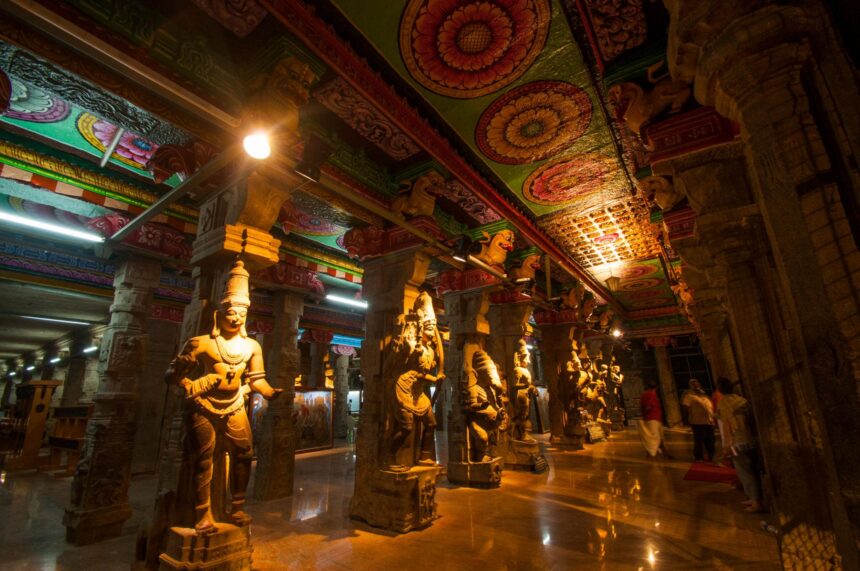
- Twelve towering gopurams covered with thousands of colorful sculptures.
- Intricately carved stone pillars.
- The famous Thousand Pillar Hall.
- Musical pillars that produce different notes.
- Golden Lotus Tank (Potramarai Kulam).
- Beautiful paintings and ceiling artwork.
- Massive temple complex covering around 14 acres.
Each sculpture narrates stories from Hindu mythology and reflects extraordinary craftsmanship.
Entry Fee and Visitor Costs
| Category | Cost |
|---|---|
| Temple Entry | Free |
| Special Darshan | Optional paid service |
| Museum Entry | Nominal fee |
| Camera Charges | As per temple rules |
| Parking | Paid parking available |
Visitors should carry some cash for offerings, lockers, or guided tours.
Temple Timings
Morning:
5:00 AM – 12:30 PM
Evening:
4:00 PM – 9:30 PM
Timings may change during festivals.
Major Festivals
The temple celebrates many grand festivals throughout the year.
Meenakshi Tirukalyanam
The divine wedding of Goddess Meenakshi and Lord Shiva attracts lakhs of devotees.
Chithirai Festival
One of Tamil Nadu’s largest religious festivals.
Navratri
Nine days dedicated to Goddess Meenakshi.
Maha Shivaratri
Special prayers are offered to Lord Sundareswarar.
Religious Significance
Meenakshi Temple represents:
- Divine feminine power.
- Unity of Shiva and Shakti.
- Prosperity and harmony.
- Spiritual wisdom.
- Cultural heritage.
For devotees, visiting the temple is believed to remove obstacles and bring peace.
Why Meenakshi Temple is Important in Our Life
The temple teaches timeless values that remain meaningful today:
- Respect for parents and elders.
- Faith during difficult times.
- Unity in family life.
- Compassion toward others.
- Self-discipline.
- Positive thinking.
- Service to society.
Even people from different religions admire the temple for its artistic and historical importance.
Daily Life Impact
The teachings associated with Meenakshi Temple encourage people to:
- Begin the day with gratitude.
- Practice kindness.
- Help the needy.
- Respect cultural traditions.
- Maintain inner peace.
- Balance spiritual and professional life.
These values contribute to healthier families and stronger communities.
Timeline
| Year/Period | Event |
|---|---|
| Ancient Era | Original shrine established |
| Pandya Rule | Temple expanded |
| 1310 CE | Temple damaged during invasions |
| 16th Century | Nayak rulers rebuilt temple |
| 17th Century | Thousand Pillar Hall completed |
| Present Day | UNESCO-recognized heritage significance and major pilgrimage destination |
Amazing Facts About Meenakshi Temple
- Over 30,000 sculptures decorate the temple.
- It has 12 magnificent gopurams.
- The tallest tower exceeds 170 feet.
- Millions of pilgrims visit annually.
- The Thousand Pillar Hall showcases exceptional engineering.
- Musical pillars create different sounds.
- The temple city of Madurai developed around it.
- The Golden Lotus Tank is considered sacred.
- Every sculpture tells a mythological story.
- The temple is beautifully illuminated during festivals.
- It remains one of India’s most active pilgrimage centers.
Observance and Temple Etiquette
Visitors are encouraged to:
- Wear modest clothing.
- Remove footwear before entering.
- Respect photography restrictions.
- Maintain silence.
- Avoid littering.
- Follow temple staff instructions.
- Respect ongoing rituals.
Important Points for Visitors
- Visit early morning to avoid crowds.
- Carry drinking water.
- Keep mobile phones on silent mode.
- Hire a licensed guide for historical insights.
- Visit nearby attractions like the Tirumalai Nayakkar Mahal and Gandhi Memorial Museum.
- Try authentic Madurai cuisine after your visit.
Wishing Messages
If you wish to greet someone visiting Meenakshi Temple, here are some heartfelt messages:
- May Goddess Meenakshi bless you with happiness, wisdom, and prosperity.
- Wishing you a peaceful and spiritually enriching visit to Meenakshi Temple.
- May the divine blessings of Goddess Meenakshi and Lord Sundareswarar bring health, success, and harmony into your life.
- May your prayers be answered, and your heart be filled with faith and positivity.
Importance to Society
Meenakshi Temple contributes significantly to society by:
- Preserving ancient Indian art and architecture.
- Supporting local artisans and craftsmen.
- Boosting tourism and employment.
- Encouraging cultural education.
- Promoting religious harmony through heritage appreciation.
- Inspiring future generations to value history and tradition.
The temple also plays an important role in Madurai’s economy by supporting hotels, restaurants, transportation services, and local businesses.
Visitor Review
⭐⭐⭐⭐⭐ Overall Rating: 4.9/5
What Visitors Love
Architecture: ★★★★★
The colorful towers, detailed carvings, and grand halls leave visitors amazed.
Spiritual Experience: ★★★★★
Many devotees describe the atmosphere as peaceful and deeply uplifting.
Cleanliness: ★★★★☆
The temple premises are generally well maintained despite heavy crowds.
Cultural Value: ★★★★★
The rituals, festivals, and historical significance make every visit memorable.
Crowd Management: ★★★★☆
Expect long queues during weekends and major festivals, but special darshan options can reduce waiting time.
Overall Verdict:
Whether you are a devotee, history enthusiast, photographer, or traveler, Meenakshi Temple offers a remarkable blend of spirituality, architecture, and living tradition. It is widely regarded as one of India’s must-visit cultural landmarks.
Frequently Asked Questions (FAQs)
1. Where is Meenakshi Temple located?
It is located in Madurai, Tamil Nadu, India.
2. Is entry free?
Yes, general entry to the temple is free.
3. Which gods are worshipped here?
Goddess Meenakshi and Lord Sundareswarar (Shiva).
4. What is the best time to visit?
October to March offers pleasant weather for sightseeing.
5. Can tourists visit?
Yes. People of all backgrounds are welcome to admire the temple while respecting its customs.
6. Is photography allowed?
Photography is generally restricted inside the main temple areas. Always follow current temple guidelines.
7. How much time is needed?
Plan for about 2–4 hours to explore the temple complex comfortably.
8. What should I wear?
Modest, respectful clothing is recommended.
9. Which festival is most famous?
The Meenakshi Tirukalyanam during the Chithirai Festival is the temple’s most celebrated event.
10. Why is Meenakshi Temple famous?
It is renowned for its towering gopurams, intricate sculptures, rich history, vibrant festivals, and profound spiritual significance.
Conclusion
Meenakshi Temple is far more than an architectural marvel. It is a living expression of India’s devotion, artistic excellence, and cultural continuity. Its magnificent towers, detailed carvings, sacred traditions, and welcoming atmosphere inspire millions of visitors every year.
Whether you seek spiritual peace, historical knowledge, or architectural beauty, Meenakshi Temple offers an unforgettable experience. The values it represents—faith, compassion, discipline, and respect—remain relevant in modern life and continue to strengthen families, communities, and society as a whole.
A visit to Meenakshi Temple is not just a journey to one of India’s greatest temples; it is an opportunity to connect with centuries of history, timeless traditions, and the enduring spirit of devotion.